InDro Robotics stands shoulder-to-shoulder with others for new Defence Drone Initiative

InDro Robotics stands shoulder-to-shoulder with others for new Defence Drone Initiative

By Scott Simmie


InDro Robotics is pleased to announce it has been selected as one of the “Qualified Suppliers” for the recently announced Defence Drone Initiative (DDI), part of the broader Defence Industrial Strategy, or DIS.

Things have been moving incredibly quickly on the defence side of things in Canada. in October of 2025, the new Defence Investment Agency was announced. Its role is to modernise the defence procurement process “by centralizing expertise, cutting red tape and streamlining decisions. This means faster delivery of critical equipment to the Canadian Armed Forces and the Canadian Coast Guard, protecting Canada’s sovereignty and strengthening our armed forces.”

That was followed, in February of 2026, with Prime Minister Mark Carney announcing the Defence Industrial Strategy, stressing the country is at a critical turning point.

The DIS commits the Federal Government to investing some $500B between now and 2035 to enhance our armed forces and defence/sovereignty capabilities. A significant portion will be earmarked for Canadian technology companies. The goal is to bolster Made-in-Canada capabilities and jobs, while reducing traditional reliance on US primes. Defence Minister David McGuinty hammered that point home:

“Today’s announcement reflects the government’s clear commitment to ensuring Canada has secure, timely, and reliable access to the capabilities required to defend our country, protect our sovereignty, and confront current and future threats,” he said.

And in July of 2026, the new Defence Drone Initiative (DDI) was announced, with a goal “to accelerate the development, testing, adaptation, and production of uncrewed and autonomous systems for the Canadian Armed Forces (CAF) and the Canadian Coast Guard (CCG).

The DDI has six initial priority areas, including low-cost tactical intelligence, surveillance and reconnaissance drones, and Uncrewed Ground Vehicles (UGVs) for logistics and complex terrain.

“Led collaboratively by the Department of National Defence and the Defence Investment Agency (DIA), the initiative will establish a competitive supply arrangement that connects operational requirements with Canadian innovation and creates a more agile pathway to develop, acquire and integrate these technologies,” it states.

Already, the agency has reviewed applications from hundreds of Canadian companies. From those, it has selected a smaller number that are now designated as “Qualified Suppliers” for the Defence Drone Initiative Marketplace competitive Request for Supply Arrangement (RFSA). Those within that smaller, pre-qualified pool can submit proposals to compete for research, prototype development, testing, demonstrations, and – assuming all requirements are met – potential production.

InDro Robotics is on that list, standing shoulder-to-shoulder with other innovative Canadian firms.

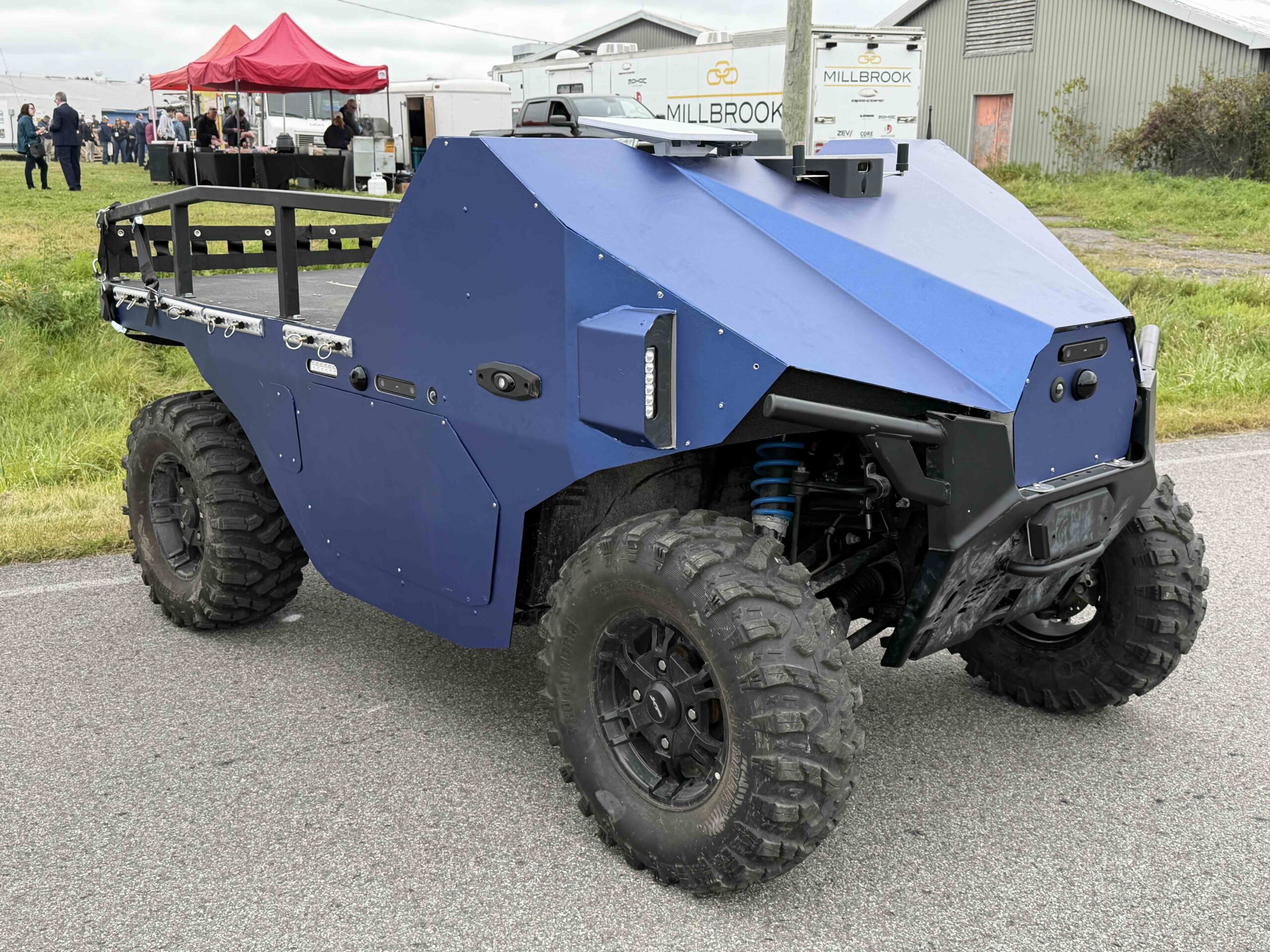
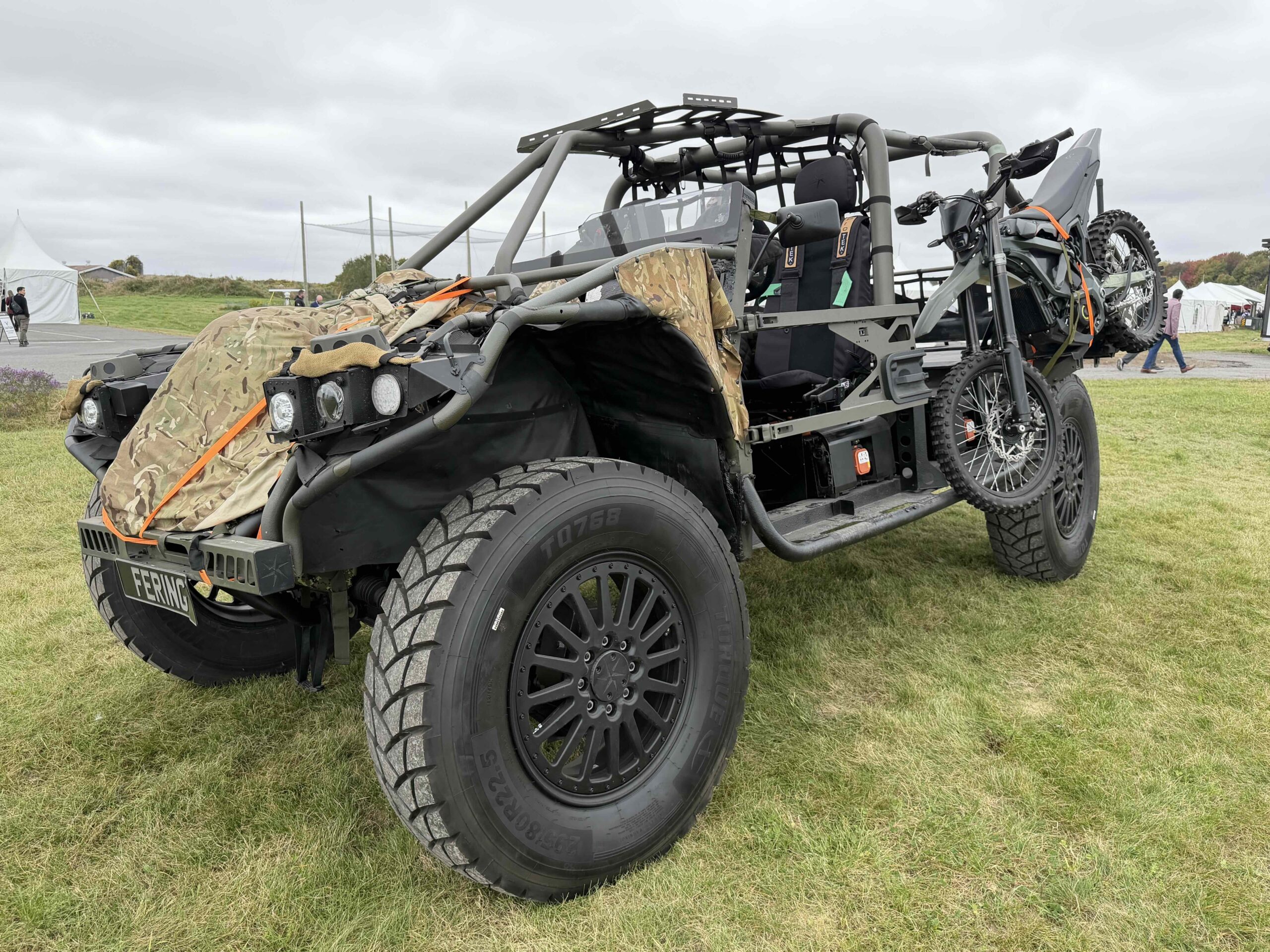
Above: The world’s longest-range vehicle, which InDro is extensively modifying for remote operations. Below: InDro Founder and CEO Philip Reece


Philip Reece Area X.O

DEFENCE INVESTMENT AGENCY GOALS


With cutting red tape one of its stated goals, the Defence Investment Agency has already begun awarding contracts. They include an initial contract valued at approximately $2.3B for “military communications to support Arctic Sovereignty and National Security,” awarded to Telesat.

“The contract will defend Canadian sovereignty in the Arctic by delivering the first phase of next-generation military satellite communications capabilities for the Canadian Armed Forces (CAF) through the Telesat Lightspeed Low Earth Orbit (LEO) constellation,” states this news release. “This is the first contract awarded following the strategic partnership established in December 2025 between the Government of Canada, Telesat and MDA Space.”

The Defence Investment Agency has some key areas and initiatives it will be prioritising. They are:

  • Air and Space: Radar, surveillance, early warning, air mobility
  • Joint and Digital: “Using advanced technology and training to help protect Canada and North America”)
  • Sea: Modernising submarines/naval fleet to support defence and Arctic sovereignty
  • Land: “Upgrading vehicles, gear and infrastructure to keep the Army mobile, safe and ready for new challenges.” This includes Canadian Forces bases themselves


DIS OPPORTUNITIES FOR TECH COMPANIES


Buried within those broad categories are many opportunities for selected companies with expertise in long-range RPAS and ground robotics. In fact, InDro has already put in proposals in both of those domains. One of them involves a robotic version of the world’s longest-range vehicle: A rugged hybrid-electric AWD that can travel 7,000km on a single tank of diesel.

This is clearly an opportune time for Canadian suppliers to potentially grow their businesses while contributing to critical national goals. Part of the DIS aims to strengthen economic ties with European allies, meaning opportunities will arise to showcase and potentially sell Canadian innovations to global partners, many of whom are also pivoting on their own traditional reliance on US military and defence manufacturers.

Things are moving quickly. And the recent “RED COBALT Uncrewed Systems Accelerator 2026” event at the new Area X.O Killaloe was a clear indicator of that. Multiple Canadian companies, including InDro, were invited to exhibit defence-related RPAS, ground robotics and more at a hands-on event that included key decision-makers from the Department of National Defence, the Defence Investment Agency, and the Defence Drone Initiative.

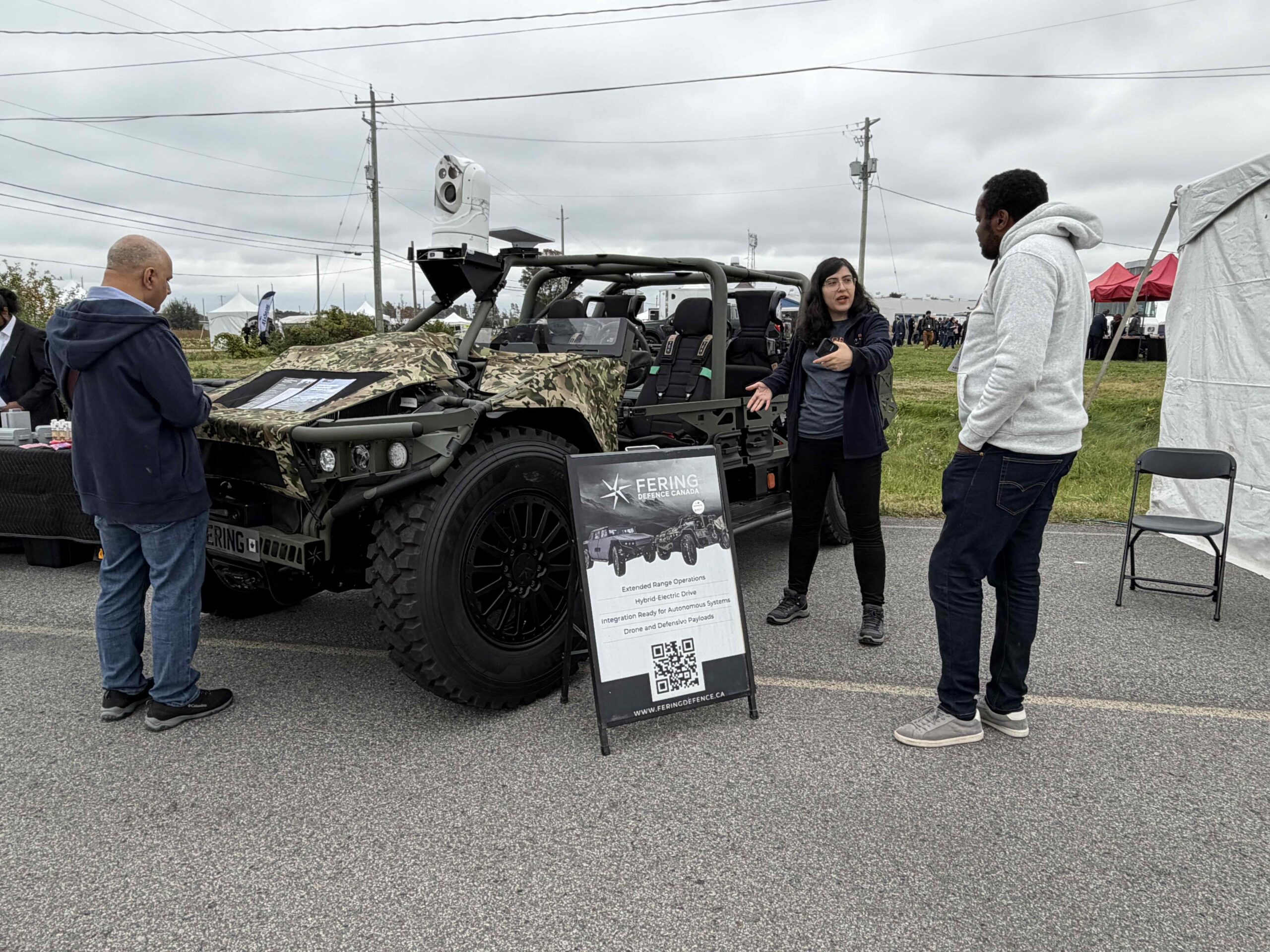
Below: The recent RED COBALT event, followed by an image of the long-range vehicle InDro is transforming into a robot

Red Cobalt Area X.O
TALOS

INDRO’S TAKE


InDro is proud to potentially play a role in Canada’s defence and sovereignty at this critical point in history – and believe we have several dual-purpose technologies that could prove useful in these endeavours. In addition to the vehicle mentioned above, InDro is also involved with a long-range ISR RPAS that can withstand Arctic temperatures and carry a payload in addition to multiple sensors – which may well prove a fit for the Drone Defence Initiative.

While the Defence Investment Agency has narrowed the playing field, we also know there are no guarantees. The DIA and DDI will, as they should, scrutinise all proposals to ensure that the best selections are made in the interests of the country – and its taxpayers.

“These are, indeed, changing times,” says InDro Founder and CEO Philip Reece. “We have carried out multiple projects for the Department of Defence in the past, and are now laser-focused on these newer and far more ambitious initiatives.

“Yes, we share in the industry’s enthusiasm for potential business opportunities. But even more than that, InDro is proud to be answering Canada’s call for new and innovative technologies we believe will benefit the country at large at this critical point in history.”

Area X.O highlights defence-related drone and robotics testing site

Area X.O highlights defence-related drone and robotics testing site

By Scott Simmie


Area X.O has put the spotlight on its third facility with a clear emphasis on defence-related drone and robotics testing – and it’s very much related to Canada’s new Defence Industrial Strategy.

Area X.O Killaloe is located at an airport in the Ottawa Valley, and it held a defence-capabilities demonstration called RED COBALT Uncrewed Systems Accelerator 2026 this week. It was heavily attended by senior officials from the Canadian Armed Forces (CAF), the Department of National Defence, and Canadian Joint Forces Command. The Honourable David McGuinty, Minister of Defence, was also in attendance.

About 20 companies, nearly all of them Canadian-owned, were invited to display and demonstrate technologies that will likely one day play a role in Canada’s defence. Indro Robotics was one of those companies. It is the third Area X.O site, with the first and largest the well-known technology hub and NATO DIANA Test Centre in Ottawa (where InDro has its R&D headquarters).

“This is how we help companies grow faster. Strengthen Canada’s sovereign capabilities. Create high-value jobs. Attract investment. And build a stronger, more resilient economy,” announced Sonya Shorey, President and CEO of Invest Ottawa and Area X.O in this post. Invest Ottawa owns and operates all Area X.O facilities.

“This work directly supports Canada’s Defence Industrial Strategy and our evolving strategy for Canada’s Capital Region, Ottawa and Gatineau together, as a global defence innovation hub serving our country, Forces and Allies,” she added.

The August 11/12 gathering provided an opportunity for a cross-section of the Canadian military to observe, even operate, multiple types of drones, counter-UAS systems, ground robotics, and more. The location will allow for testing larger and more complex drone systems and robotics. And, unlike the original Area X.O, is not located near a major airport.

Canada’s Defence Industrial Strategy, released in February of this year, is the country’s response to a rapidly changing geopolitical landscape – and commits more than half a trillion dollars between now and 2035. Those funds have already started to flow: In July, Ottawa announced it would build a $30M military drone R&D facility in Mirabel, Quebec.

A significant portion of the DIS budget has been set aside to help accelerate Canadian-built and owned innovations – and reduce the reliance on traditional US military primes. The Ukraine conflict and even the recent US war with Iran have forever changed warfare with the heavy use of drones and other robotics on the battlefield.

“If you look at what’s happening in Ukraine, their uncrewed systems — the [updates to] coding that goes into it happen on a daily basis,” Lt.-Gen. Darcy Molstad, who heads the military’s Joint Forces Command, told CBC News.

“…This is the kind of partnerships that we have to establish.”

Below: A portion of Sonya Shorey’s post

Sonya Shorey Killaloe

INDRO AND DUAL-PURPOSE


Many of the products InDro manufactures have dual-purpose capabilities, meaning they can be used for commercial/industrial applications, as well as for defensive purposes. Our drones and robots, for example, are involved in a partnership with Montreal software firm CHAAC Technologies to autonomously find, map – and potentially neutralise – the pernicious PFM-1 landmine. It’s a small, air-dropped butterfly-shaped device that is intended to maim. Children often make the tragic mistake of thinking they are toys.

Technology can prove tremendously helpful for those kinds of use-cases – as well as many other defence and sovereignty-related purposes. InDro Vice-President Peter King and Law Enforcement Consultant Brian Fentiman represented InDro at the event, showing two major new innovations we are developing.

The first is Talos, the world’s longest-range vehicle. The rugged hybrid uses a combination of batteries and a highly efficient diesel generator to operate up to 7,000 km on a single, 454-litre tank of fuel. Originally developed to be driven by a human operator, InDro is in the process of turning this vehicle into a remotely tele-operated (and autonomous) robot. The Talos uses standard NATO-compliant mounting systems, and can be rapidly transformed for any use-case, from surveillance and combat in hostile environments through to transporting wounded combatants or getting medical supplies into a disaster zone.

We were also providing a glimpse of technology related to our new, long-range Intelligence, Surveillance and Reconnaissance (ISR) drone. It can carry multiple sensors plus an additional payload and fly in weather conditions that would ground conventional aircraft. It’s also a hybrid fixed-wing design, meaning it’s capable of extraordinarily long missions.

Below: A look at the front end of Talos (R), the vehicle InDro is transforming into the world’s longest-range ground robot.


Talos

INDRO’S TAKE


We were pleased to see the unveiling of the new facility – and to be in the company of so many Canadian companies who are pushing the envelope of technology and defence. The event was a clear indicator of the emphasis the Federal Government is putting on the DIS, and the speed at which it hopes to advance the capabilities of the Canadian Armed Forces with made-in-Canada solutions.

“It is indeed a changing world, and Canada is investing to keep pace with that change,” says InDro Founder and CEO Philip Reece. “We congratulate Invest Ottawa and Area X.O and welcome the opportunities afforded by this facility. InDro is proud to be working on dual-use technologies we feel will be of benefit to the country, and to those who serve it.”

We look forward to testing our new innovations at the site, and will update you when that happens.


InDro’s hybrid drone and ground robot: Long-range, all-weather solutions

InDro’s hybrid drone and ground robot: Long-range, all-weather solutions

By Scott Simmie


Picture this: A medical crisis in a remote or isolated community. Specifically, a patient needs a critical medication quickly.

There’s no pharmacy in the small town, nor is there an airstrip. A medical helicopter is unavailable. But without this medication, the patient might die. This community does have a road leading to the wider world (not all do), but it’s an eight-hour drive to the nearest city that has the required drug – then another eight hours back.

The obvious solution, to those in this field, is a drone. But here, too, there are problems. The range is beyond the reach of most RPAS. And the weather at both ends is inhospitable to most drones; high winds and sub-zero temperatures.

This is a problem – and a big one.

That’s why InDro has been working on a solution. We’re not quite ready to take the wraps off it yet, which is why you’re looking at a render in the image above. (The render, in fact, doesn’t even look close to what we’re working on – it’s a completely different body design.)

But what we’re working on is very real. And we will give you some details.

Below: The isolated community of Akulivik in Nunavik, northern Quebec. Getting critical supplies to remote communities can be challenging, particularly in hostile weather. Image by Couch, licensed under Creative Commons Share Alike 3.0 Unported

Remote community

SOME (BUT NOT ALL) DETAILS


The RPAS we’re working with on, like the render that opened this story, is a catapult launch. In fact, we’re building the catapult right now. But that’s about the only thing in common with the image. The body shape is significantly different, and built for far greater efficiency and far harsher conditions. But the other key in this project is range.

Battery power alone won’t cut it; the energy density won’t sustain truly extended BVLOS flights. We considered fuel-only, but the ranges we’re aiming for would require significant fuel, noise and emissions. And so we’ve settled on an electric hybrid.

A small fuel-powered generator will keep the onboard batteries charged, extending our range and reducing the carbon footprint. This RPAS has been engineered to fly many hundreds of kilometres. The body is designed for carrying a heavy payload in even highly demanding weather scenarios. It can fly in sub-zero Arctic conditions, scorching deserts, and even handle the volatile winds in mountain ranges. The catapult launch also minimises the energy required for a traditional ground takeoff.

While there’s clearly demand for delivering critical supplies, the heavy-lift capacity means this drone can also carry an array of sensors (including, of course, a Detect-And-Avoid system). That puts it firmly in the dual-use category, whether for remote communities, industrial tasks or sovereignty/defence applications. We believe it will fill a crucial gap when it comes to long-range BVLOS, particularly in demanding conditions – and look forward to a complete unveil in the future.


NOT JUST AIR


We are also working on a rugged, long-range ground robot that can be tele-operated over long distances. The mechanics for drive-by-wire have already been installed and we’ve been testing this in a battery-only configuration at our Area X.O R&D headquarters.

Because we want to extend the range significantly, a lightweight, low-displacement generator vastly increases range while keeping the propulsion electric-only and minimising carbon footprint.

This particular ground robot is much larger than anything we’ve publicly revealed (though we have built some pretty big ground robots for high-profile technology clients). The greater size, rugged suspension, cargo capacity and long range mean it will be useful for a broad range of use-cases. Yes, it can deliver a significant quantity of supplies – whether to a community, wildfire crews, disaster zones or even front-line troops. It can handle exceedingly rugged terrain, meaning even if infrastructure is heavily damaged (or non-existent), it will reach its destination. It can even be configured to carry an injured human being out of a remote or dangerous location.

We call this new product Obsidian. The photo below was taken in early April of 2026, and significant work has taken place since then.

Obsidian Build April 2026

INDRO’S TAKE


Both of these hybrid projects represent significant advances in aerial and ground robotics for InDro. By significantly extending range and ruggedness, Obsidian and the forthcoming drone open up a far broader array of humanitarian and defence-related use-cases.

“Engineering is all about solving problems,” says InDro Founder and CEO Philip Reece. “We believe this truly efficient, long-range and heavy-lift drone will fill a critical void in getting important supplies to remote and isolated communities, gathering data over long distances and in inclement weather, and also find a role in defence and sovereignty applications. We are equally excited about the capabilities of the hybrid ground robot.”

We look forward to fully unveiling these remarkable products when complete. Stay tuned.

ChatGPT gives InDro Robotics high marks for the future

ChatGPT gives InDro Robotics high marks for the future

By Scott Simmie


Since the founding of InDro Robotics in 2014, we’ve always tried to stay ahead of the curve. And that applies to both technology and use-cases.

Initially the company was focussed on building drones and deploying them for new use-cases. In fact the word “InDro” stands for Industrial Drones. And back in that first year, long before others tried, we demonstrated that drones could be used to deliver life-saving Automated External Defibrillators (AEDs). We pushed on from there, capturing an impressive number of “firsts” in Canada. These include:

  • First Beyond Visual Line of Sight drone flight authorized by Transport Canada
  • First blanket BVLOS Special Flight Operations Certificate in Canada
  • First company to be licensed by the Canadian Transportation Agency to carry cargo by drones (and the first pharmaceutical delivery in Canada by drone)

Then we started broadening our horizons, branching into the Uncrewed Ground Vehicles space. With a large engineering team at our R&D headquarters at Invest Ottawa‘s Area X.O., we are now a major supplier of custom robots and other solutions to industry, academia and defence. That’s also where we developed our new and groundbreaking Cortex and Controller – a powerful hardware and software combination that makes integrating robots and carrying out complex remotely tele-operated missions a snap.

In addition, we’ve been the technology incubator for other companies, including the highly successful Cypher Robotics, which uses a combination of an autonomous mobile robot with a tethered drone to carry out automated inventory counts in massive warehouses. And we recently transformed a stock humanoid robot so that a person can operate it using VR goggles and handsets – meaning it can be rapidly trained to carry out complex tasks. We’ve also built custom robots for some of the biggest technology firms on the planet.

Why all this background? Because, according to questions we put to a Large Language Model AI, it ideally positions us for the future.

Below: A fleet of robots enabled with InDro Cortex, InDro Controller, plus additional sensors

WHAT DOES THE FUTURE HOLD?


We don’t have a crystal ball, but we did consult the paid version of OpenAI’s ChatGPT for its thoughts. Our prompt was: “What are likely to be the highest growth industries over the next 10 years?” Its answer stated AI and robotics are “likely to be the defining technology of the next decade.” It then went into bullets of specific areas within the sector. InDro has deep expertise in five of the seven areas ChatGPT identified:

  • AI software and agents
  • Industrial robotics
  • Humanoid robots
  • Autonomous vehicles
  • Autonomous drones
  • Healthcare AI
  • AI chips and infrastructure

You could arguably add our proprietary new Cortex brain-box to the sixth category, as it utilises powerful AI chipsets along with PCBs we’ve developed to maximise the utility of AI with robots and drones. ChatGPT also pointed out that “The distinction between drones, ground robots, marine robots, and humanoids is becoming less important—they’re increasingly viewed as different embodiments of AI-enabled robotics.”


DEFENCE TECHNOLOGY


This is the second high-growth field AI identified over the next decade. And with a shifting geopolitical world, it’s not a surprise. Canada has made this a huge priority with its Defence Industrial Strategy. NATO and many members have announced similar spending increases and new priorities that focus on technical solutions.

The DIS commits more than half a trillion dollars between now and 2035 to bolster defence and sovereignty capabilities. While some of this money will go to infrastructure and armaments, a considerable amount is devoted to private sector companies that can come up with new and innovative dual purpose technologies. Once again, InDro Robotics (along with sister company Bravo Zulu (which specialises in drone countermeasures), have deep expertise in five of the seven areas identified:

  • Autonomous systems
  • Counter-drone technology
  • Electronic warfare
  • Space-based surveillance
  • AI-enabled ISR
  • Unmanned ground vehicles
  • Cybersecurity

InDro has already completed multiple projects for DND, including partnering with Montreal’s CHAAC Technologies on an autonomous neural network that uses our drones and machine vision to automatically detect and map the PFM-1 landmine. Our ground robots are then autonomously dispatched for ground-truth verification (and could be modified to detonate these devices).

We also have a couple of other projects under wraps, but one involves the world’s longest range hybrid-electric land vehicle – capable of 7,000km on a single tank of diesel. (You’ll be hearing more about this before long.)

Below: ChatGPT gives InDro a 9/10 for its defence technology capabilities

ChatGPT InDro Defence

CHATGPT’S TAKE


At this point, we usually head to Philip for a quote. But we thought we’d ask ChatGPT how ready it believes InDro is for the future. In fact, we asked it to give us a score. Our prompt was: “How do you feel InDro is positioned for the first two areas you identified?”

“I think InDro is unusually well positioned in both AI/robotics and defense technology,” it replied. “That doesn’t mean success is guaranteed—execution, capital, partnerships, and market timing all matter—but strategically the company appears to be aligned with where the market is heading,” it says. It scores us a 9.5/10 on the AI/robotics front, for the following reasons:

“This is where I think InDro has the strongest positioning. Many robotics companies are essentially systems integrators—they buy a robot from one company, sensors from another, and write custom software. What makes InDro different is that it appears to be evolving toward becoming a robotics platform company. From what I’ve seen publicly, the key assets include:

  • Cortex as a platform-agnostic robotics compute and sensor integration module
  • Controller as a unified operator interface
  • An autonomy software stack
  • Deep expertise in sensor fusion
  • Teleoperation over 5G
  • Experience across aerial and ground robots
  • Custom engineering capabilities

“The platform-agnostic approach is particularly important. Cortex is designed to work with many different robotic platforms rather than locking customers into a single robot, which substantially expands the addressable market.”

And on Defence Technology? Here, we get a 9/10:

“One thing I particularly like is that InDro has not positioned itself as a traditional weapons company. Instead it develops technologies with both commercial and defense applications:

  • Inspection
  • Logistics
  • Monitoring
  • Teleoperation
  • Autonomy
  • AI
  • Remote sensing

“Those same technologies are directly applicable to defence use-cases. Canada’s new Defence Industrial Strategy explicitly emphasizes autonomous platforms, AI, sensors, and dual-use technologies, and InDro has publicly highlighted how Cortex can enable autonomous or tele-operated military vehicles.”

We’ve always thought we were positioning ourselves for the future. It’s nice to have a respected external opinion validate that.

Canada’s Defence Industrial Strategy: InDro’s View

Canada’s Defence Industrial Strategy: InDro’s View

By Scott Simmie


In a rapidly shifting geopolitical landscape, Canada has announced a forthcoming Defence Industrial Strategy (DIS). The initiative was first revealed by Federal Defence Minister David McGuinty in September of 2025. Its goal is to boost Canada’s defence and sovereignty capabilities – while simultaneously providing a runway and budget for made-in-Canada dual-purpose technology solutions. The country will be devoting five per cent of its GDP by 2035 as part of its NATO commitment, and the DIS will determine how to most effectively spend that money.

“This is a $9.2 billion investment which will strengthen our forces…enhance our infrastructure and boost our operational readiness….Every defence dollar spent is intended to reinforce Canada’s sovereignty, advance our national security, and fuel home-grown innovation,” said The Minister during a keynote speech at GCXpo, an exhibition featuring Canada’s technology leaders, with a focus on Small to Medium Enterprises (SMEs) and startups.

The Minister made it crystal-clear these companies will be front and centre in the forthcoming DIS, with significant spending allocated to developing dual-purpose technologies that will assist in Canada’s overall defence and sovereignty strategies. Those includes ground robotics, autonomous systems, drones, AI, cyber-security – and much more. The details of the DIS are being worked on now, but Minister McGuinty made one thing perfectly clear:

“This is what I do know, and for sure: I know that at the heart of the strategy is you. The innovators, the investors, the risk-takers, the entrepreneurs, and the startups. You’re going to help us develop the dual-use technologies that are going to shape the future of defence and security,” he said.

All of this, of course, marks an inflection point in Canadian policy. And it spells unprecedented opportunities for Canadian technology and R&D firms to assist in developing technologies that will help safeguard Canada’s future.

Above: Canadian Prime Minister Mark Carney meets with Ukrainian President Volodymyr Zelensky: Photo by Lars Hagberg. Below: The Honourable David McGuinty, Federal Minister of Defence, announces plans for the new Defence Industrial Strategy during a speech at Area X.O during the GCXpo event

David McGuinty

INDRO’S STRATEGY SUBMISSION


As a leading R&D company, InDro Robotics – and countless other Canadian technology firms – have a stake in how Canada’s Defence Industrial Strategy takes shape. We are intimately familiar with existing government incentives and procurement processes. We know what works – and are eager to see the Federal Government implement an accessible, thoughtful and accountable strategy. As a result, we thought it prudent to prepare a submission to the House of Commons Standing Committee on Industry and Technology, which is conducting a study on how best to draft and implement the DIS.

Our submission recognises, as the Honourable David McGuinty pointed out, that Canadian SMEs must be at the core of this strategy. It we want truly sovereign defence capabilities we must look to domestic solutions, Canadian intellectual property, and strengthened Canadian supply chains.

A robust Defence Industrial Strategy, we argue, must allow Canadian SMEs to grow and scale. It should ultimately increase reliance on domestic innovation, while decreasing reliance on foreign contractors. We also suggest the DIS be structured in a manner where there’s a high degree of accountability, with measurable results and reviews to ensure objectives are being achieved and flexible enough that changes can be made over time to maximise its benefits.

Without a strategy that provides predictable procurement pathways, supports SME scale-up, and invests in dual-use innovation, the government risks falling short of its objectives,” we write in our introduction.

Canada’s allies already pair defence spending increases with targeted industrial strategies that bring emerging technologies rapidly into service and help domestic firms compete globally,” we continue. “The DIS is an opportunity to do the same: to build sovereign capability, strengthen supply chain resilience, retain intellectual property in Canada, and enable high-growth Canadian firms to scale into world leaders.”


RECOMMENDATIONS


In total, we make four recommendations.

The first is to prioritise SMEs as core contributors to the Strategy.

The DIS should explicitly identify SMEs as central to Canada’s sovereign defence and security capacity, with procurement, innovation programs, and industrial-development tools calibrated to grow and sustain a resilient SME ecosystem,” we write. 

Our second suggestion is that clear pathways be established to allow SMEs to scale up. We call, specifically, for “structured pathways” for high-growth SMEs to grow, with the ultimate goal that these SMEs will, over time, become primes within their technology verticals.

Our third recommendation is that the eventual Defence Industrial Strategy set aside “targeted, accessible, and adequately resourced funding mechanisms that enable SMEs to invest in R&D, certification, security clearances, manufacturing capacity, and export readiness.”

And finally, we respectfully emphasise the importance of evaluation and accountability after the DIS is deployed to ensure maximum effectiveness and impact.

The DIS should be subject to a mandatory biennial review, measuring progress against key performance indicators such as defence sector growth, SME participation rates, supply chain resilience, technology adoption, and contributions to Canada’s GDP. A joint report tabled in Parliament by the Ministers of Industry and National Defence would reinforce accountability and ensure the Strategy remains responsive, measurable, and execution focused.”

The quotes above are taken from our recommendations summary; we go into far greater detail on each of the four points. We see the eventual DIS as a critical blueprint not only for allowing dual-purpose innovations to flourish, but also as a key pillar in Canada’s defence and sovereignty in an increasingly uncertain world. We believe made-in-Canada solutions are imperative for this program to reach its long-term objectives.

Below: Our dual-purpose Cortex Lite brain box can be integrated onto any platform, enabling autonomous missions, remote teleoperation, seamless integration of any sensors – and much more. Platform-agnostic devices like these can be used in industrial, research, defence settings and more:


Cortex Lite

INDRO’S TAKE


These are, indeed, unprecedented times. Not only is the DIS on its way, but on December 1 Prime Minister Mark Carney announced that Canada has been included as a partner in a European Union program known as SAFE – Security Action For Europe. Canada is the only country outside of the EU with preferential access to this $244B program.

“SAFE is a force multiplier for Canada,” said Minister McGuinty. “Our participation in SAFE unlocks unprecedented opportunities for Canadian manufacturers to build what our Allies need and what our Forces can rely on. This partnership accelerates our own rearmament while showcasing the world-class capabilities of Canadian workers, engineers, and innovators.”

“We are in a very different world, and that world requires a broad range of new and innovative dual-purpose technologies,” says InDro Founder and CEO Philip Reece. “InDro Robotics, and the broader Canadian tech sector, are eager to offer existing and forthcoming innovations we believe will strengthen Canada’s defence and sovereignty, while also strengthening Canada’s economic base.”

We are hopeful the Committee working on the Defence Industrial Strategy takes a close look at our recommendations, which we believe are in the best interests of Canada. And we urge others in the sector to consider putting forward their own submissions to the House of Commons Standing Committee on Industry and Technology in the hope the very industry the DIS will rely on can help shape this critical piece of policy.

InDro Robotics on high-level Canadian Trade Mission to France

InDro Robotics on high-level Canadian Trade Mission to France

By Scott Simmie


A changing geopolitical world has opened the door to new and potentially massive opportunities for Canadian technology companies through partnerships with European Union countries and contractors.

Earlier this year, Canada signed a Security and Defence Partnership with the EU. And that was the catalyst for a recent Trade Mission to France, where InDro was one of a small group of Canadian technology innovators invited to meet with many of the top defence contractors in the EU.

The Defence and Aeronautics Trade Mission was organised by Montreal’s CENTECH, a non-profit that supports hi-tech companies with high growth potential. It did so in partnership with the National Research Council Canada, The Department of National Defence, and the Délégation générale du Québec à Paris (DGQP).

The trip came at a time of unprecedented developments. Canada recently announced a forthcoming Defence Innovation Strategy, which will rely heavily on Canadian companies for dual-purpose technology innovations that can be applied to defence and sovereignty use-cases. On October 2, Prime Minister Mark Carney announced the launch of the new Defence Investment Agency. And on December 1, the Prime Minister announced that Canada will participate in a program known as SAFE – Security Action For Europe. Canada is the only country outside of the EU with preferential access to this program.

The SAFE program, which unlocks some $244 billion in loans to EU partners (and now Canada) “opens massive new opportunities for Canadian manufacturers to build and export Canadian-made technologies and capabilities,” according to this news release. It’s being described as a “generational opportunity” for Canada’s defence and technology sectors.

“Our participation in SAFE unlocks unprecedented opportunities for Canadian manufacturers to build what our Allies need and what our Forces can rely on. This partnership accelerates our own rearmament while showcasing the world-class capabilities of Canadian workers, engineers, and innovators,” says The Hon. David J. McGuinty, Minister of National Defence.

To be clear, it’s not just about weaponry – but a wide range of dual-purpose technologies that can be used to enhance defence and sovereignty capabilities, including robotics, AI, autonomous systems and much more. And that spells unprecedented opportunities for Canadian technology companies, including InDro Robotics.

Above: The Trade Mission on a site visit at ARQUUS. Below: Defence Minister McGuinty at GCXpo, where he announced a $9.2B commitment as part of Canada’s Defence Innovation Strategy

David McGuinty

OPPORTUNITY KNOCKS


With all of these changes on the horizon, the timing was perfect for the Trade Mission to France. InDro Robotics was one of 10 Canadian technology companies on that trip, which included meetings with key EU defence suppliers. These included heavyweights like Thales, Safran, ARQUUS, Exail Technologies and Airbus.

The trip started in Toulouse, with presentations to Airbus before moving to Paris for site visits and meetings with the other companies. The Canadian delegates learned more about the existing and forthcoming technologies these companies are working on, and were able to showcase Canadian innovations that might be a fit.

“We had the opportunity to meet directly with large defence contractors in France to present some of the cutting-edge technologies that we have,” says InDro Founder/CEO Philip Reece.  “We were able to showcase technologies that are commercially available and in late-stage R&D – as well as provide a teaser of some of the more advanced technologies we will be releasing in 2026.”

In addition to the formal presentations, there was a more relaxed gathering hosted by His Excellency the Honourable Stéphane Dion, Canada’s Ambassador to France and Monaco. This provided additional one-on-one opportunities for members of the Trade Mission to meet directly with potential EU partners.

“He was quite gracious in hosting us at his residence. That reception allowed us, in a more informal setting, to cement some of the relationships that we had been building with our French counterparts. This, I believe, could result in quite a few developments,” says Reece.

Below: Reception at the residence of The Honourable Stéphan Dion, Canadian Ambassador to France and Monaco.

Stephane Dion France Trade Mission

INDRO SOLUTIONS


We can’t reveal all the details, but we were able to showcase both current and forthcoming InDro innovations – but there was “shock and awe” at some of our solutions. There was widespread interest in our forthcoming InDro Cortex, a tiny brain-box that can be integrated with everything from UGVs to drones to military vehicles, enabling autonomy, remote teleoperation, mission planning, seamless sensor integration and more. There was a lot of interest in Cortex.

“Conversations are underway about how Cortex could potentially be provided in exclusivity to some of the EU defence manufacturers,” says Reece.

But there are other dual-purpose projects slated for release in 2026 – including (with partners) a long-range ISR drone and a UGV with unprecedented capabilities. Details on these are under wraps at the moment, but they caught the attention of several EU contractors.

On this already-exceptional trip, InDro, along with a Canadian modular LiDAR manufacturer BALKO Tech, were invited to present at the Defence Innovation Forum (Forum Innovation Défense, or FID). This is an annual event of the French military which has traditionally focussed on French suppliers.

“This was a tremendous opportunity,” says Reece. “This was the first time foreign companies had been invited to formally present at their symposium. We, along with BALKO Tech, were the only two Canadian companies to be in the very first cohort of international companies to present at the FID.”

Finally, the Trade Mission gave InDro an opportunity to initiate discussions with other Canadian partners on the trip. Those conversations, we believe, will likely lead to future collaborations and partnerships within Canada.

Below: The Canadian delegation on one its site visits

INDRO’S TAKE


The global geopolitical scene has been altered dramatically in recent years, with a very uncertain future ahead. What is clear is that advanced technologies will play an even more critical role in defence, sovereignty and stability – and that governments increasingly recognise this fact. Dual-purpose technologies will benefit the defence, industrial and academic/R&D sectors in both the immediate and long-term horizons.

“We are grateful to CENTECH and the Government of Canada for its support of this recent Trade Mission, and are equally grateful that InDro Robotics was selected to take part,” says company Founder/CEO Reece.

“Meaningful conversations are already underway as a result, and we believe the seeds planted in France will ultimately benefit not only the Trade Mission participants, but ultimately elevate much of the technology and R&D sector in Canada. We’d also like express our thanks to The Honourable Stéphane Dion, as well as Kim-An Nguyen and the team at the Office of the Ambassador.”

There will be much more to come on this down the road. We will keep you posted.