
By Scott Simmie
Picture this: A medical crisis in a remote or isolated community. Specifically, a patient needs a critical medication quickly.
There’s no pharmacy in the small town, nor is there an airstrip. A medical helicopter is unavailable. But without this medication, the patient might die. This community does have a road leading to the wider world (not all do), but it’s an eight-hour drive to the nearest city that has the required drug – then another eight hours back.
The obvious solution, to those in this field, is a drone. But here, too, there are problems. The range is beyond the reach of most RPAS. And the weather at both ends is inhospitable to most drones; high winds and sub-zero temperatures.
This is a problem – and a big one.
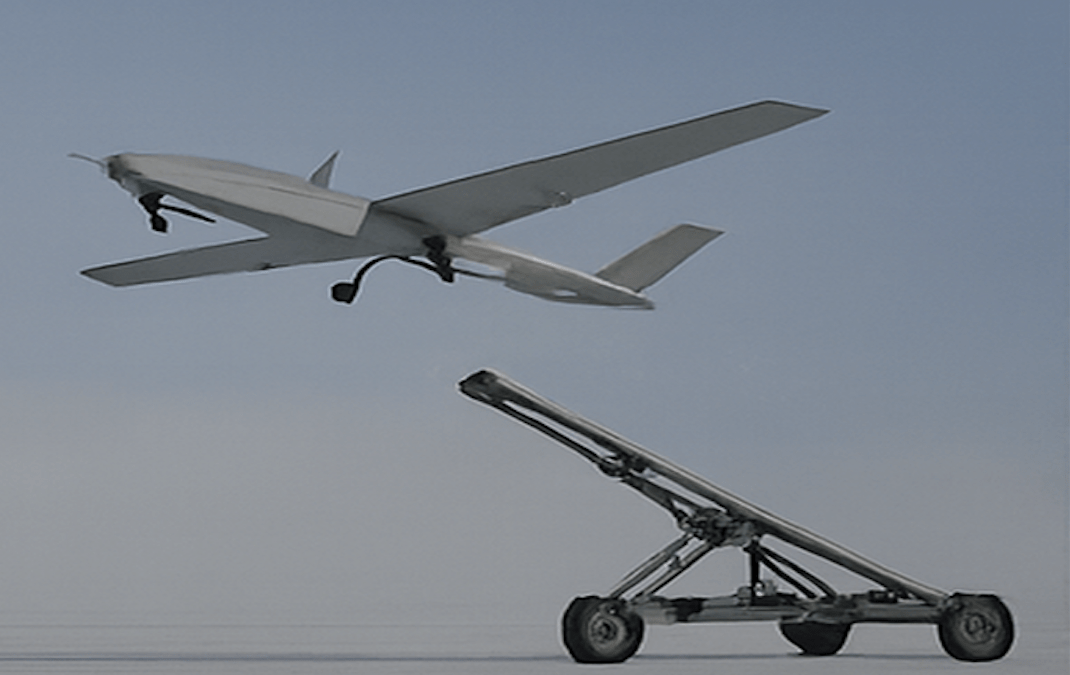
That’s why InDro has been working on a solution. We’re not quite ready to take the wraps off it yet, which is why you’re looking at a render in the image above. (The render, in fact, doesn’t even look close to what we’re working on – it’s a completely different body design.)
But what we’re working on is very real. And we will give you some details.
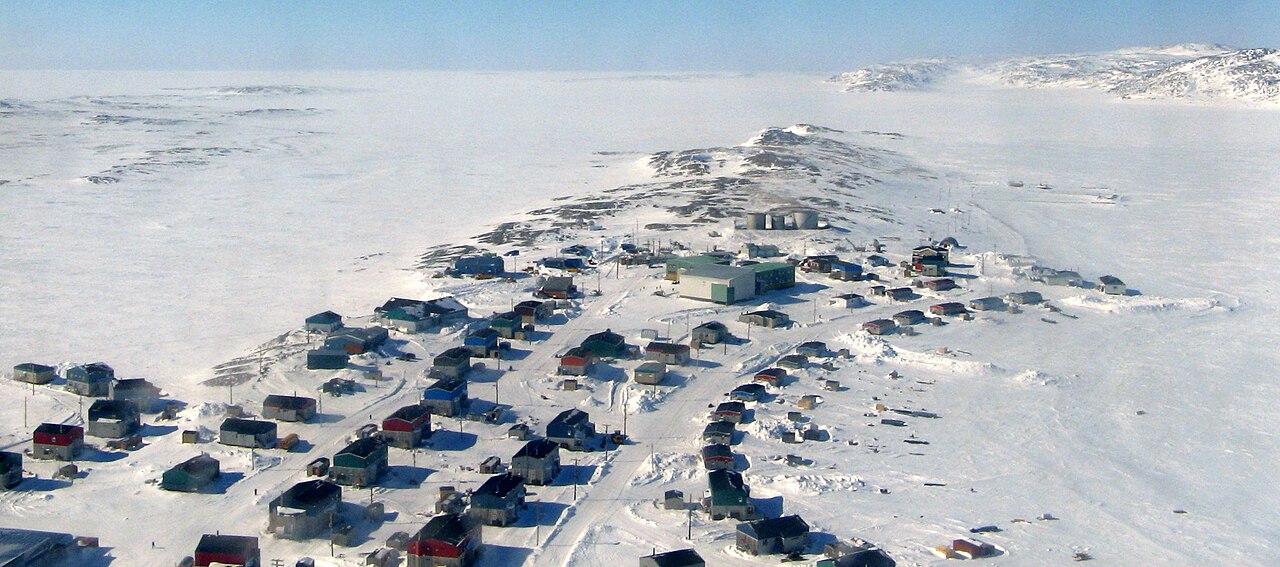
Below: The isolated community of Akulivik in Nunavik, northern Quebec. Getting critical supplies to remote communities can be challenging, particularly in hostile weather. Image by Couch, licensed under Creative Commons Share Alike 3.0 Unported

SOME (BUT NOT ALL) DETAILS
The RPAS we’re working with on, like the render that opened this story, is a catapult launch. In fact, we’re building the catapult right now. But that’s about the only thing in common with the image. The body shape is significantly different, and built for far greater efficiency and far harsher conditions. But the other key in this project is range.
Battery power alone won’t cut it; the energy density won’t sustain truly extended BVLOS flights. We considered fuel-only, but the ranges we’re aiming for would require significant fuel, noise and emissions. And so we’ve settled on an electric hybrid.
A small fuel-powered generator will keep the onboard batteries charged, extending our range and reducing the carbon footprint. This RPAS has been engineered to fly many hundreds of kilometres. The body is designed for carrying a heavy payload in even highly demanding weather scenarios. It can fly in sub-zero Arctic conditions, scorching deserts, and even handle the volatile winds in mountain ranges. The catapult launch also minimises the energy required for a traditional ground takeoff.
While there’s clearly demand for delivering critical supplies, the heavy-lift capacity means this drone can also carry an array of sensors (including, of course, a Detect-And-Avoid system). That puts it firmly in the dual-use category, whether for remote communities, industrial tasks or sovereignty/defence applications. We believe it will fill a crucial gap when it comes to long-range BVLOS, particularly in demanding conditions – and look forward to a complete unveil in the future.
NOT JUST AIR
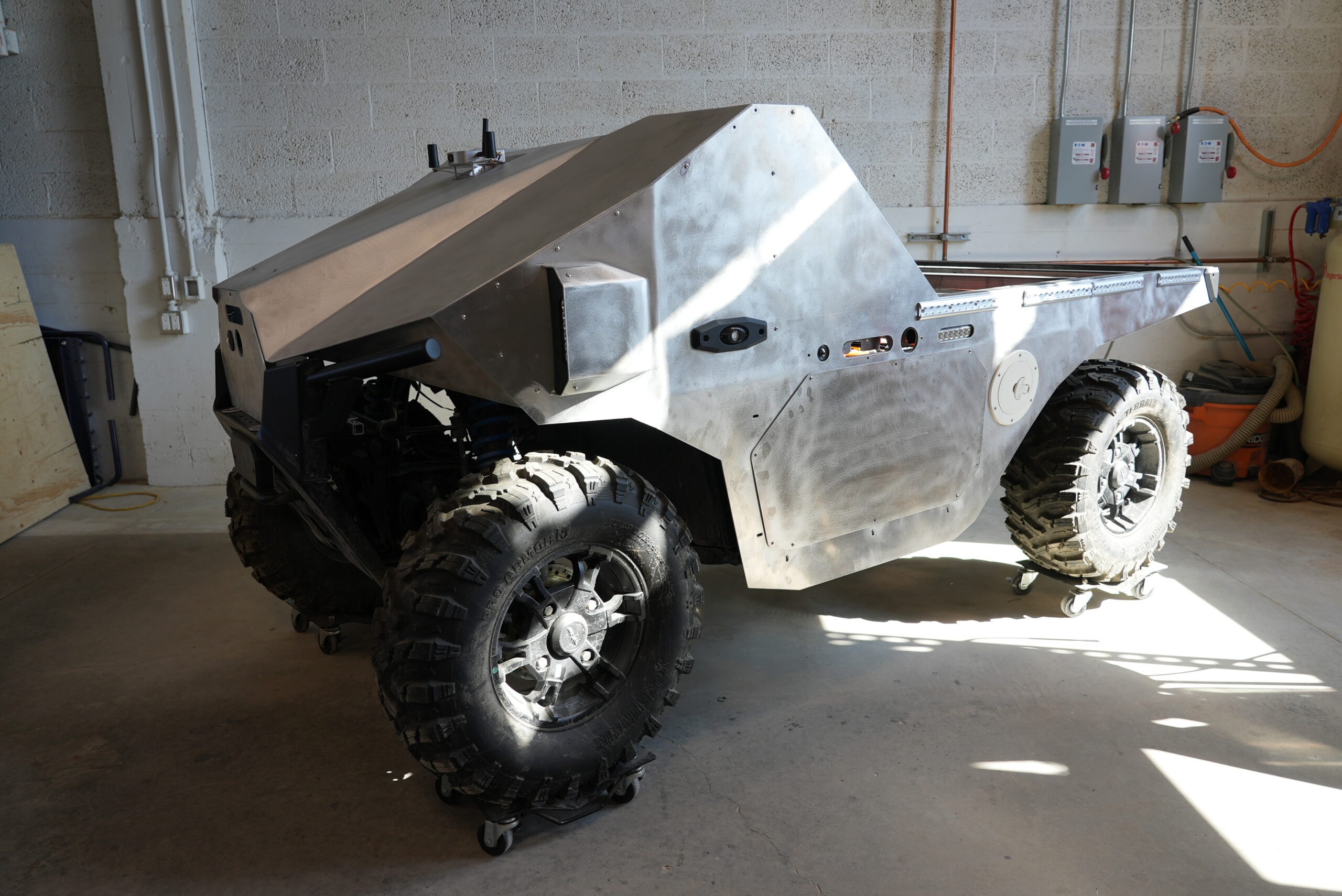
We are also working on a rugged, long-range ground robot that can be tele-operated over long distances. The mechanics for drive-by-wire have already been installed and we’ve been testing this in a battery-only configuration at our Area X.O R&D headquarters.
Because we want to extend the range significantly, a lightweight, low-displacement generator vastly increases range while keeping the propulsion electric-only and minimising carbon footprint.
This particular ground robot is much larger than anything we’ve publicly revealed (though we have built some pretty big ground robots for high-profile technology clients). The greater size, rugged suspension, cargo capacity and long range mean it will be useful for a broad range of use-cases. Yes, it can deliver a significant quantity of supplies – whether to a community, wildfire crews, disaster zones or even front-line troops. It can handle exceedingly rugged terrain, meaning even if infrastructure is heavily damaged (or non-existent), it will reach its destination. It can even be configured to carry an injured human being out of a remote or dangerous location.
We call this new product Obsidian. The photo below was taken in early April of 2026, and significant work has taken place since then.
INDRO’S TAKE
Both of these hybrid projects represent significant advances in aerial and ground robotics for InDro. By significantly extending range and ruggedness, Obsidian and the forthcoming drone open up a far broader array of humanitarian and defence-related use-cases.
“Engineering is all about solving problems,” says InDro Founder and CEO Philip Reece. “We believe this truly efficient, long-range and heavy-lift drone will fill a critical void in getting important supplies to remote and isolated communities, gathering data over long distances and in inclement weather, and also find a role in defence and sovereignty applications. We are equally excited about the capabilities of the hybrid ground robot.”
We look forward to fully unveiling these remarkable products when complete. Stay tuned.