DRONE EMERGENCY MEDICAL RESPONSE PROJECT REACHES REAL-LIFE DEPLOYMENT PHASE

DRONE EMERGENCY MEDICAL RESPONSE PROJECT REACHES REAL-LIFE DEPLOYMENT PHASE

By Scott Simmie


A pilot program for delivering emergency medical supplies – including life-saving devices such as an automated external defibrillator and an Epinephrine auto-injector (EpiPen) – by drone has reached a new milestone.

Between July and December of this year, Peel Regional Paramedic Services (PRPS) will respond to emergencies not only with ground crews – but with an RPAS carrying critical supplies or emergency medication – directly to people in need by drone. This could, in some instances mean the difference between life and death for those in rural, remote and Indigenous communities.

“Our goal is simple: to best support you while paramedics are on their way,” says this Peel Region announcement of the program. “By improving access to these essential tools, we aim to give people the best possible chance of survival.” That announcement is part of a broader outreach to inform the community, elected officials and municipal employees about the program. 

It’s been a long time coming. Research on this project first began back in 2017. It is spearheaded by Dr. Sheldon Cheskes, Medical Director, Sunnybrook Center for Prehospital Medicine.

“This milestone represents the culmination of extensive planning, including geospatial mapping, feasibility assessments, test flights, and multiple research publications,” he tells us.

“To be among the first programs globally to reach this stage is truly significant. It reflects the dedication and collaboration of a large multidisciplinary team, and seeing the project come to fruition is both exciting and rewarding.”

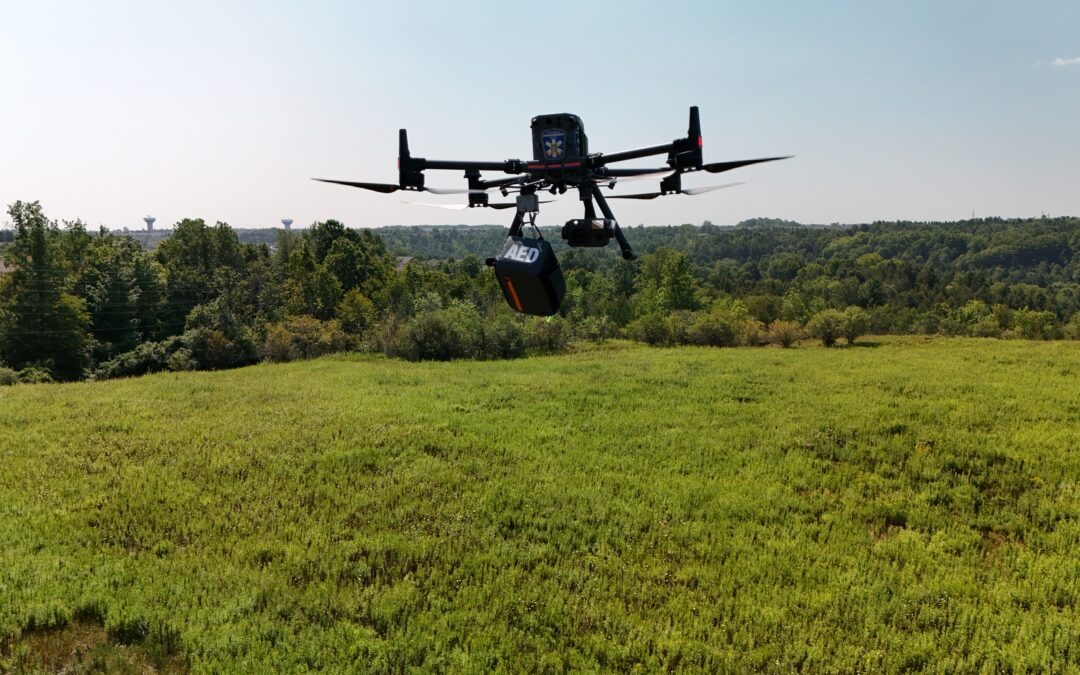
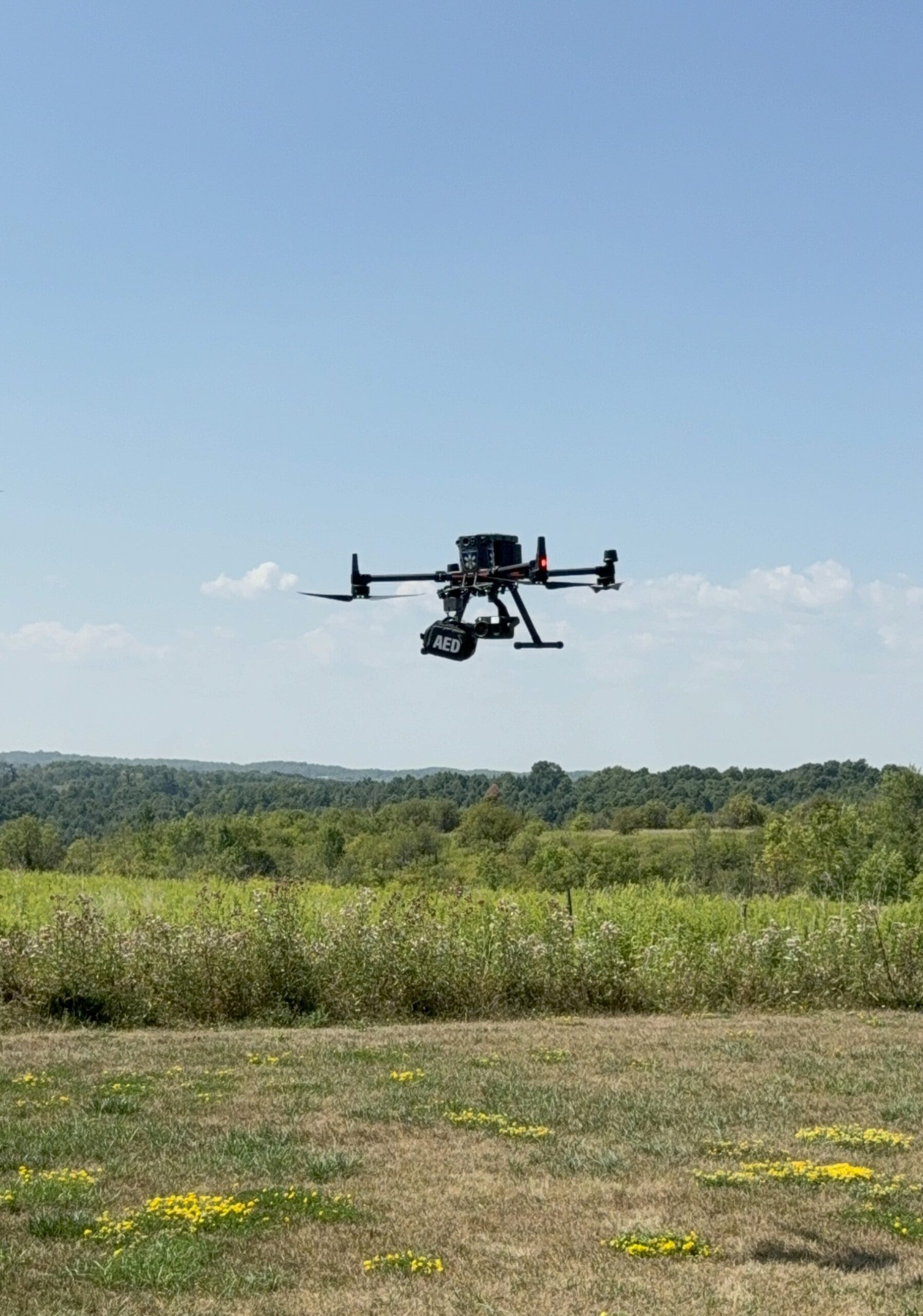
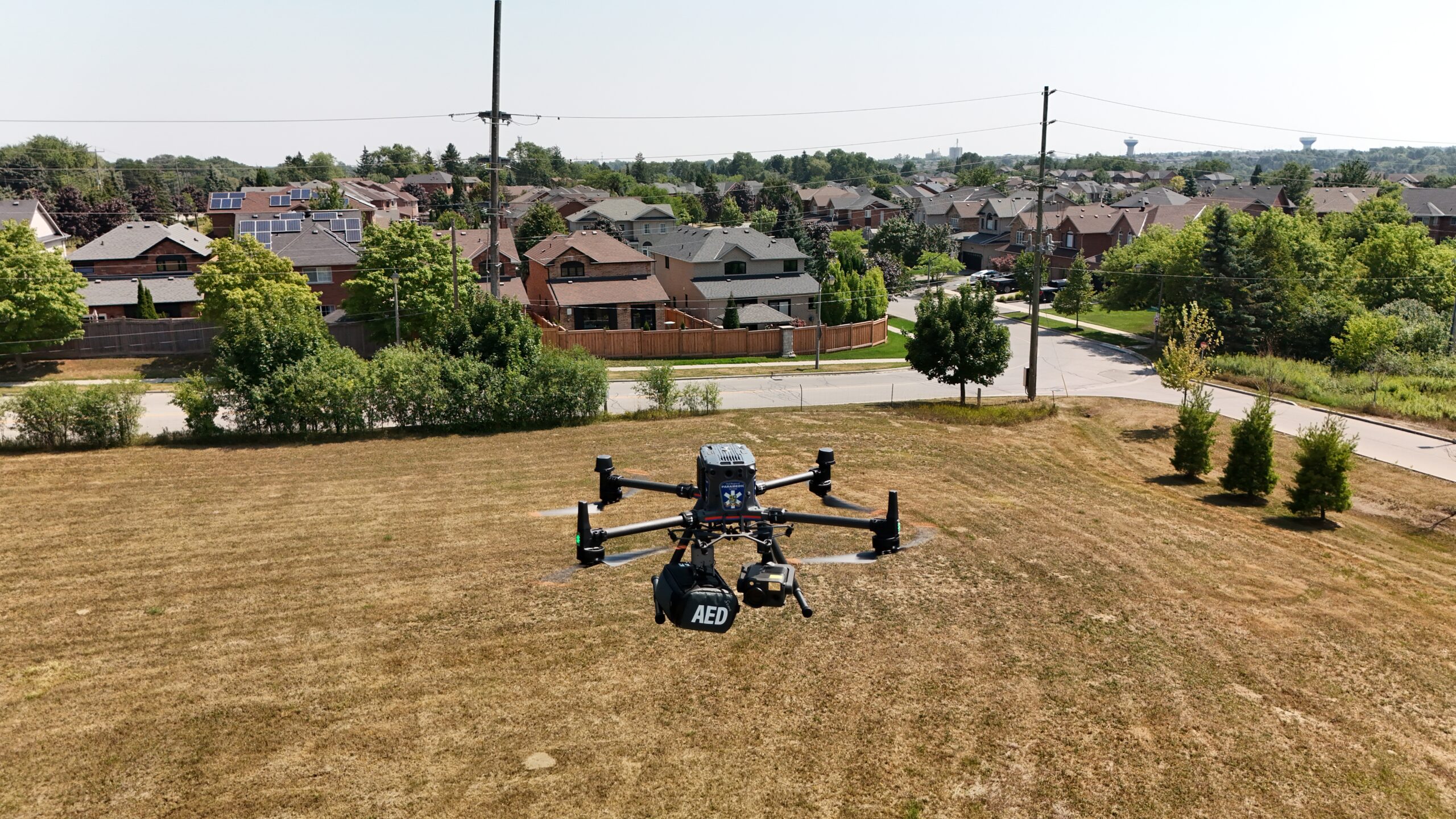
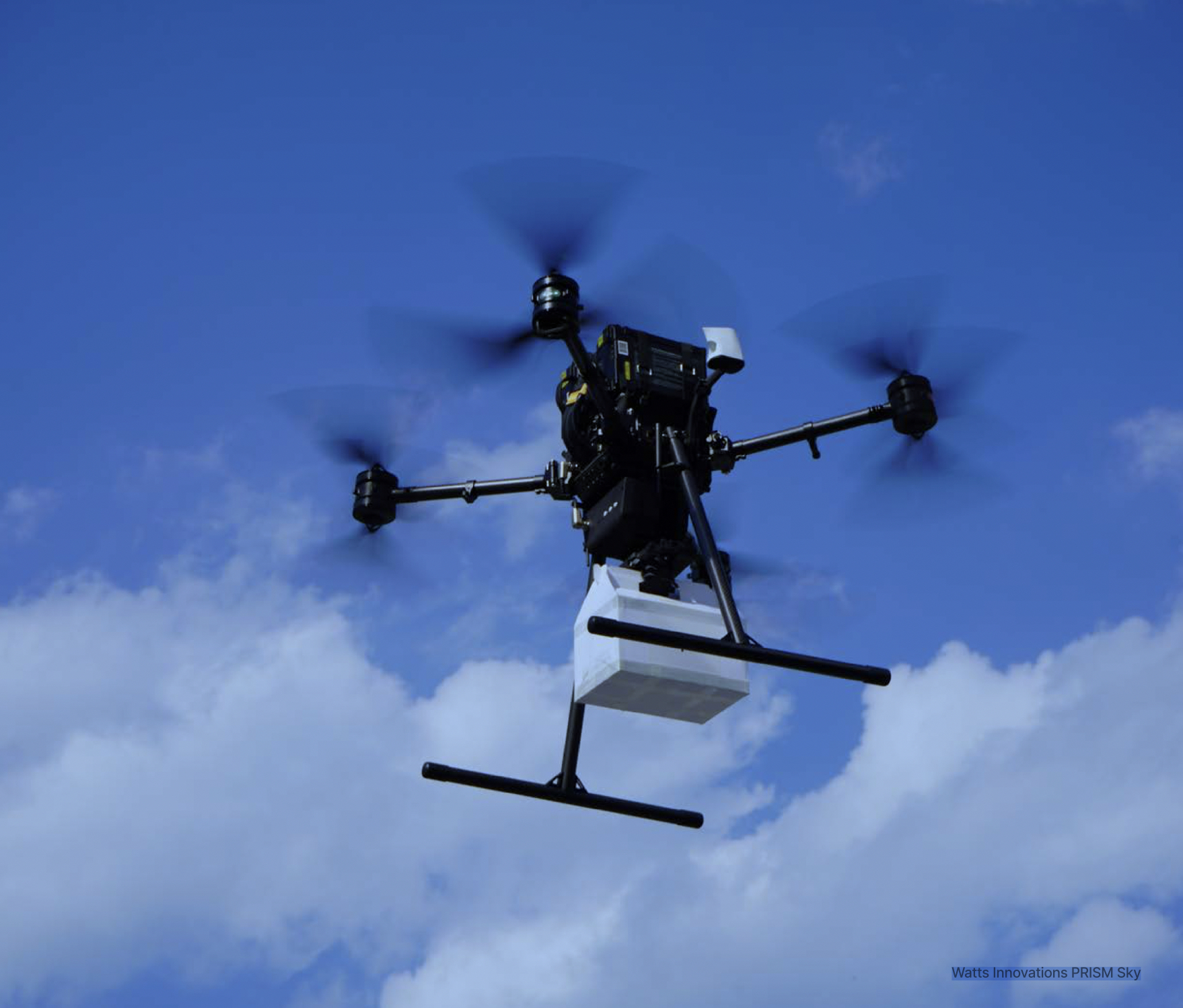
Below: That Peel Regional Paramedic Services drone, and the payload it’s carrying, might well save a life

THE NEED FOR SPEED


It goes without saying it’s better getting medical treatment to someone, particularly in an emergency, sooner rather than later. But in some instances, such as cardiac arrest, a severe allergic reaction or an opioid overdose, every second counts. PRPS will have drones charged up and ready to go, and aims to have them in the air soon after receiving a 9-1-1 call.

“Our medical drones will be equipped with essential, time-sensitive interventions including an AED, epinephrine auto-injector (EpiPen), naloxone for opioid overdoses, and a Stop the Bleed kit,” says Dr. Cheskes, who is also a professor at the Department of Family and Community Medicine and the University of Toronto’s Division of Emergency Medicine.  

“Once a call meets our deployment criteria and GPS coordinates are received, our goal is to launch the drone within 60 seconds.”

While the drone is being dispatched, a ground crew will also hit the road. Previous trials have shown that in rural areas, drones arrive more quickly because they can travel directly in a straight line to where they’re needed. The payload will include not only those critical medical devices/supplies, but something equally important: A phone.

When the drone lands, a phone will be in the AED container. That means, says the PRPS, “support every step of the way. A paramedic will talk to your over a phone, guiding you how to use the equipment until paramedics arrive.”

Paul Snobelin, who serves as a Specialist, Community Safety & Resuscitation Programs with PRPS, oversees the drone side of things and has also been deeply involved with this project.


AN ADJUNCT


During this phase of the pilot project, paramedics will also be dispatched on calls where the decision is made to also send a drone.

“A traditional ground EMS response will remain the standard for all calls,” he says. “Drone deployment is designed to complement – not replace –  this response.”

For Dr. Cheskes, this has been a long time coming. The physician has spent nearly a decade researching the viability of drones for emergency medical responses. In fact, InDro Robotics supported much of this research, where the data showed drones were faster in arriving at rural destinations than paramedics on the ground. 

“The true measure of success, however, will be the lives saved through timely delivery of critical interventions,” says Dr. Cheskes.

“InDro Robotics has been an essential partner from the outset, providing expert guidance across all aspects of the program—from technical consultation to pilot training and navigating the regulatory environment. Their support has been instrumental in helping us reach this important milestone, and this progress would not have been possible without them.”

Below: A PRPS drone, complete with payload

Peel Paramedic Dr. Sheldon Cheskes drone delivery AED

INDRO’S TAKE


We are obviously pleased to see the pilot project reach this stage, where a drone responding to an emergency may well save a life.

“We’ve always been a proponent of using drones for the timely delivery of critical medical devices and supplies to rural and remote locations. In fact, we pursued a model for this back in 2014,” says InDro Founder and CEO Philip Reece. “We commend Dr. Cheskes for his devotion to providing evidence-based data that supports this use-case, and look forward to positive results from this phase of his project.”

You can find the announcement Peel Region made to its community about the program, which includes a useful Q&A section, right here.

Below: A flashback to 2014, when we first attempted AED delivery by drone

InDro part of new rural Indigenous healthcare drone delivery project

InDro part of new rural Indigenous healthcare drone delivery project

By Scott Simmie


InDro Robotics is pleased to be part of a newly funded research initiative that will explore delivering healthcare supplies by drone to three separate rural Indigenous communities. The project’s full title is “Implementing Drone Technology in Rural Indigenous Healthcare Systems: The Drone Transport Initiative.”

This news is actually the latest component of a multi-pronged initiative that will examine the need for and effectiveness of such deliveries, how to best ensure the most comprehensive benefits for communities in need, incorporate best practices from a multidisciplinary team – and even develop and test new technologies. The ultimate long-term goal is to develop an efficient and safe long-range drone delivery system that could be deployed at scale to enhance healthcare in remote Indigenous and other isolated communities.

The funding for the newest phase comes from Canada’s New Frontiers in Research Fund (NFRF). The Fund typically focuses on “interdisciplinary, international, high-risk/high-reward and fast-breaking research.”

There’s no question that rural Indigenous communities face barriers to access to the healthcare most Canadians take for granted. As the NFRF announcement points out: “Delivering medical supplies to rural Indigenous communities in Canada presents significant challenges, leading to health inequities. Drones offer a promising solution by transporting medical supplies, potentially bridging these gaps in healthcare access. By doing so, this project addresses these inequities and supports the Truth and Reconciliation Commission’s Calls to Action.”

The Principal Investigator of this portion of the project is Dr. Femke Hoekstra (PhD), Assistant Professor at UBC’s Department of Medicine, Division of Social Medicine in the area of Implementation Science. Her research focuses on improving “health services and care for equity-deserving groups in rural, remote and isolated communities.” She holds multiple other related qualifications/positions – and is a perfect fit to oversee the research.

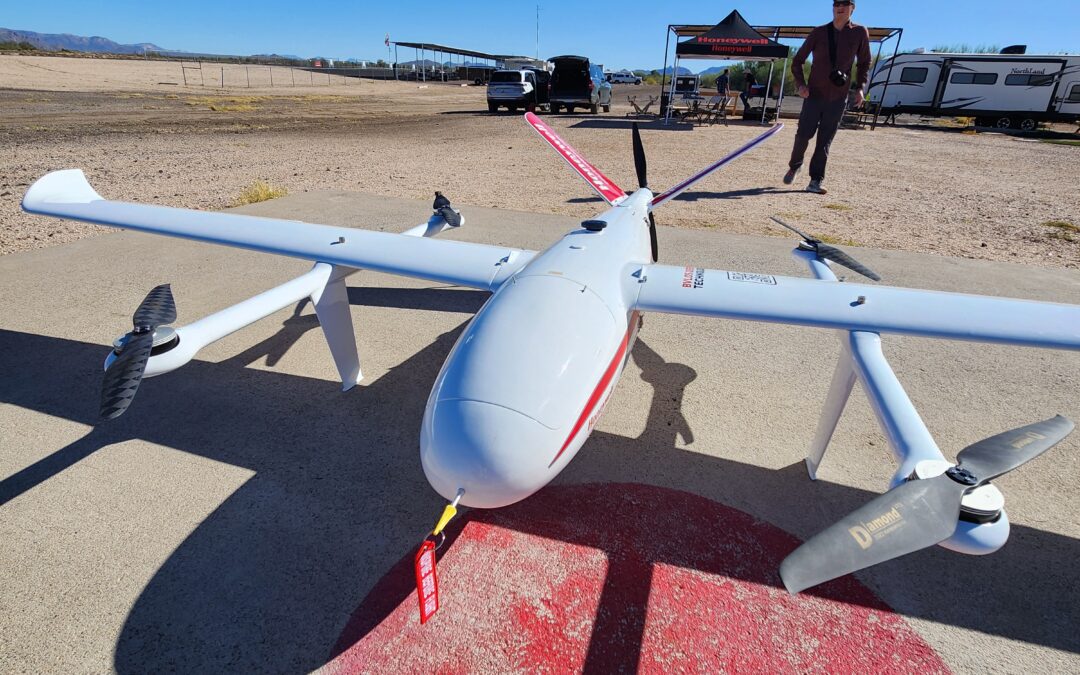
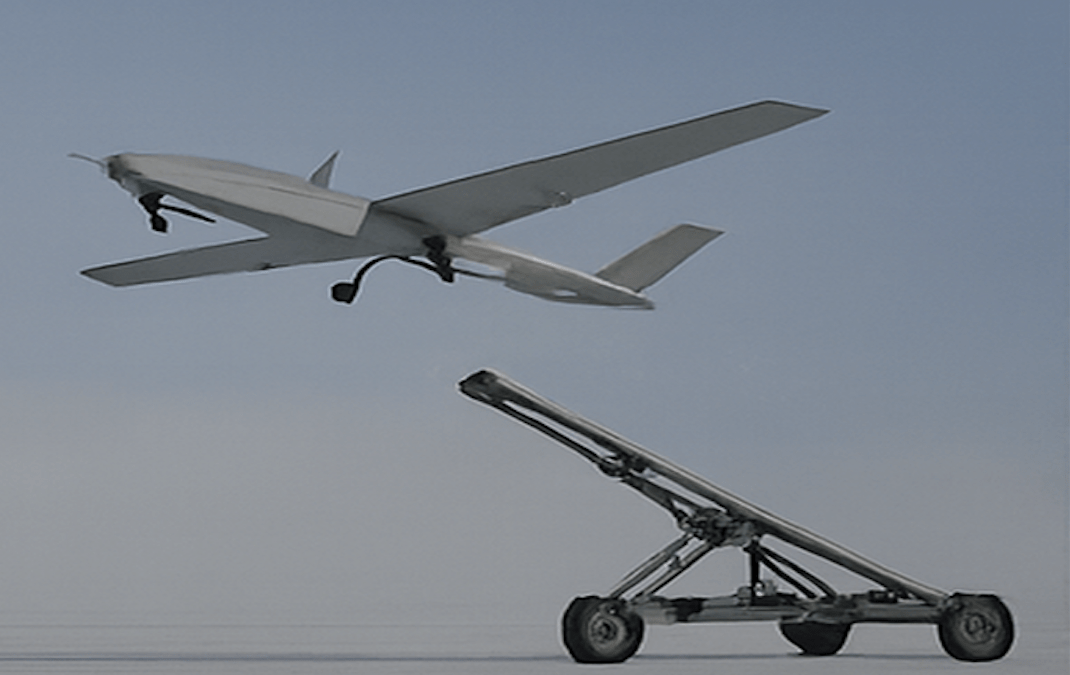
Above: The Skylane M350, a long-range VTOL InDro is evaluating for use in the project. Below: A previous InDro initiative delivering COVID test supplies to an isolated First Nations community during the peak of the COVID19 pandemic

THE DETAILS


Particulars of this new NFRF funded project are now public and available by searching “drone” on this page. The overview makes it very clear this is not simply a delivery project – but a comprehensive research initiative with many medical experts, Indigenous and regional partners, subject matter experts and more. It’s about a *lot* more than simply shuttling supplies by drone. Rather, you could think of it as the early phase of developing a workable system that will attempt to address and unify the many variables required to make all of this work effectively.

Partners in the project include an interdisciplinary team of researchers, health administrators and professionals, members of rural Indigenous communities, industry partners and key decision makers. As the NFRF announcement points out:

“Insights from our initial demonstration phase, environmental scans, and community needs assessment will inform our drone delivery model. Building relationships with the three rural Indigenous communities will be crucial for success, as their views and needs will guide the work.”

The initial phase of the project will focus on communities in northern British Columbia, including the Village of Fraser Lake and Stellat’en First Nation – both remote and a considerable distance west of Prince George. The goal is to provide reliable patient care by moving supplies, lab samples, and medicine between facilities and even directly to patients’ homes.

OBJECTIVES

The funding announcement outlines three specific objectives:

  • Co-develop an innovative model for using drones to deliver medical supplies in rural Indigenous communities
  • Co-implement the use of drone technology in three rural Indigenous communities
  • Co-evaluate partners’ experiences, outcomes and impacts.

Once the preliminary research is complete, InDro Robotics will be an industry partner carrying out the drone deliveries. These will be long-duration, low-risk BVLOS flights over challenging terrain – and where weather conditions could be very different 50 kilometres out from the takeoff point. InDro’s Chief of Flight Ops, Dr. Eric Saczuk, recently met in Prince George with about 30 people involved with the project. To say he was impressed would be an understatement.

“I was blown away at how passionate people were, how serious they were and how excited they were. I really felt like this people are visionaries. They’re definitely looking into the future and that appeals to me a great deal. I would love to positively contribute to that effort on that basis alone.”

There’s a lot of work before the first flights – which will involve a fixed-wing VTOL – take place. There are many considerations on the healthcare and community side of things, ensuring Indigenous partners have the main voice in determining the most pressing needs. Community healthcare workers will have input too – and researchers will want to create a framework so that all of this can be critically assessed for best outcomes.

And that’s before we even get to the drone side of things. There’s topography, range and payload to consider, weather challenges, Detect and Avoid technologies, contingency landing spots – and so much more. In fact, as part of a companion project, InDro is developing ground-based stations that will pepper the route to relay local weather conditions, scan for low-flying aircraft – and relay that data both to the drones and a Mission Control where an operator can someday monitor multiple simultaneous deliveries.

Sound like a lot of work? It will be. And that’s why Dr. Saczuk absolutely embraces it.

“It’s challenging. It’s something that will certainly move the needle forward in terms of establishing what needs to happen in order to operationalize these types of deliveries.”

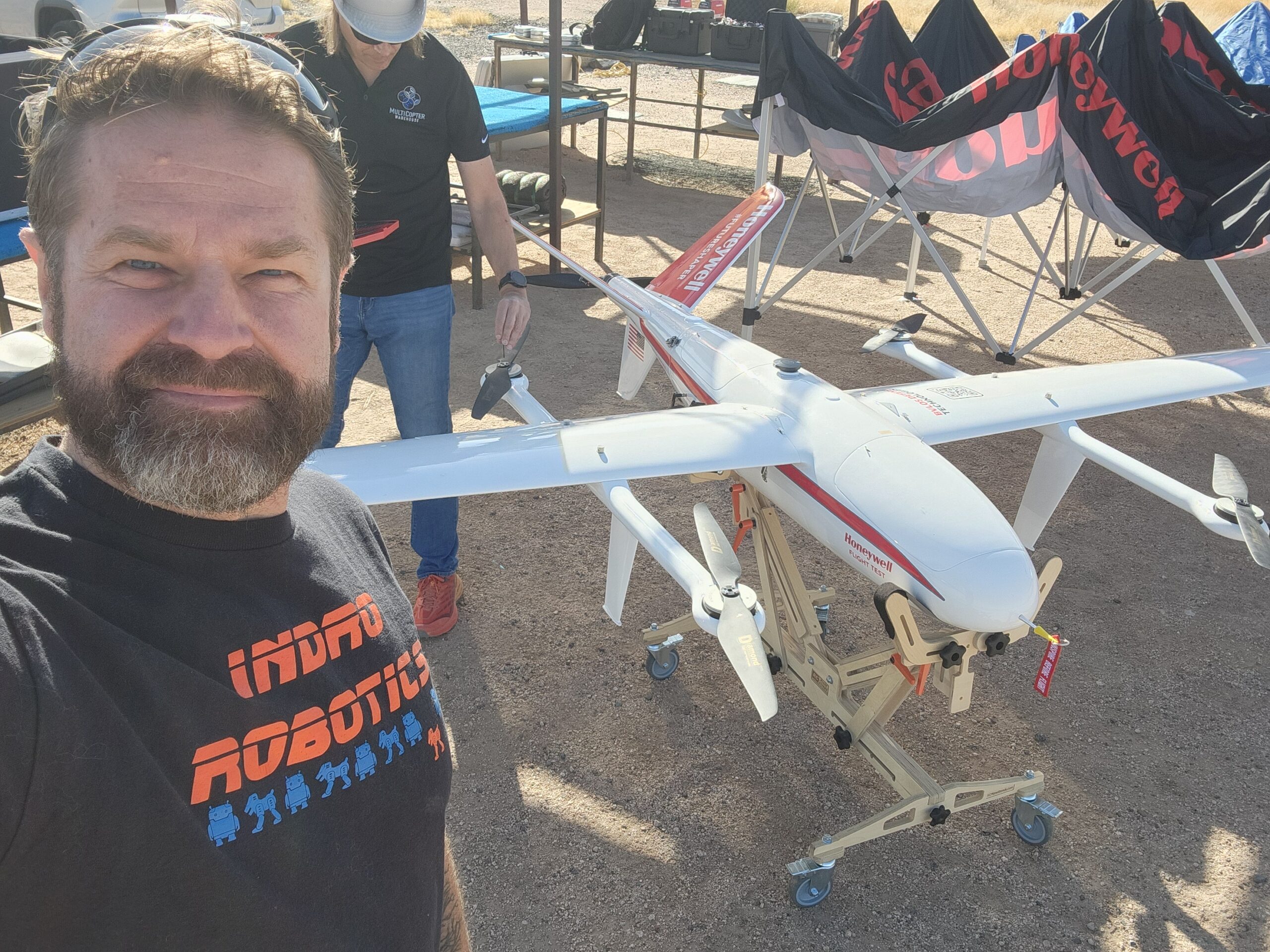
Below: (1) The communities include the Village of Fraser Lake and Stellat’en First Nation, with flights to and from Prince George. (2) Dr. Eric Saczuk alongside the Skylane M350 VTOL, a drone we are evaluating for use in the project 

UBC Drone Delivery Village of Fraser Lake
Skylane M350 VTOL Eric Saczuk

INDRO’S TAKE


Drone deliveries aren’t new. There are huge success stories in rural healthcare deliveries, with Zipline achieving legendary accomplishments rapidly moving critical medical supplies in Africa. But when it comes to Canada, particularly communities most in need, there has yet to be a carefully thought-out long-range BVLOS system that reliably and consistently serves communities with pressing needs at scale. It takes more than a drone company to execute such a grand vision – it takes a village, and a multidisciplinary one at that.

There is now such a village. And we are very excited to be a member.

“We hear about various pilot projects, about instances where people try things out,” says Dr. Saczuk. “But I think this has the potential – out of all the projects and products I’ve been involved with – to really establish it as an operational service that could actually overcome some of those gaps and barriers to the delivery of medical services to remote First Nations communities.”

As mentioned, there are other partners onboard this ambitious project, with each carrying out interconnected and synergic roles. These include the CAN Health Network and INSAT – the Institute for Sustainable Aviation Technology. You’ll be hearing more about their roles later.

This is an important, long-term project which we hope will result in immense benefits for multiple communities. We look forward to keeping you updated along the journey.

InDro, UBC partner on medical drone deliveries to remote communities

InDro, UBC partner on medical drone deliveries to remote communities

By Scott Simmie


InDro Robotics is pleased to partner with the University of British Columbia on a pilot project that will use drones to deliver critical medical supplies to remote communities in that province.

It’s a use-case InDro has long supported. In fact, during previous trials we have securely delivered prescription medications to Gulf Islands in conjunction with Canada Post and London Drugs. It was Canada’s first-ever BVLOS RPAS delivery of its kind. That, however, was a short-term demonstration. The UBC partnership is long-term and has broader goals.

“There are multiple aspects to this project,” explains InDro Robotics Founder and CEO Philip Reece. “In addition to delivering critical medical supplies, we’ll be evaluating what kinds of cargo can be delivered, how drones perform in year-round weather, and ultimately how beneficial this service is for communities and local health-care providers.”

Initially, the project will focus on transporting personal protective and laboratory test swabs before expanding to include prescription medications and other supplies – including blood products. InDro has expertise in this field as well, carrying out trials in Montreal in 2019 to deliver simulated blood products by drone between hospitals. The work required strict temperature controls to ensure viability.

All of this is very much up our alley. In fact, InDro carried out deliveries of COVID test supplies during the height of the pandemic to a remote First Nations community:

LOGICAL, EFFICIENT


You don’t need to look very hard to find examples of where drone delivery of medical supplies has been hugely successful. The most well-known is Zipline, which has logged more than 100 million miles (160M km) delivering vaccines, blood products and other medical supplies in Africa and has recently expanded into some US locations.

The philosophy here is simple: It’s much faster and more efficient to move products to patients – rather than vice-versa.

“For generations, we’ve had a medical system where we tend to move patients to resources, as opposed to resources to patients,” explains Dr. John Pawlovich, the Rural Doctors’ UBC Chair on Rural Health, in this UBC post on the project.

“It’s the same problem around rural Canada and around the world—resources that patients need are either in short supply or they don’t exist in rural, remote or Indigenous communities.”

Dr. Pawlovich and his team are working closely with the Village of Fraser Lake, located west of Prince George, as well as with the Stellat’en First Nation. Both of these qualify as isolated communities, where it’s not always easy to get critical supplies quickly.

“Based on the isolated location of our community and the needs of our residents, drone transport may enhance our access to COVID-19 testing and medication without travelling and endangering other members of our community,” says Chief Robert Michell of the Stellat’en First Nation.


NOT JUST PATIENTS


It’s not simply about making things easier for patients. As we learned with shuttling COVID test supplies to and from Penelakut Island, it can also help healthcare providers. In that example, it meant a community clinic worker no longer had to pick up and deliver these supplies in person – a nearly full-day endeavour that took them away from helping patients in their community. Instead, in coordination with InDro Ops, they simply loaded or unloaded a drone that landed outside their clinic.

And, says Dr. Pawlovich, there’s no question the selected communities could benefit from a boost in healthcare access.

“Residents of rural, remote and Indigenous communities face much greater health-care disparities than other residents of BC,” he says. The UBC article states that life expectancy is lower and that people in these communities have reduced access to specialty care, imaging and laboratory investigations.

“These inequities predate COVID-19. They’ve been amplified during the pandemic and continue to exist. We’re looking at how technology can start to shrink and close that inequity gap.”

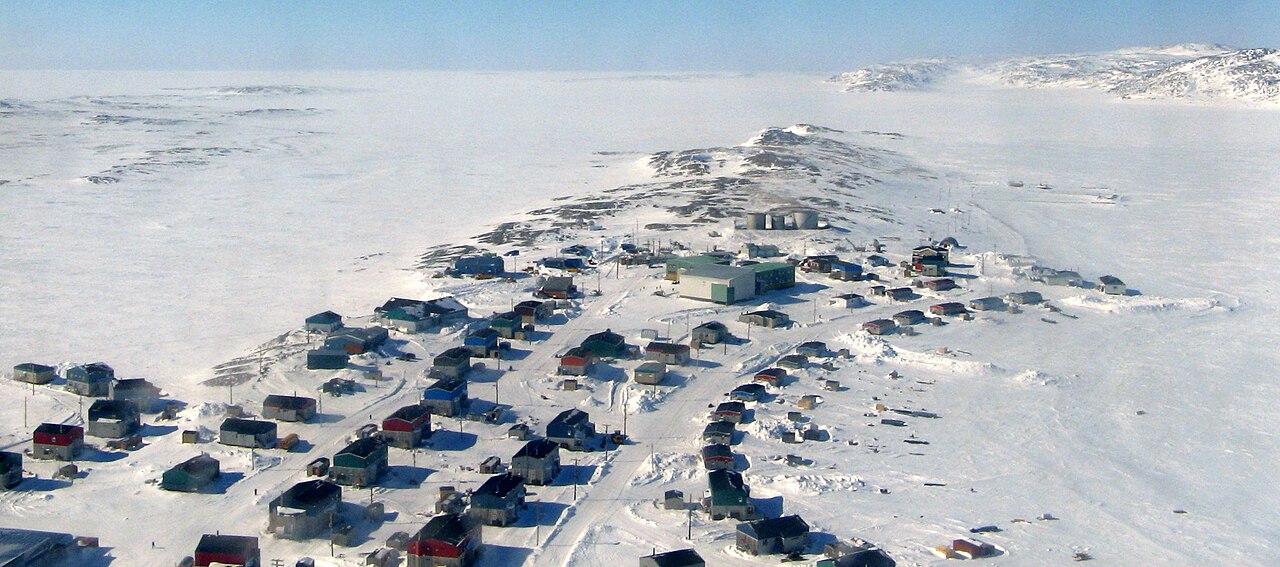
Below: Stellat’en First Nation, which is close to the Village of Fraser Lake. The drone deliveries will be coming from Prince George.

UBC Drone Delivery Village of Fraser Lake

INDRO’S TAKE


This isn’t our first foray into the world of healthcare and drone delivery. But it is our first long-term project in the field.

“There’s a lot we’re going to learn with this research,” says InDro Robotics Founder and CEO Philip Reece. “As it progresses, we hope to expand the range and payload of these missions to best benefit patients and healthcare providers. Over time, it’s our hope to be able to respond even to emergencies, getting supplies to those who need them most in a timely fashion.”

Flights for the new project will commence in 2026 – and we’ll be sure to update you!

Consumers ready for drone delivery: Auterion

Consumers ready for drone delivery: Auterion

Consumers love their deliveries.

Whether it’s from hugely popular Amazon or a local retailer, there’s been an explosion in demand for deliveries since the COVID pandemic took hold. People have largely embraced the convenience of a truck pulling up and dropping off goods – despite the carbon footprint of Last Mile deliveries.

But what about drones? Are consumers ready to embrace drone delivery? According to the drone Open-Source company Auterion, nearly half of US consumers are indeed ready to start receiving goods from above.

Auterion

Auterion is a major force in the drone world. In a nutshell, it provides “an ecosystem of connected drones, payloads, and apps within a single easy to use platform based on open-source standards.” In other words, Auterion software simplifies the workflow of all aspects of drone operations. Auterion works with more than 100 drone manufacturers – and that number is growing.

Because its software is used by so many end-users, the company thought it would be a good idea to take the pulse of consumers when it comes to drone deliveries. So it surveyed more than 1000 people to produce a report entitled “Consumer Attitudes on Drone Delivery.”

Its findings? Americans are ready.

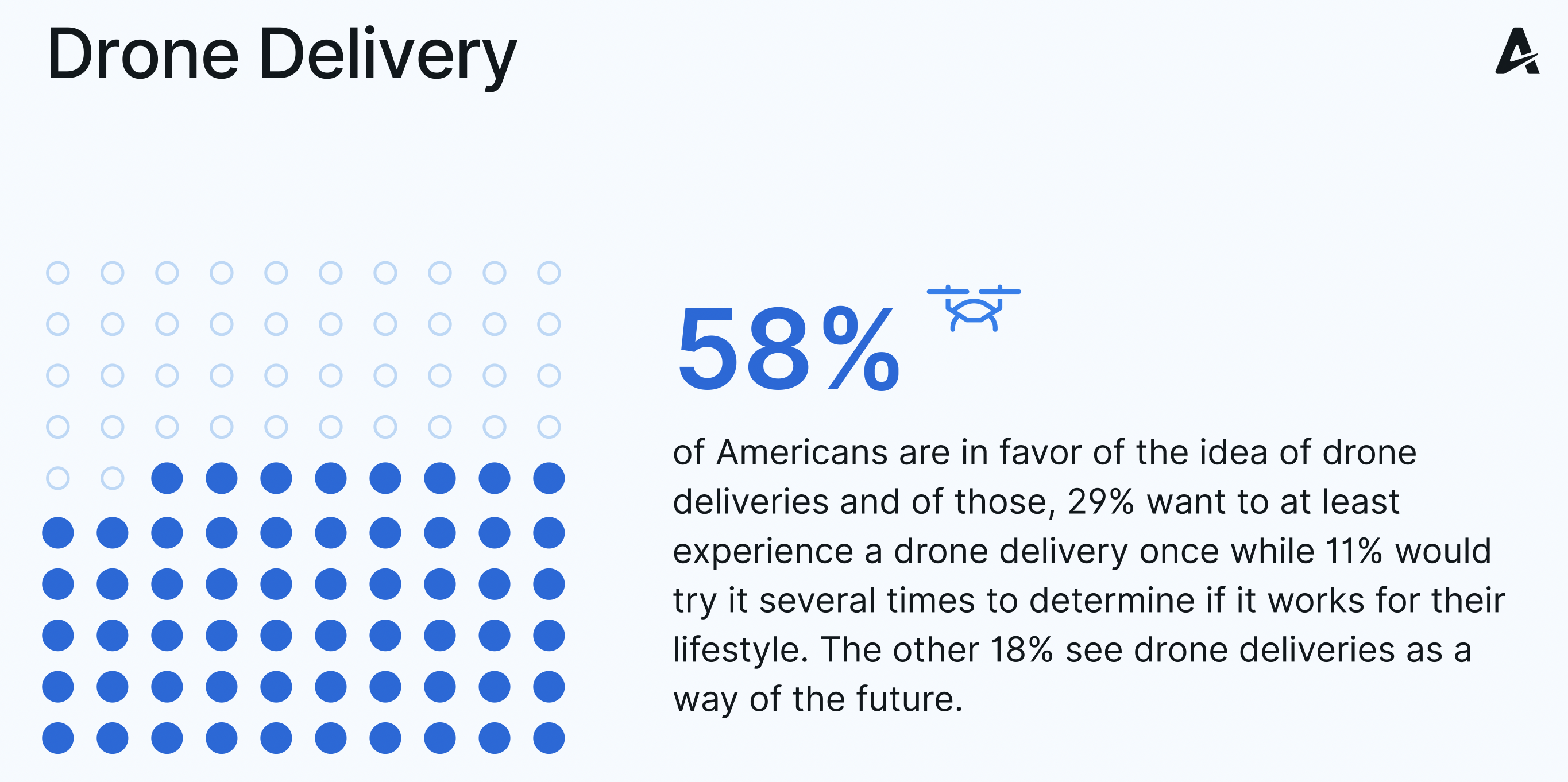
The report found “a solid majority of Americans (58%) favor the idea of drone deliveries and even more (64%) think drones are becoming an option for home delivery now or will be in the near future. With more than 80% reporting packages delivered to their homes on a regular basis, the survey finds that Americans are generally ready to integrate drone delivery into daily life.”

And of the 64 per cent who think drones are an option for home delivery, here’s the breakdown for when they believe this will become a viable option:

  • 32% think it’s possible now or within the next 1 to 2 years,
  • 18% say within 3 to 4 years, and
  • 14% within 5 to 10 years

While that’s encouraging, the Auterion report also found some hesitancy.

Auterion Drone Delivery

Not everyone is enthused


There is some hesitancy. In fact, 43 per cent of those surveyed feared that the drone might break down during delivery. Other concerns include:

  • 39% – the drone will deliver my items to the wrong address,
  • 38% – if something happens to the drone, I won’t get a refund,
  • 37% – that my items will get ruined by the travel,
  • 35% – that my items will be left unattended making stealing easier for porch bandits, and
  • 32% – that the sky will be cluttered with ugly/noisy technology.

On that last concern, Alphabet’s WING discovered during its early trials in Australia that there was significant opposition to the noise produced by its drones. (The fact WING drones have 14 propellors might have played a role here.)

But there’s ongoing work on reducing drone noise levels, including some innovative new propellor designs. As for some of the other concerns raised, Auterion CEO Lorenz Meier says drones are ready for the task.

“Cargo drones are now able to understand the environment with precision, to communicate through control software in a common language, and to predict safe landing spots in real time for fast package delivery, as well as emergencies and other situations,” says Meier in the report.

“While traffic is jammed and fuel prices are volatile, air space is massive and becoming more accessible. Reducing reliance on gas-powered delivery vehicles with tough, environmentally friendly cargo drones is ultimately a safer, more flexible and more cost-effective approach to delivery.”

The technology is ready. So too, it appears, are most American consumers.


Drone Delivery Canada

InDro’s Take


InDro played an early role in proving drone deliveries in Canada. The company has shuttled presciption medications to remote locations, transported simulated blood products between hospitals – and even delivered COVID-19 testing supplies for a island-based First Nations community during the peak of the pandemic. InDro Robotics was also the first company in Canada to receive a Cargo License from the Canadian Transportation Agency.

While we acknowledge there’s demand for drone deliveries, our own view is that this technology is perhaps best initially served by delivering urgent medications or other critical supplies to remote or isolated communities and homes.

There’s certainly an argument to be made on the environmental benefits of drones for Last-Mile delivery. But delivering coffee and bagels – though convenient for consumers – could be disruptive to neighbourhoods. We suspect city-dwellers are likely to be more accepting of drone deliveries when the cargo is critical, and not incidental.

Ultimately, and with reductions in noise, there will likely be room for both.

The Auterion survey contains far more insights than we were able to capture; you can read more and download the report here.