

By Scott Simmie
This year’s GCXpo – the showcase of next-generation technologies in the nation’s capital – was the biggest ever.
More than 2400 attendees registered for the event, which included exhibits from 100+ firms. Organized by Invest Ottawa (which owns and operates Area X.O, the exhibit site) and with the support of the Federal Government and others, it was a clear success.
At last year’s event, Defence Minister David McGuinty first flagged that a new Defence Investment Strategy was on its way. The subsequent release of that policy, which commits close to half a trillion dollars in defence spending between now and 2035, meant this year’s GCXpo saw a greater emphasis on defence and other dual-purpose technologies.
The Honourable David McGuinty was here again, kicking off the event with a short keynote address.
“Everyone here today understands how quickly the security environment is changing,” he said.
“Technology is changing the battlespace at extraordinary speed. The cycle between innovation, deployment and countermeasure is getting shorter. Supply chains are under pressure, and the demands on our people and equipment are growing.”
McGuinty said we cannot respond to this environment with systems designed for a different era.
“Ukraine has shown us how quickly militaries must be able to adapt. Uncrewed systems, counter-drone technologies and electronic warfare have become central to the fight. And the pace of innovation has been breathtaking and relentless,” he said.
“The lesson for Canada is clear: Military advantage increasingly depends on how quickly we can test, adopt and scale it – scale the technology.”
Many of the companies at GCXpo came here to signal they are ready for that challenge.
Below: Defence Minister David McGuinty, followed by a counter-UAS interceptor designed in Ukraine that will be built in Canada. Above: An electro-magnetic catapult for launching large fixed-wing drones, from Cypher Robotics


DEFENCE AND AGRITECH
The sprawling exhibit area was divided into two zones: One for dual-purpose and defence technologies, and the other for agricultural technologies. In a changing world, even the agriculture technologies took on a new significance.
“Agri-tech is a pillar of Canadian sovereignty, and it is about far more than food,” says the GCXpo site. “It covers secure supply chains, resilient rural infrastructure, and dual-use technologies that move between the field and other sectors.”
The Farm Credit Canada (FCC) Agri-Tech zone was busy, and included:
- Robotics and autonomous machinery for use in the field
- AI and analytics for crop health/yield, livestock and resource management
- New and sustainable production techniques, some of which take into account climate change
There were many impressive new solutions on display and the Agri-Tech area was busy, but there was arguably more buzz around the second zone.
ACCENTURE DEFENCE AND DUAL-PURPOSE ZONE
Dual-purpose technologies are ones that can be used in both civilian and defence applications. For example, the new InDro Obsidian – a hybrid-electric all-terrain vehicle – could be used to transport emergency supplies in a disaster scenario, or move critical goods to the front lines on a battlefield.
And the TALOS – the world’s longest-range hybrid-electric ground vehicle with a range of 7,000 kilometres – could be used for multiple use-cases in civilian or military applications. The vehicle, which was originally designed to be driven by humans, is currently being transformed by InDro into a robotic vehicle capable of remote teleoperation or even fully autonomous missions. From far north sovereignty and reconnaissance patrols through to transporting critical supplies in a disaster scenario, TALOS is truly a dual-purpose device.
But, in a sign of how quickly the geopolitical scene has shifted, there were many exhibitors whose products and innovations are built solely for military applications. Several companies were displaying drone technologies specifically for the battlefield. These included First-Person View drones capable of carrying explosives designed for taking out larger drones in flight or targets on the ground. One firm had very small but high-speed drones intended for battlefield reconnaissance. Multiple companies had military-style vehicles designed to be remotely operated for moving supplies without putting a human being at risk. There were also several firms with Intelligence, Surveillance and Reconnaissance (ISR) drones.
Some of these solutions will find a place in Canada’s defence supply chain; others will not. The challenge will be to find solutions that won’t quickly become outdated. Though Ukraine is not the only conflict on the planet, the pace of innovation in that war has been astonishing – and was noted more than once by Minister McGuinty. Today’s cutting-edge drone solutions in that war will likely be eclipsed six months from now.
Below: Gallery showing the InDro Obsidian, two images of InDro TALOS, and InDro Founder and CEO Philip Reece
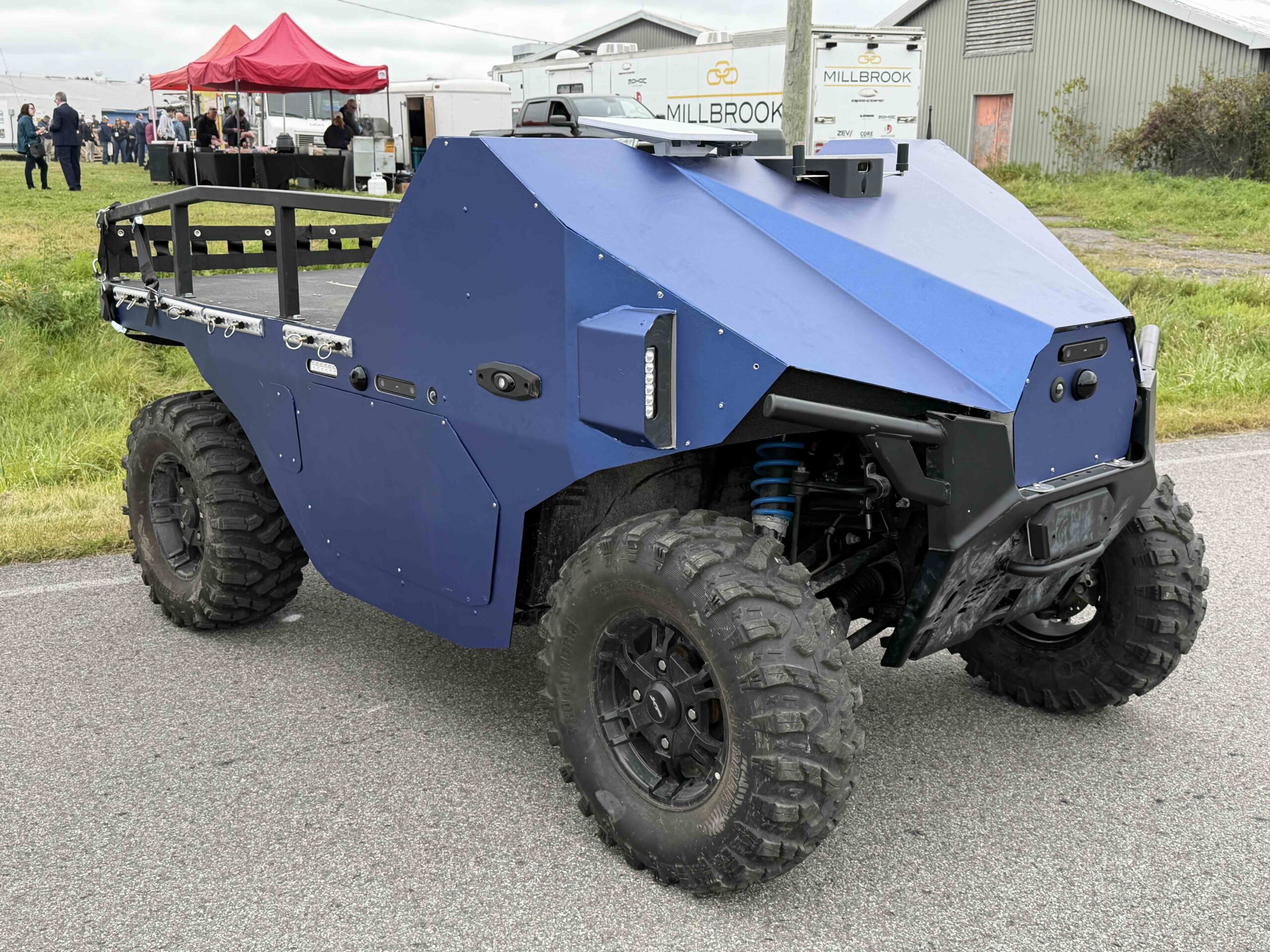
InDro Obsidian
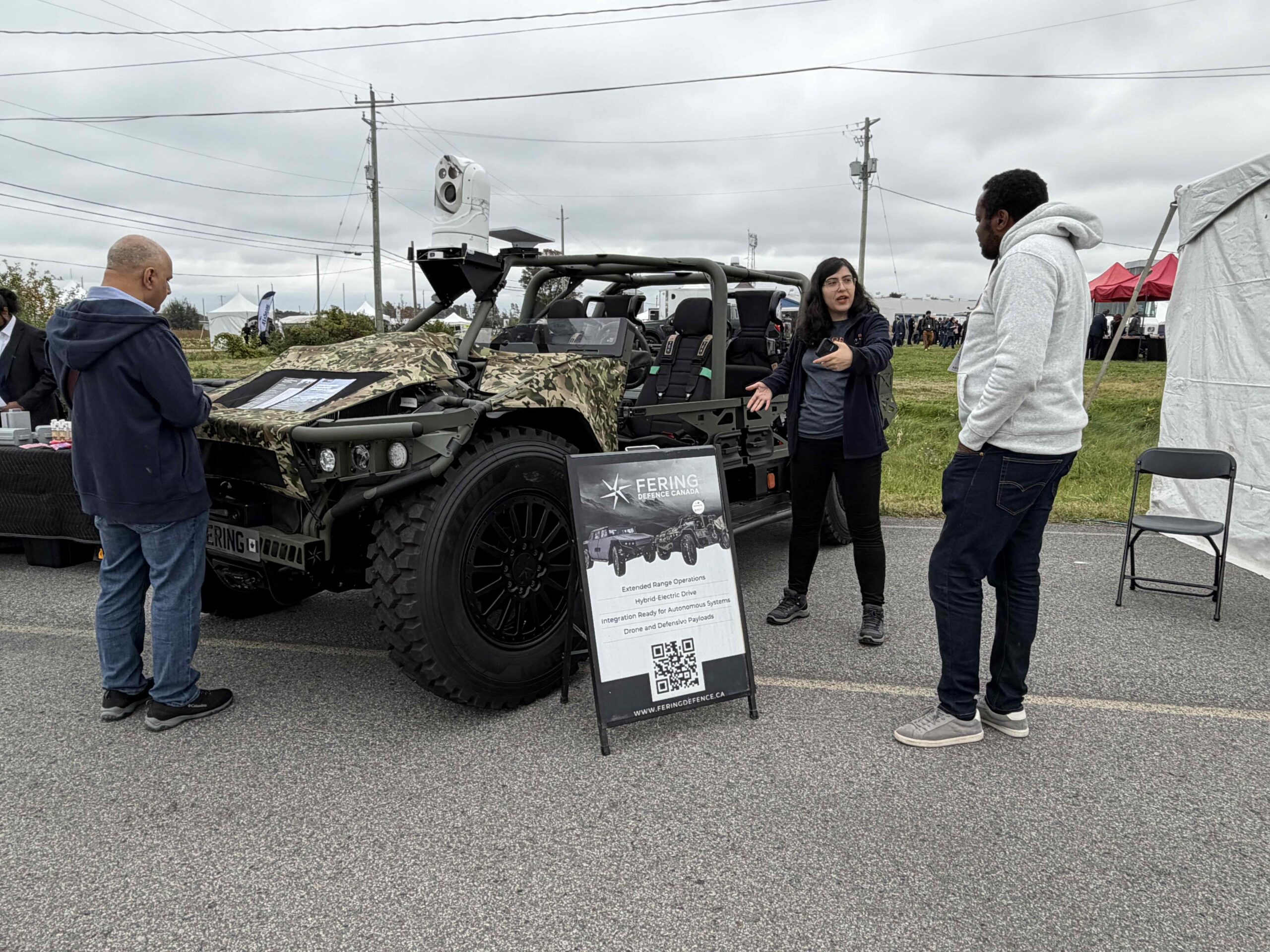
INDRO TALOS EXHIBIT
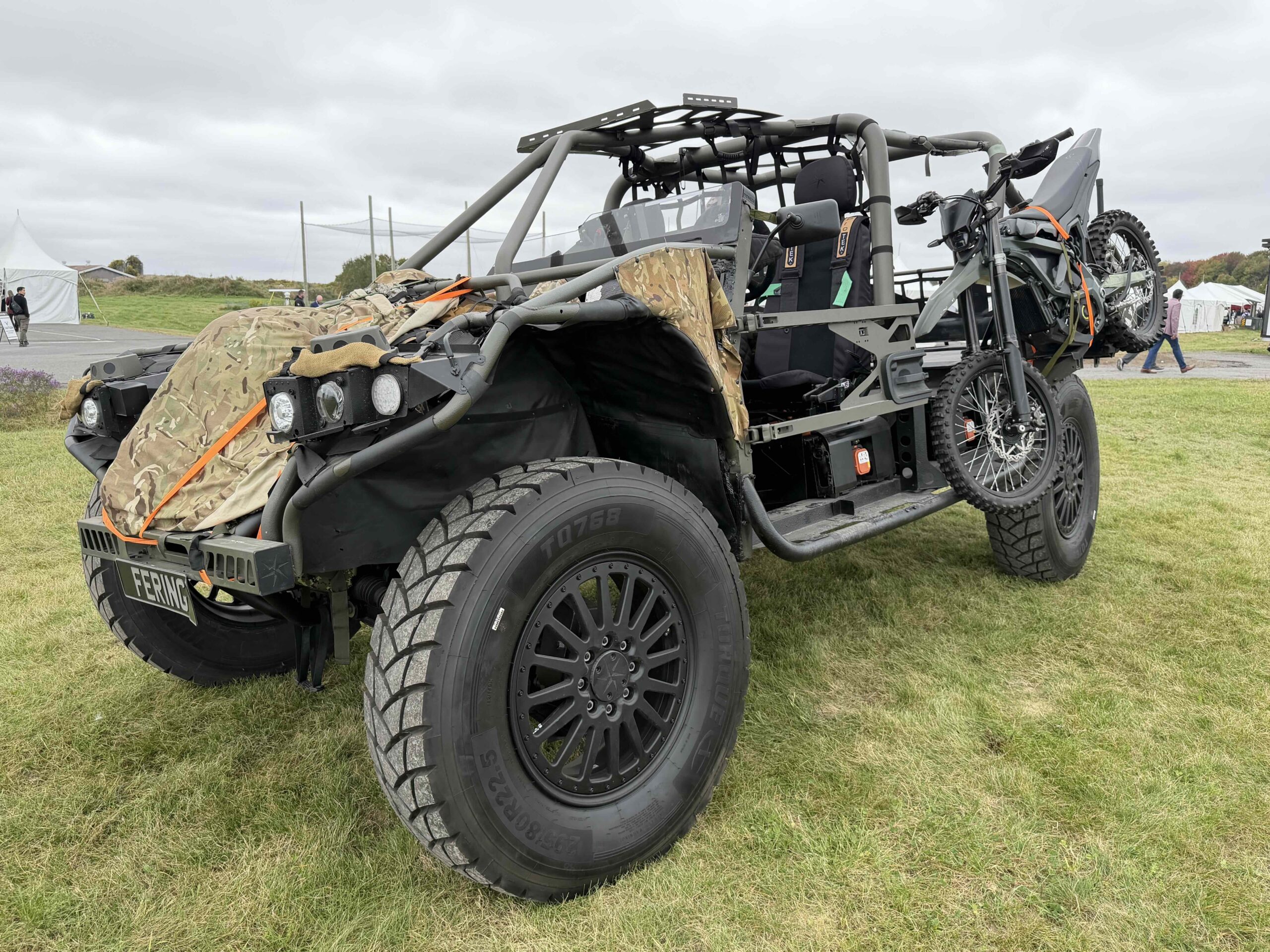
INDRO TALOS SIDE

Philip Reece
INDRO’S TAKE
Since its inception as “TCXpo” – where the TC stood for Transport Canada – InDro has participated in every one of these events. We’ve watched this exhibition grow and evolve over time, with 2026 breaking all previous years for attendance. We anticipate the greater emphasis on dual-purpose and defence is a trend that will continue for the foreseeable future.
“The Federal Government’s Defence Industrial Strategy is a prudent and clear path toward greater reliance on Made-in-Canada solutions,” says InDro Founder and CEO Philip Reece.
“The challenge for Canadian companies will be in iterating solutions that stay ahead of the technology curve and provide truly useful, long-term utility for the Department of National Defence. InDro is proud to contribute to those solutions, along with many other dedicated Canadian companies. Collectively, we are dedicated to innovations that will help ensure Canadian sovereignty and preparedness.”
We’ll have more on TALOS in the near future. Stand by.