New NAV CANADA study projects massive growth in drone/AAM use

New NAV CANADA study projects massive growth in drone/AAM use

By Scott Simmie


Those in the drone sector in Canada have seen incredible growth in recent years across multiple areas: Technology, use-cases, economic benefits and regulatory advancements. Many in the industry have long said ‘Drones are the future’ – or words to that effect.

Now, a new study commissioned by NAV CANADA backs up that belief with some astonishing projections. The report forecasts a growth in the number of drones in Canada from 24,000 in 2024 to 507,000 by 2045. And with those numbers come some impressive economic figures.

“The RPAS and AAM sectors contributed between $2.4 billion and $3.6 billion CAD to Canada’s GDP in 2024, supporting more than 30,000 jobs nationwide,” says a summary of the report’s highlights. “By 2045, that contribution is forecast to grow more than twentyfold, reaching over $69 billion CAD and creating more than 290,000 new jobs as demand accelerates for data processing, logistics, infrastructure inspection, and remote flight operations.”

That future will, of course, involve an increasing number of Beyond Visual Line of Sight (BVLOS) flights, as well as the certification and integration of new passenger-carrying Advanced Air Mobility vehicles. Orchestrating all of that new traffic in the skies will require a sophisticated solution for safely managing all this, and the report touches on that as well.

Director of RPAS Traffic Management at NAV CANADA Alan Chapman led the report, entitled: RPAS and Advanced Air Mobility Market Sizing and Economic Impact. He calls it “the most sophisticated forecasting analysis of its kind for the Canadian RPAS and AAM sector,” and is clearly pleased with the final product.

Here’s Alan’s post announcing the report (which gives a shoutout to InDro CEO Philip Reece, Regulatory and Training Specialist Kate Klassen, and Law Enforcement Division Consultant Brian Fentiman of BlueForce).

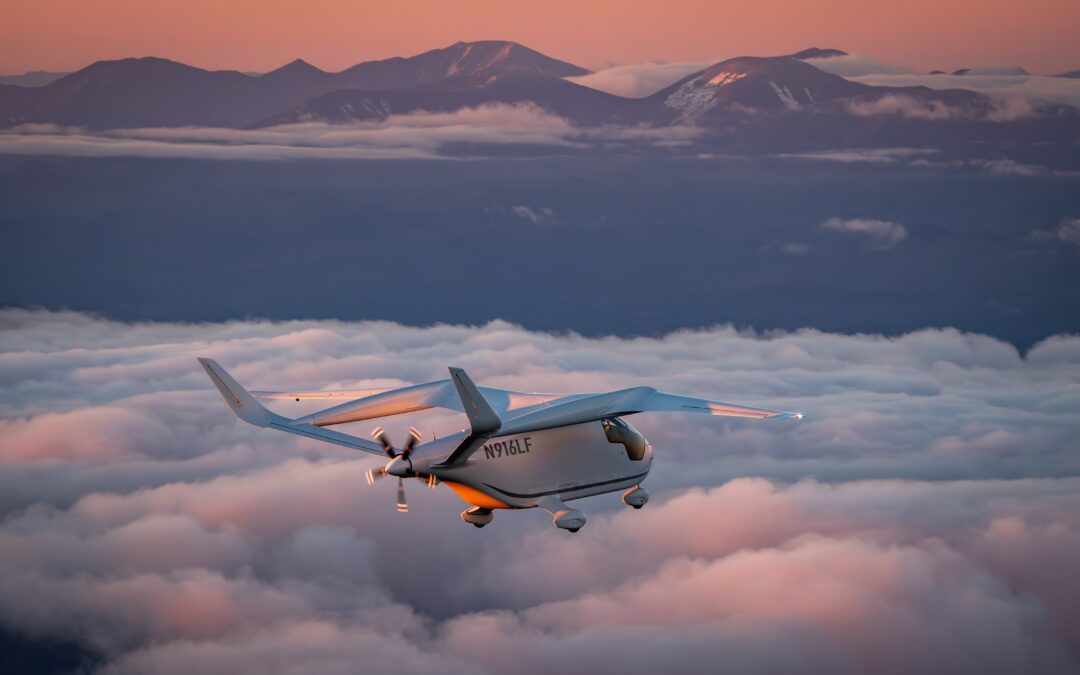
Above: A Beta Technologies eCTOL CX300 takes to the skies. AAM aircraft like this will play a role in Canada’s RPAS/AAM future

USE-CASE PROJECTIONS


As mentioned, all of this traffic will require a unified RTM system to safely ensure there’s no conflict between traditional aviation and the RPAS/AAM sectors – and also within the RPAS/AAM world itself. Because of the immense projected growth in flights, the report predicts that RTM system will be handling a lot of traffic.

“By the year 2045, the RPAS Traffic Management (RTM) system is projected to handle roughly 19 million operations, equating to more than 50,000 operations daily,” says the NAV CANADA summary page. “However, the study anticipates operations of more than 21 million drone and AAM flights by this time, requiring additional investment to increase the system to meet projected demands and seize the potential of this growing sector.”

By the year 2045, there will have been significant growth in the Advanced Air Mobility sector, meaning new and transformative sustainable aircraft that can carry passengers, transport people requiring medical care, and even deliver large cargo payloads to remote or isolated areas. The growth of AAM (along with more heavy-lift drones) points to new use-cases. Here’s how the report breaks down projected annual flights for 2045, which includes a massive growth in drone deliveries:

  • 4.9 million consumer goods delivery flights
  • 350,000 health-care deliveries, including prescriptions, blood, organs, pathology samples, and other medical supplies
  • 150,000 RPAS passenger transportation operations, including tourism, commute, and transporting patients
  • 15,000 RPAS First Responder/security flights, including emergency management and disaster management

“The scale of economic opportunity highlighted in this study confirms that Canada is entering a new era of aviation,” says Mark Cooper, President and Chief Executive Officer at NAV CANADA. “To seize that potential, Canada’s key players need to be ready – by investing in the infrastructure, regulatory frameworks, and partnerships that will enable safe integration of new airspace users. Canada has a unique opportunity to lead globally, and the work starts now.”


COMPREHENSIVE


This study is the first of its kind by NAV CANADA, and the company clearly wanted to do things right. The report “draws on more than 3,000 verified data sources, reports, and market insights, making it the most comprehensive forecasting model ever produced for Canada’s RPAS and AAM industries,” states NAV CANADA. In addition, more than 40 subject matter experts were consulted, including experts in the aviation, technology and infrastructure sectors.

And while there will still be some recreational pilots, the overwhelming majority of flights will be commercial, creating not only jobs and other economic benefits, but also saving companies that adopt the technology money.

“Beyond recreational flying, 97 per cent of operations are expected to deliver measurable business value, improving efficiency and safety across sectors such as construction, energy and mining. In fact, the study shows that automated solutions can achieve cost savings of 50-70 per cent when implemented on-site,” says this summary.

The implications are huge – and there will be some challenges ahead. NAV CANADA says it’s already hard at work preparing for this evolution.

“Integrating millions of uncrewed and advanced air mobility flights will require resilient digital infrastructure, adaptive traffic-management frameworks, and tighter data exchange between operators, regulators and NAV CANADA,” said David Sheppard, Vice President and Chief Technology and Information Officer at NAV CANADA. “This study sets out the scale of that challenge and highlights the work now underway to ensure these technologies can be safely and efficiently integrated into Canadian airspace.”

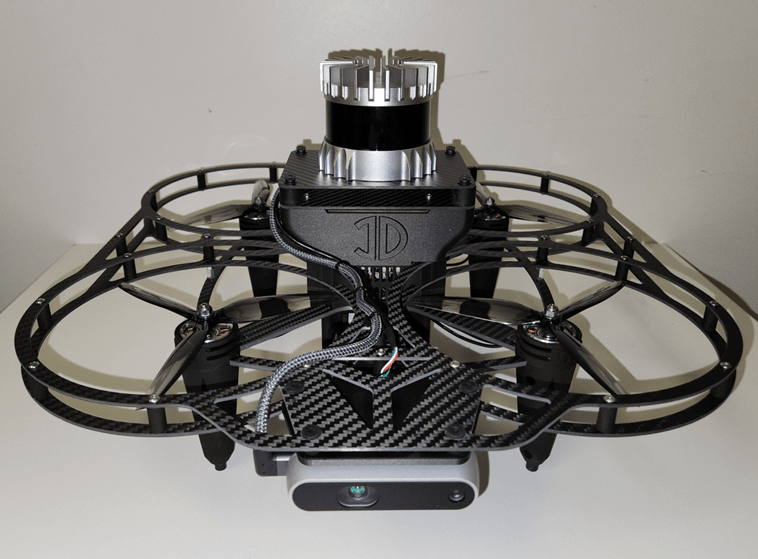
Below: An InDro-built R&D drone operating on Robot Operating System 2. It’s popular with researchers building the next generation of drones and exploring new use-cases
InDro ROS drone

INDRO’S TAKE


We’re obviously excited about this new future, and have multiple projects underway to explore how best to safely integrate new use-cases and technology into the ever-evolving regulatory framework. These projects include a hydrogen-powered drone and infrastructure for refuelling in the field, as well as a broad partnership for long-range deliveries of critical supplies to remote and isolated First Nations communities. (There’s more, but we’ll just have to surprise you later on.)

“InDro Robotics was incorporated in 2014 because we could see the future potential of drones,” says Founder and CEO Philip Reece. “We’re grateful to NAV CANADA and Alan Chapman for having the foresight to produce an evidence-based report; one which confirms our own convictions about the incredible potential of this industry. We look forward to this future, and have no doubt ground robotics will achieve similar growth.”

You can read the entire study right here.

NAV CANADA says enhanced capabilities coming to NAV Drone app

NAV CANADA says enhanced capabilities coming to NAV Drone app

By Scott Simmie


If you’re an RPAS pilot in Canada, you’re likely using NAV Drone (and if you’re not, you should be).

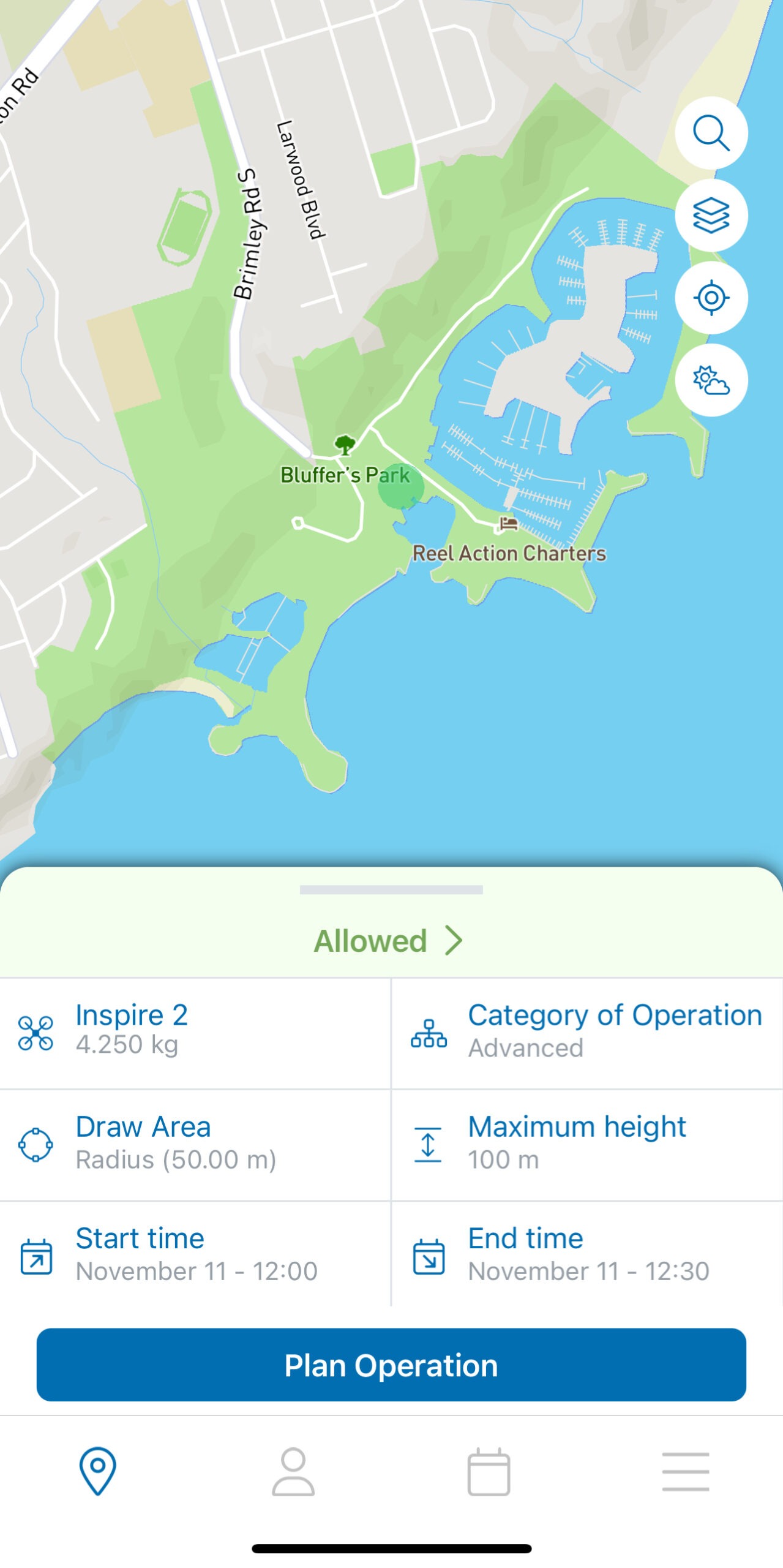
The mobile and web app from NAV Canada is the app to ensure your mission is approved. As the NAV CANADA website explains: “NAV Drone is the only app that lets you safely and legally request permission to fly a drone in airspace controlled by NAV CANADA. From the web or a mobile device, professional and recreational drone pilots and operators can easily see where they can and cannot fly with interactive maps and, when needed, submit requests to fly in controlled airspace.”

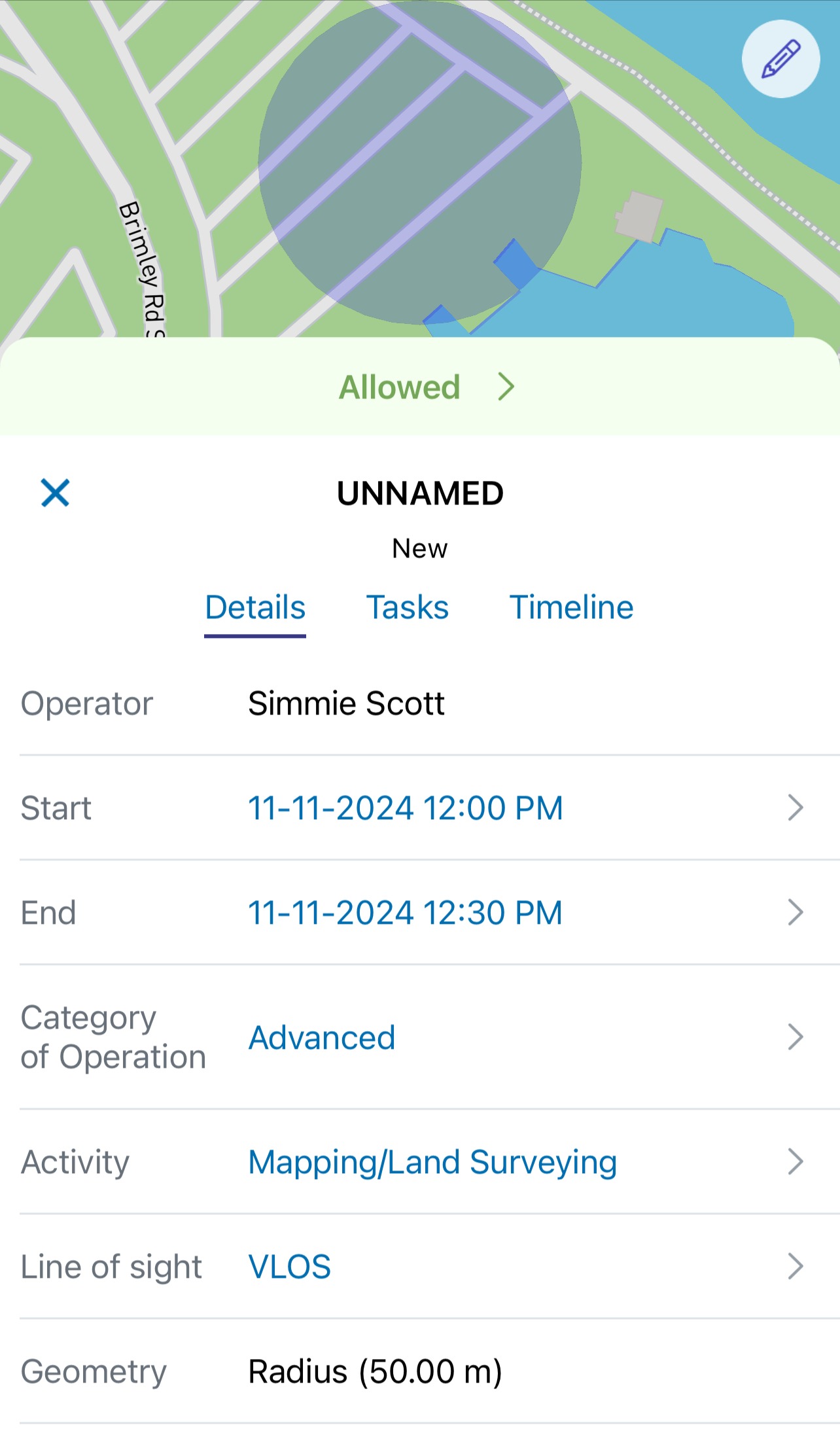
It’s a snap to use. The app lets you know where you can fly – and where you can’t – and could save you from both dangerous operations and potential fines. The app also notifies you if there are other drone operations underway in the vicinity of your operations, which is really useful for situational awareness.

Last week, at the Aerial Evolution Association of Canada‘s annual conference and exhibition, NAV CANADA offered an update on usage stats for the app – and revealed there are more enhancements on the horizon.

Below: Screengrabs from the NAV Drone mobile app, followed by a NAV CANADA explainer video

NAV Drone
NAV Drone

BY THE NUMBERS


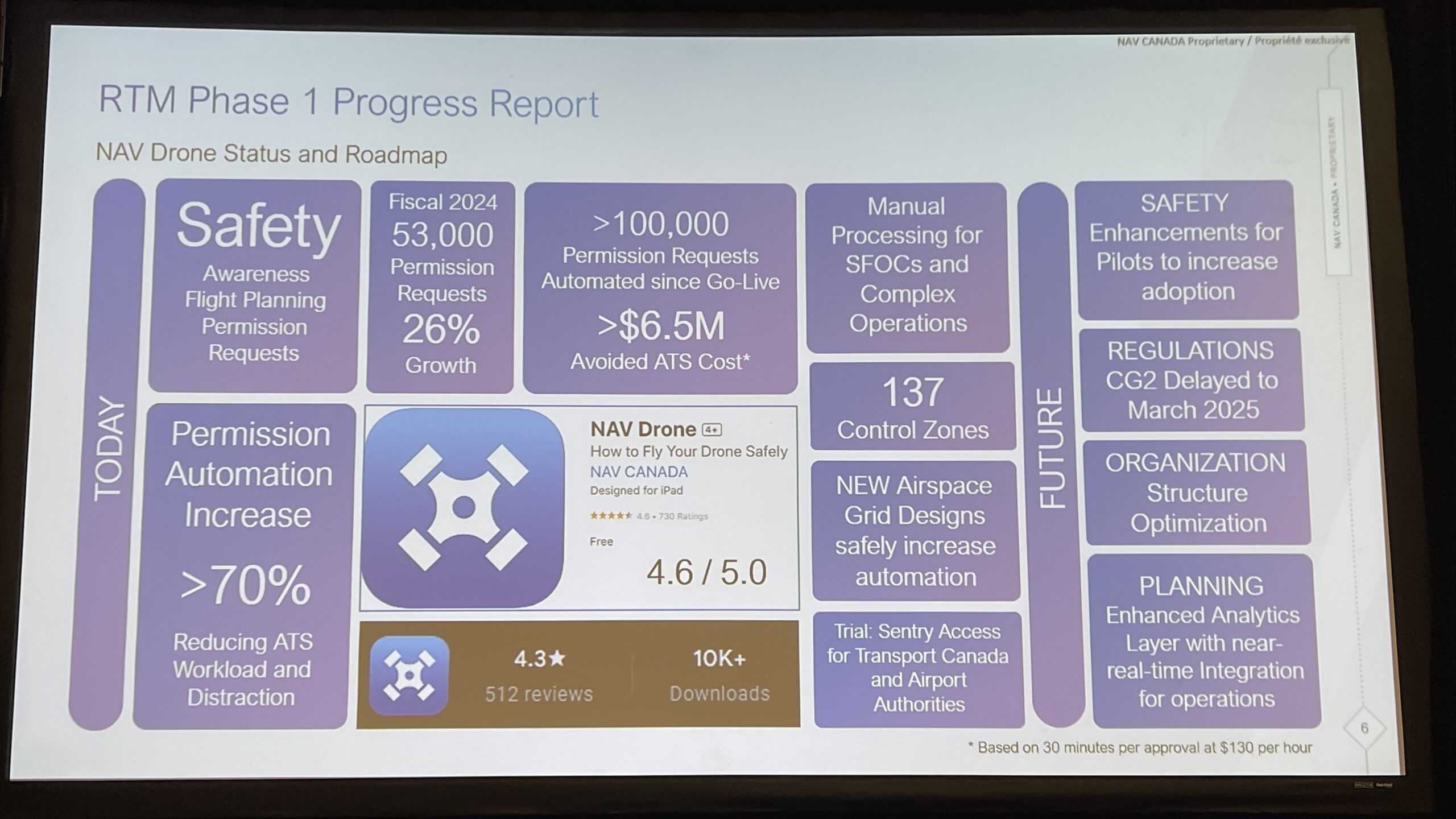
NAV Drone has been operational now for several years. There was a lot of buzz in the industry when it was first released, but what has that translated to in terms of actual use? Here, NAV CANADA offered some numbers – which indicate the app has been widely embraced across the sector.

In 2024, NAV Drone had processed 53,000 permission requests as of early November, a growth rate of 26 per cent over the previous year. By automating this process – and avoiding manual approval (30 minutes per request at $130/hour), NAV CANADA says the app has saved more than $6.5M in Air Traffic Service (ATS) costs. What’s more, users seem to really like the app; it has excellent ratings on the App Store and Google Play.

And, of course, NAV Drone has greatly enhanced safety (and provided a huge amount of data) for NAV CANADA, the country’s privately run non-profit corporation that operates our civil air navigation system.

“Safety is the key reason it’s there. It’s all about keeping the airspace safe,” explained Alan Chapman, NAV CANADA’s director of RPAS Traffic Management.

As we head toward increased RPAS traffic, including regulations that will permit low-risk Beyond Visual Line of Sight flights in 2025, NAV CANADA has bold plans to enhance the offerings of the NAV Drone app. And that’s good news for both RPAS operators and also those operating traditional crewed aviation.

“Some big changes are coming to NAV Drone in 2025,” said Stewart Paveling, Product Family Leader, RPAS Traffic Management NAV CANADA during a panel discussion.

That includes a number of additional features to the app, including greater capabilities with RPAS Traffic Management (RTM), low-risk BVLOS and EVLOS flight approvals – Including the ability to record flights undertaken with a Special Flight Operations Certificate through the app.

These are big changes, indicative of recognition this industry will continue to grow as well as NAV CANADA’s desire to safely help the industry expand as we head, ultimately, into the era of Advanced Air Mobility (AAM).

“NAV CANADA’s strategic direction positions us to take a leadership role to effect change across the air navigation system,” read a slide during its presentation. “To unlock not just our own potential, but also the potential of the industry to be more effective, more efficient, and more environmentally sustainable going forward.”

To further emphasise that, the slide continued – including the bold in the following paragraph:

“RTM facilitates the safe integration of RPAS, in a highly automated way, enabling growth of operations and expansion of use cases to capture the potential aviation and societal benefits.”

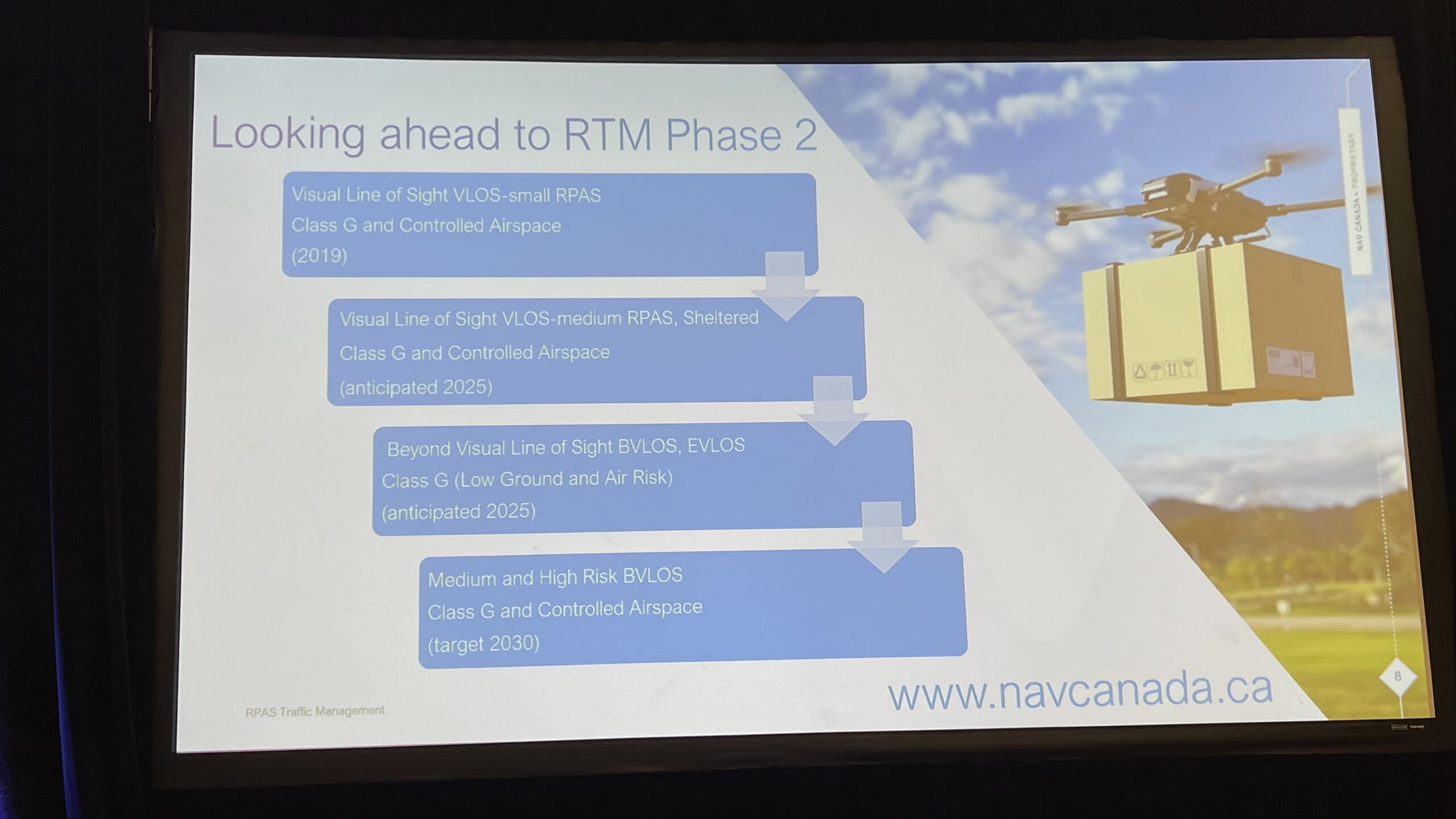
That was followed by a high-level road map indicating priorities for the coming years.

NAV CANADA Nav Drone

NEXT STEPS


Following the slides, there was a panel discussion about future plans, along with other suggestions on ways to improve the existing app. In addition to Alan Chapman and Stewart Aveling, the panel included Joanne Moon (Manager of RPAS Operations, NAV CANADA), Anne Sophie Ripple-Bouvier (Flight Safety Officer, Aerial Evolution Association of Canada) and Brian Fentiman (Project Manager, InDro Robotics/CEO BlueForce UAV Consulting, Inc.).

As the slide above notes, NAV Drone will keep pace with Transport Canada regulations – including the much anticipated changes that will allow low-risk BVLOS flights in 2025. The emphasis here is on pushing the envelope with a highly automated RTM system “to support safe, efficient and scalable BVLOS operations.”

For years, the sector has been eager to enable BVLOS flight without the need for a time-consuming Special Flight Operations Certificate. This obviously opens the door to a broad range of use-case scenarios, ranging from monitoring long-range assets like railroad tracks and pipelines through to large-scale mapping and other data acquisition.

For those operations that will still require an SFOC, NAV Canada revealed that the capability will be in place to allow flights to be recorded in the app. Though that will simplify the process of recording for operators, NAV Canada will not approve SFOCs; these applications will still be reviewed by Transport Canada, which is responsible for approving SFOCs.

Later this year, Paveling added, there will be new map layers for restricted airspace. NAV Canada is also planning to improve the flight clipboard that comes with the system, redesigning it and making it easier to read. There will also be changes to the web-based support site, including a move away from PDF manuals “with better content that’s easier to consume and search.”

Outside of the app, NAV Canada said it is working to beef up its ability to detect drone incursions.

“We see reports of RPAS in control zones on approach paths,” said Joanne Moon of NAV Canada, adding that the corporation also obtains data from drone detection systems in place at airports. (InDro Robotics is the chief technology partner with the drone detection system at YOW. That data is shared with NAV CANADA and Transport Canada, among others.)

NAV Canada, she said, is looking at strengthening its capabilities and enforcement in this arena.

“(We’ve) Been working with industry partners, looking at things like drone detection, information sharing, emergency response, collaboratiion with airport authorities (as well as) our own air traffic services unit.”


OTHER IMPROVEMENTS


There was also an opportunity during the panel to discuss other improvements that could be made to the NAV Drone app. And here, InDro’s Brian Fentiman offered some suggestions.

“One of the biggest things I find, more as a trainer than an operator, is the weak spot. The weak spot seems to be emergency procedures…With a flyaway, I would much prefer that there’s a single number. I’d like to see that phone number up front so it’s easy for people to find. In controlled airspace, you do get a phone number but it’s buried in a flight report…Sometimes you’ll get that phone number and the tower is not even open during those hours.”

It’s an important point – and one NAV Canada says it’s about to address.

“We are actively working on that right now…for an upcoming change to NAV Drone,” said Moon.

The other point Fentiman raised was with regards to conspicuity – meaning the electronic visibility of a drone within a broader RTM system.

“To enable BVLOS, we need conspicuity…whether it’s from the drone to other (RPAS) traffic or to commercial aviation,” he said.

That is something, said NAV CANADA, that is precisely on its roadmap. And the best way to fully get there, it was suggested, was to ensure that everyone in the industry uses the NAV Drone app.

“The more people who use the tool, the better situational awareness we have,” said Chapman.

Below: Brian Fentiman on the NAV CANADA panel at AEAC2024. Photo by Scott Simmie, InDro Robotics

Brian Fentiman AEAC 2024 NAV CANADA

INDRO’S TAKE


The annual Aerial Evolution Association of Canada’s conference and exhibit is always a great event – and precisely due to learning opportunities like this one. Conversations with bodies like NAV CANADA and Transport Canada are tremendously important for the growth of the sector.

“We are fortunate in Canada to have a collaborative relationship with NAV CANADA and Transport Canada, as that’s not always the case between the industry and regulators or air traffic systems organizations,” says Philip Reece, Founder and CEO of InDro Robotics.

“We have seen a true evolution over the years in terms of this relationship – and from both sides. There’s a greater recognition now from the industry that safety has to remain paramount if the sector is going to continue its growth trajectory. And we’ve also seen a real willingness from NAV CANADA and Transport Canada to work with RPAS operators to safely continue growth. The NAV Drone app – and how widely it’s now used – is evidence of this collaboration from both sides. We look forward to enhanced capabilities on this already excellent tool.”

Want to learn more about the benefits of membership with the Aerial Evolution Association of Canada? You can find all the details here.

Feature image by Scott Simmie, InDro Robotics