DON DRONES ON ABOUT TRANSPORT CANADA CHARGES IN YOW INCIDENT
By Scott Simmie
If you’re a regular reader (and we certainly hope you are), you may recall we recently broke the story about a plethora of fines levied by Transport Canada following two illegal drone flights at the Ottawa International Airport (YOW).
Those flights were detected by the YOW Drone Detection Pilot Program and Indro Robotics is the core technology provider for that platform. Both flights took place December 20 of 2022 and violated numerous sections of the Canadian Aviation Regulations (CARs).
The drone was a DJI Air 2S and police were directed to the pilot’s location by airport authorities. He was caught while actively flying and ordered to bring the drone down.
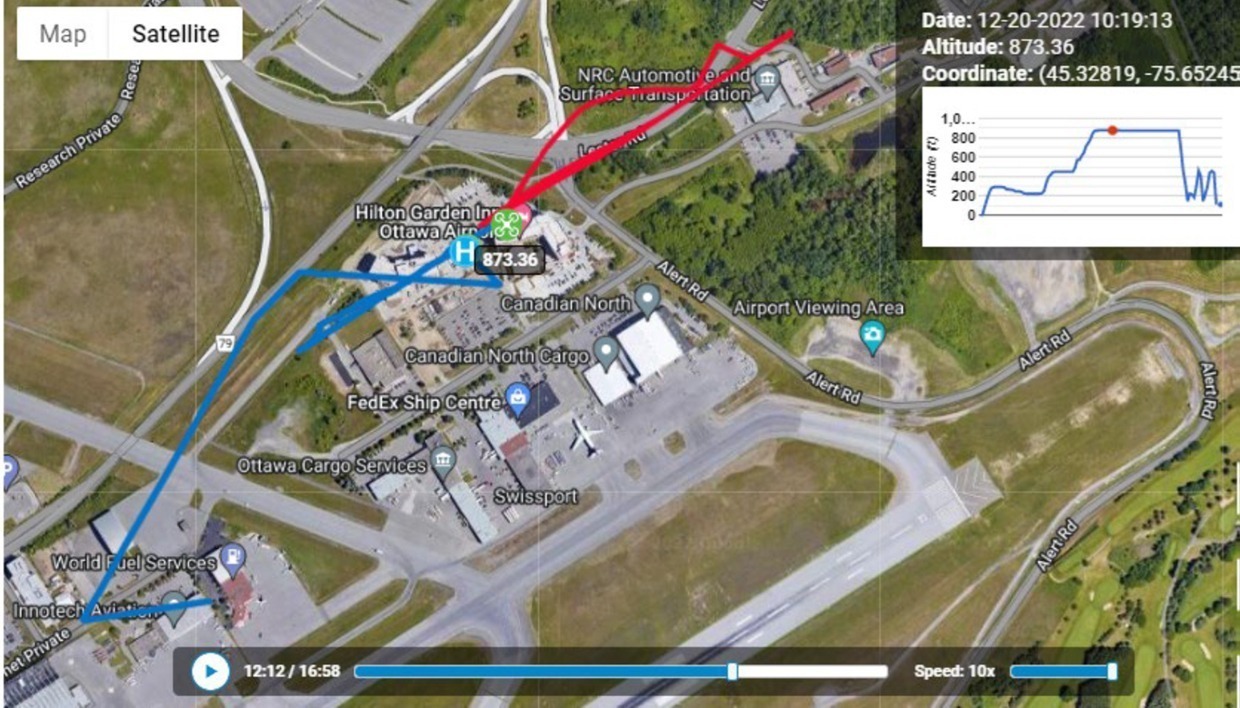
Both flights posed a risk. The first took place while a helicopter was landing; the second while a Jazz Q-400 passenger aircraft was coming in. Both flights – in addition to violating other sections of CARs – were well above the standard altitude limit of 400′ AGL.
Our story quickly gained attention in Canada’s RPAS world and piqued the interest of Don Joyce. He’s the person behind DonDronesOn, a YouTube channel with informative information for drone pilots.
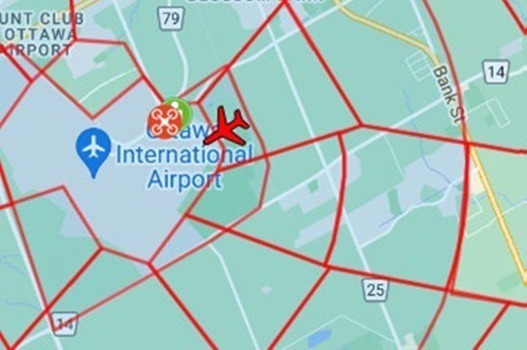
Below: A look at the flight paths that were picked up by the YOW Drone Detection Pilot Program
CAUTIONARY TALE
Joyce sees this incident – as do many – as a cautionary tale. The potential for a conflict with crewed aircraft was very real. The drone was in the air as two different aircraft landed nearby.
“This is not an example of government overreach,” he says in a video you’ll see shortly. “Rather, a good example of technology and process applied to keep us safe from fools and bad actors.”
Joyce also rightly points out that drone detection systems are becoming more commonplace at airports and other sensitive facilities. Not knowing the rules is no excuse for those found caught breaking them.
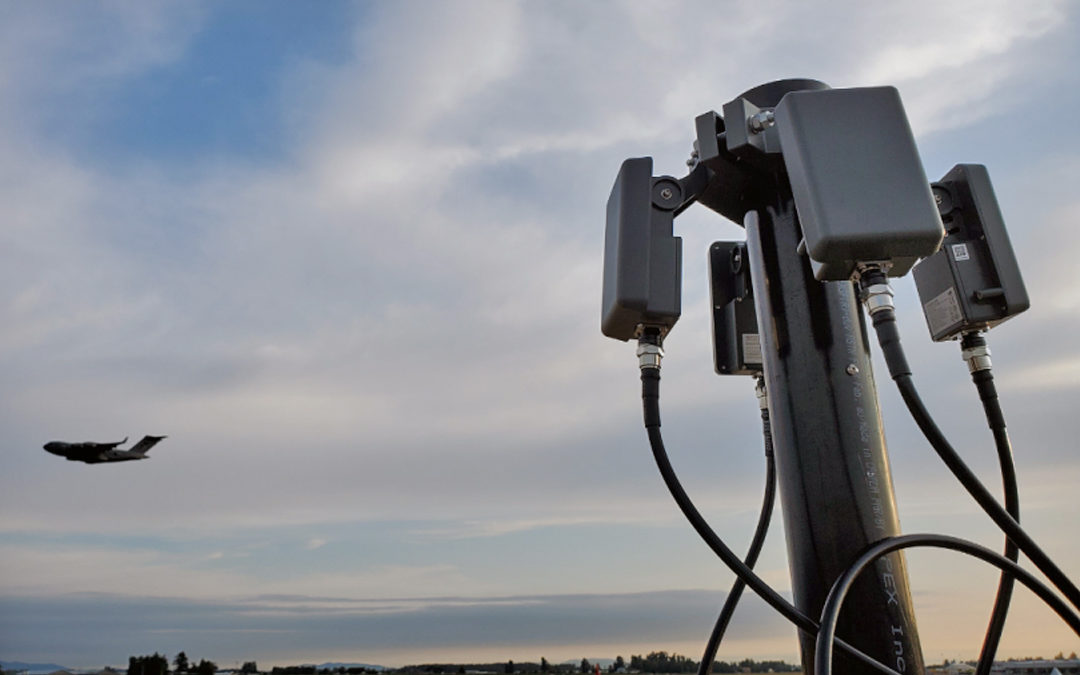
“Drone detection systems are in use in Canada around sensitive locations like airports. They work. And they’re only going to get better and more widely deployed. This stuff is picking up both the electronic and acoustic signatures of our drones today.
“So if you think you’re flying with no one watching, think again.”
Joyce’s video triggered a lot of comments. Most were pleased to see the pilot was charged in this case. One commenter noted that – despite this incident – the number of rogue flights that blatantly violate CARs appears to have gone down over the years. (If you’ve been in this field for a while, you’ll recall crazy YouTube videos of blatant violations near airports, over crowds, etc.)
“I can say that in my experience over the past 10 years, there are less and less ‘idiots’ flying drones in Canada as many are indeed aware of TC regs and rules,” he wrote.
“And although all the TC regs/rules are not always followed, the ‘idiot’ flights placing other’s safety in question are extremely low today compared to five to ten years ago.”
Joyce has filed an Access to Information request to get the full file from Transport Canada. For now, he does a great job of explaining what happened – and how the pilot likely changed locations to evade DJI’s GeoFencing restrictions.
CONSEQUENCES
As we originally reported, the pilot was fined $3021 for violating seven sections of the CARs – including not having a Transport Canada RPAS Certificate. And that got us thinking: What other fines has Transport Canada levied recently in connection with violations of Part IX of CARs – the regulations governing Remotely Piloted Aircraft Systems?
Turns out, there have been a few. We take a look here at publicly available Transport Canada records for violations occurring in 2022. TC takes its time with these investigations; roughly a year transpired between most violations and the eventual fines.
Date of Violation: 2022/07/30 Location: Pacific Region
Though it took until June of 2023 for the offender to be served, the pilot was fined for violating three sections of CARs. According to Transport Canada: “A person operated a remotely piloted aircraft system (RPAS) when it was not registered and in Class F Special Use Restricted Airspace without authorization. A person also operated a remotely piloted aircraft system (RPAS) at a special aviation event or at an advertised event without a special flight operations certificate — RPAS.”
Given that this occurred in the Pacific Region, we believe this may have occurred at the Fort St. John International Air Show (which was underway at that time). The penalty assessed was $1400.
Date of Violation: 2022/05/29 Location: Quebec Region
Once again, three sections of CARs were violated. Says TC: “A person operated a remotely piloted aircraft system (RPAS) when it was not registered, and at a distance of less than 100 feet from another person measured horizontally. A person also operated an RPAS when that person was not the holder of a pilot certificate – advanced operations.”
The fine was served in May of 2023.
Date of Violation: 2022/06/17 Location: Quebec Region
Like the Pacific Region incident, this one also appears to have occurred at an airshow or special event. And there were a couple of interesting violations, including not having a Special Flight Operations Certificate and not having a copy of the RPAS owner’s manual available.
According to Transport Canada: “A person failed to operate a remotely piloted aircraft system (RPAS) in visual line-of-sight at all times during flight, and in controlled airspace. A person conducted the take-off or launch of a remotely piloted aircraft for which the manufacturer has provided a remotely piloted aircraft system operating manual without the manual immediately available to crew members at their duty stations. A person also operated an RPAS when that person was not the holder of a pilot certificate – advanced operations, and an RPAS having a maximum take-off weight of 250 g or more at a special aviation event or at an advertised event without a special flight operations certificate — RPAS.”
There were five CARs violations and a fine of $1500
Date of violation: 2022/06/19 Location: Quebec Region
This also took place at either an airshow or other special event – and these infractions set the pilot back by $900. “A person operated a remotely piloted aircraft system (RPAS) in controlled airspace,” states Transport Canada.
“A person also operated an RPAS when that person was not the holder of a pilot certificate – advanced operations, and an RPAS having a maximum take-off weight of 250g or more at a special aviation event or at an advertised event without a special flight operations certificate — RPAS.”
Date of violation: 2022/06/19 Location: Quebec Region
This incident involved violations of five sections of CARs. A fine of $1500 was levied in May of this year.
Here’s Transport Canada’s description of the offenses: “A person operated a remotely piloted aircraft system (RPAS) without a registration number clearly visible on the remotely piloted aircraft, in controlled airspace, and failed to operate it in visual line-of-sight at all times during flight. A person also operated an RPAS when that person was not the holder of a pilot certificate – advanced operations, and an RPAS having a maximum take-off weight of 250 g or more at a special aviation event or at an advertised event without a special flight operations certificate — RPAS.”
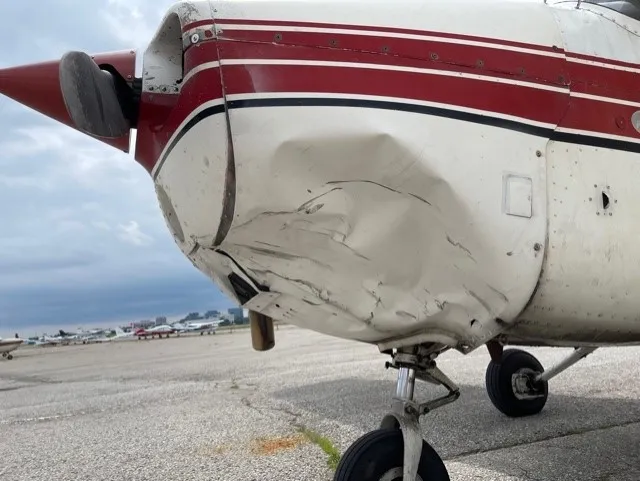
Below: The crumpled cowling of a Cessna. The aircraft collided with a drone operated by York Regional Police drone near Buttonville Airport on August 10, 2021. The pilot was later fined by TC. You can read our coverage of the incident here.
Date of Violation: 2022/05/01 Location: Quebec Region
This incident involved seven infractions and a fine of $2100. Interestingly, this case involves the use of a First Person View device – where the pilot was wearing goggles and did not have a visual observer monitoring the drone directly (among other things).
Again, here’s the Transport Canada description: “A person operated a remotely piloted aircraft system (RPAS) when it was not registered, in controlled airspace, and at altitude greater than 400’ AGL without a special flight operations certificate — RPAS.
“A person also conducted the take-off or launch of a remotely piloted aircraft for which the manufacturer has provided a RPAS operating manual without the manual immediately available to crew members at their duty stations.
“A person operated a RPAS using a first-person view device without, at all times during flight, a visual observer performing the detect and avoid functions with respect to conflicting aircraft or other hazards beyond the field of view displayed on the device. A person also operated a RPAS at a special aviation event or at an advertised event without a special flight operations certificate — RPAS, and when that person was not the holder of a pilot certificate – advanced operations.”
Date of Violation: 2022/03/05 Location: Quebec Region
This one’s intriguing, as it involves an “unauthorized payload.” What that payload was is a bit of a mystery, as TC tell us that. However, this was part of a very pricy day: The eventual fine for violating five sections of CARs was $3950.
“A person operated a remotely piloted aircraft system (RPAS) when it was not registered, in Class F Special Use Restricted Airspace without authorization and failed to immediately cease operation when the safety of persons was endangered,” states the summary.
“A person also operated a RPAS while transporting an unauthorized payload and when the person was not the holder of a proper pilot certificate – small remotely piloted aircraft (VLOS).”
Date of Violation: 2022/03/16 Location: Quebec Region
Though details are scarce, we can read between the lines on this $1300 case and infer that someone flew their drone while First Responders or Law Enforcement were at an emergency scene. Costly mistake, along with not registering the drone.
“A person operated a remotely piloted aircraft system (RPAS) when it was not registered and over or within the security perimeter established by a public authority in response to an emergency. A person also operated a RPAS when the person was not the holder of a proper pilot certificate – small remotely piloted aircraft (VLOS).”
Date of Violation: 2022/03/16 Location: Quebec Region
Five CARs violations; $3780. Ka-ching.
“A person operated a remotely piloted aircraft system (RPAS) when it was not registered, in Class F Special Use Restricted Airspace without authorization and failed to operate it in visual line-of-sight at all times during flight. A person also operated a RPAS while transporting an unauthorized payload and when the person was not the holder of a proper pilot certificate – small remotely piloted aircraft (VLOS).”
OBSERVATIONS
As you perhaps noticed, the vast majority – eight of nine reported cases – occurred in Quebec. So one might immediately assume that pilots in that province are more reckless.
But we can’t say that from the data. Perhaps TC inspectors are more inclined to levy fines in that province, or there are more inspectors there. Maybe people are more inclined in Quebec to report drone violations to authorities. We really can’t say.
We did, however, find it interesting to note that some pilots were fined for violations such as not having a drone manual available on-site or wearing FPV goggles without a constant visual observer. It’s a good reminder that the regs are the regs – and they all need to be followed.
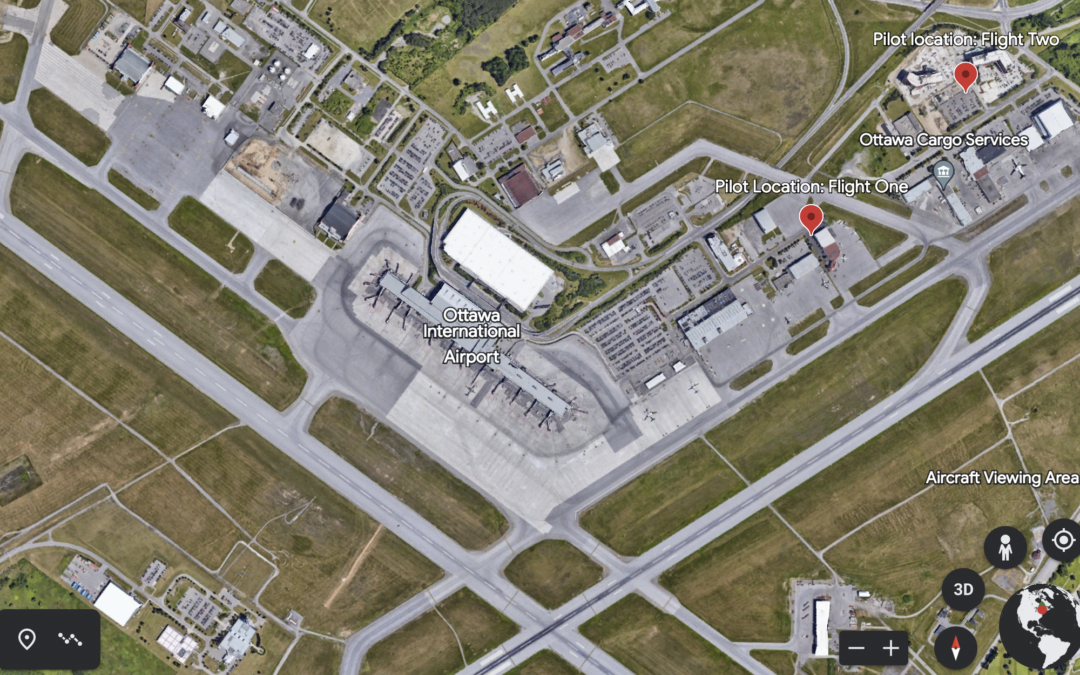
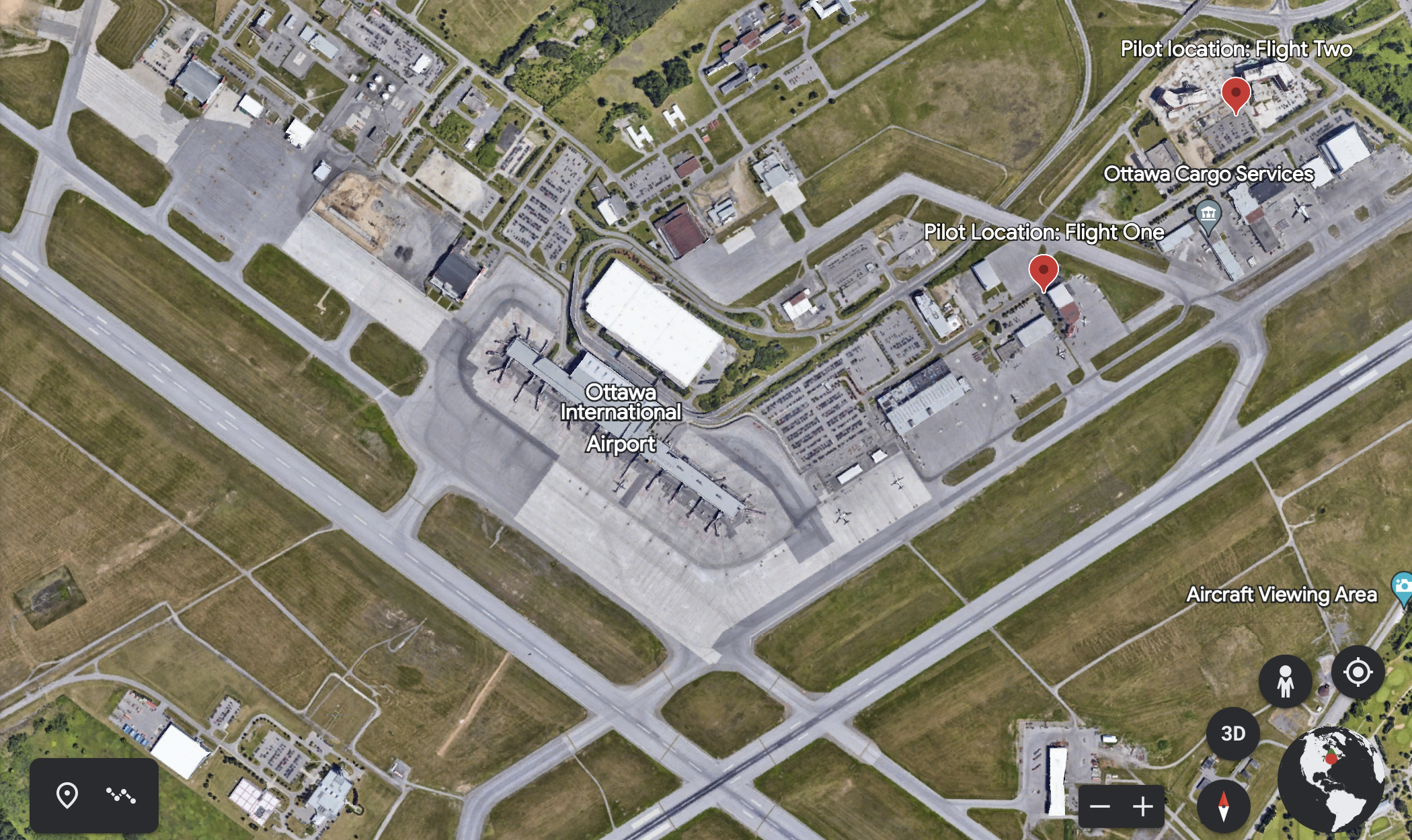
Below: Image shows the take-off points of the two flights detected by the YOW Drone Detection Pilot Project
INDRO’S TAKE
InDro Robotics was one of the first companies to offer hands-on drone training in Canada. We have trained police, firefighters, other First Responders – and more. We are also proud to have one of Canada’s leading online drone instructors, Kate Klassen, on staff.
Kate has trained more than 10,000 drone pilots in Canada. Her website, FLYY, offers everything to get pilots started – or take them to the next level for specialized training. (She is also a pilot and certified trainer for traditional crewed aircraft.)
“Regulations are there for a reason – to avoid conflict with crewed aircraft and to protect people and property on the ground,” says InDro CEO Philip Reece (who is also a private pilot).
“We’re pleased to have played a role in detecting these flights at YOW, and hope the fines levied do indeed send a message: Knowing and following the regulations is the right thing to do – and the best thing for this emerging industry.”
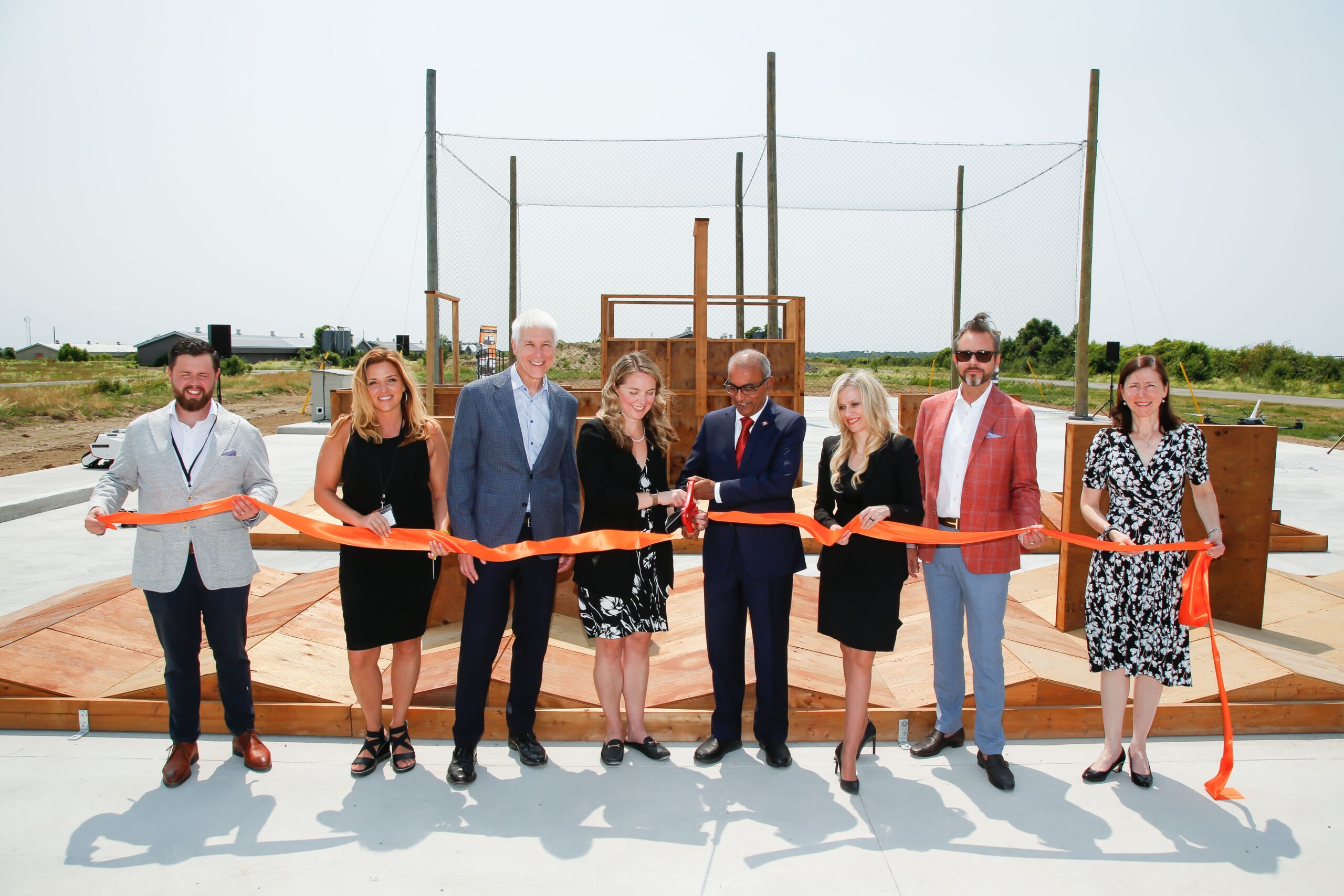
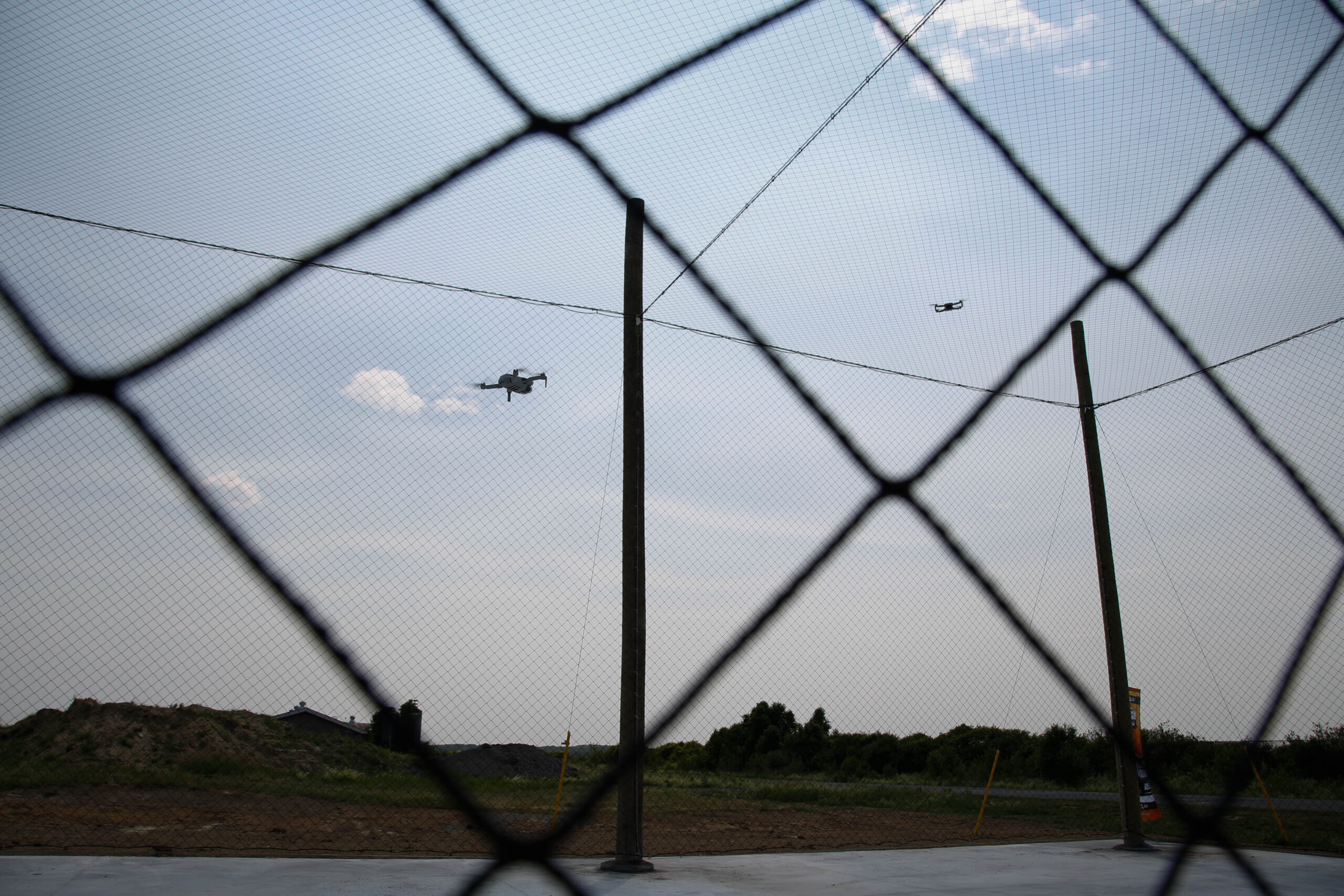
We should also mention that InDro is now offering basic and high-level drone training and evaluation in a massive netted enclosure at DARTT – the newly opened NIST-compliant facility for Drone and Advanced Robot Testing and Training at Area X.O in Ottawa. If you’re interested, you can contact us here.
You can find Transport Canada’s list of offences here. And we do recommend you check out Klassen’s FLYY.