Adopting inspection robots: Perceived barriers and solutions

Adopting inspection robots: Perceived barriers and solutions

By Scott Simmie


Some companies – and we’ve built for them – have plunged head-first into the adoption of industrial inspection robots. They’re perfect for routinely inspecting assets like electrical substations, refineries, construction sites – the list goes on (and on). InDro robots are currently hard at work on multiple sites – and in more than one country.

Yet still, some potential clients hesitate.

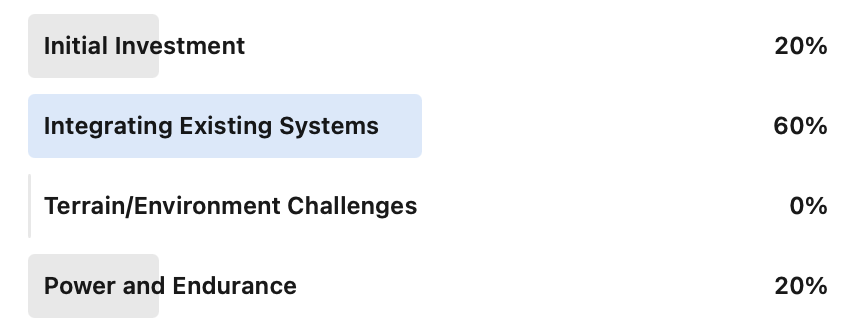
So we thought we’d take the pulse with a survey. Here’s the question we asked, via LinkedIn: “Which of the following challenges do you think is the biggest barrier preventing companies from adopting industrial inspection robots?” Here were the choices:

  • Initial investment
  • Integrating existing systems
  • Terrain/environment challenges
  • Power and endurance

And here…are the results:
Inspection Robot survey

PERCEPTIONS…AND SOLUTIONS


So let’s tackle those concerns.

Initial investment is holding back 20 per cent of respondents from taking the plunge. Fair enough. Robots aren’t cheap. A fully customised solution with multiple sensors capable of regular, autonomous inspections in a demanding environment has traditionally cost $100k+ (and still can). Clients wonder if the investment will result in a positive ROI.

“With any new technology tackling any new use-case, it can be challenging to build an ROI calculation right out of the gate because you can’t truly know until you get it out in the field and and are able to use it in the actual desired use-case,” says Head of R&D Sales Luke Corbeth.

But he points out that many clients, once they have purchased a robot, discover that it not only offers ROI for the intended task, but that it can handle ancillary use-cases they hadn’t even considered at the outset. That, he says, has resulted in greater return on investment than some clients initially calculated. The other factor Luke points out is that the last couple of years have seen more powerful solutions appear at lower price points.

“Even two years ago, if you wanted a system capable of multi-level inspection, you had to go with an industrial-sized robot, right? You needed something like the Unitree B2 or Boston Dynamics Spot. Those would run you six figures before you even outfit it with software, cameras, acoustic sensors etc.” says Corbeth.
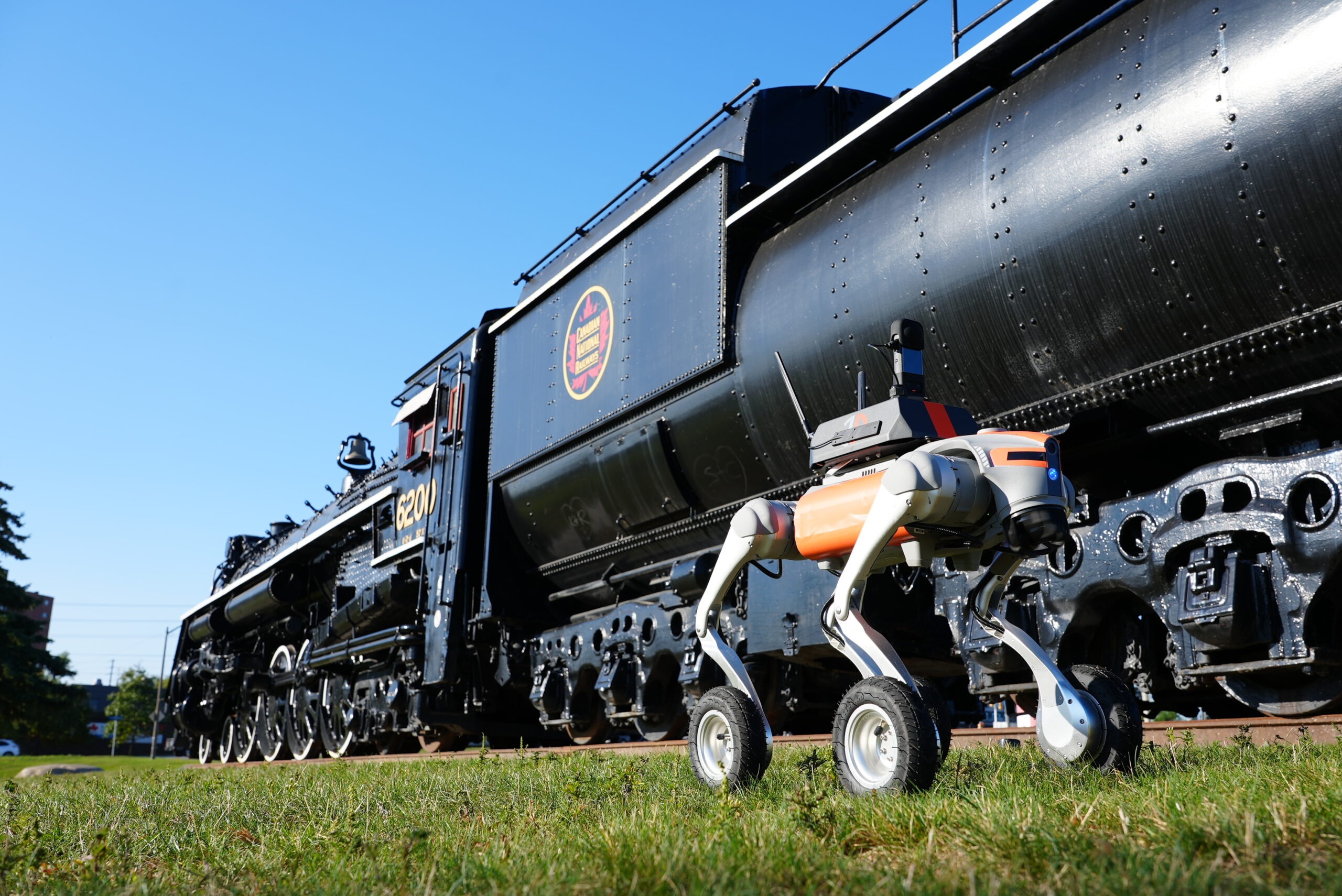
 
By contrast, highly agile and capable machines like the Go2-W (a wheeled quadruped that InDro can modify for any use-case) is much more affordable, allowing clients to invest even as a proof-of-concept. (The Go2-W, seen below, is capable of handling even the most demanding terrain, including stairs, steep inclines, and debris. It can even climb over short fences.)
wheeled quadruped

INTEGRATING EXISTING SYSTEMS


This, according to our survey, was the biggest stumbling block. A full sixty per cent of respondents identified this as a barrier to adopting industrial inspection robots. In all likelihood, these are companies that have legacy systems in place that have served them well – and the perceived complexity of integrating a new robot seems daunting. As Corbeth puts it: “Change is inherently hard.”

But there are solutions – ways for newer robots to capture and integrate data into existing systems, even if they are somewhat dated. Yes, there may be friction. But it’s not the barrier some perceive. InDro’s systems are Open Source/Open Architecture, allowing in-house engineers (or our own) to easily customise the software so the data and your existing system can co-exist in harmony.

Some sectors also use what’s known as “vertical specific” software, meaning systems built for say, the Oil and Gas sector, warehouses (WMS), mining, etc. But that’s not the roadblock some may perceive, says Corbeth.

“As long as the client is willing to expose an API (Application Programming Interface) to us, it’s relatively easy to point all of the data there. So instead of that data being manually collected and uploaded, now it’s automatically captured through autonomous missions and then automatically uploaded over whatever communications infrastructure the client already has.”

Understanding existing client systems and integration concerns is a key part of our discovery process with new clients. We ensure, from the outset, that integration will be as seamless as possible.


TERRAIN, POWER, ENDURANCE


None of the respondents indicated terrain was an issue. And perhaps that’s not a surprise. The latest generation of platforms, particularly wheeled quadrupeds like the Go2-W, can glide or clamber over just about anything. Tracked platforms can handle mud and snow. There are solutions for virtually every terrain.

Power and endurance are another matter. No one wants an inspection robot that can’t finish the job. In fact, twenty per cent of those who voted in our survey identified this as a concern. And who wants the hassle of plugging something in to recharge after a mission?

The reality is that there have been gains in both power and endurance with the latest generation of platforms. What’s more, InDro can customise any robot to autonomously dock with a wireless charging station so it’s ready for the next mission with no human intervention. Says Corbeth: “It’s pretty much a non-issue at this point.”

With all that being said, there are some unrealistic expectations out there, fuelled by slick videos – particularly of humanoid robots – doing amazing things. If you think you can just buy a humanoid and it’s going to be picking tomatoes the next day while interacting with human beings, think again. Modifying humanoids to flawlessly carry out human tasks takes a lot of work. But many use-cases (particularly for non-humanoid robots) are what Corbeth describes as “low-hanging fruit” – meaning tasks that have massive value implications, are easy to integrate, and get the job done.

“That’s where the sweet spot is,” he says.

Below: Our answers to concerns about integration in a slide format.

INDRO’S TAKE


We feel this survey was a useful exercise. It identified common barriers, and gave us an opportunity to set the record straight. The perceived obstacles aren’t really obstacles at all – but engineering challenges. And that’s where InDro excels.

“InDro has built many inspection robots for clients, some of whom had the same initial concerns,” says company Founder and CEO Philip Reece. “Those robots are currently carrying out regular inspections, wirelessly recharging, and heading out to work again the next day or week. Good engineering is all about problem-solving, and we love finding solutions.”

Interested? You can contact Luke to set up a no-obligation discovery call right here.
How remote inspection robots reduce downtime

How remote inspection robots reduce downtime

By Scott Simmie


Inspection robots aren’t cheap.

We fully acknowledge that might not be the best opening pitch, but hear us out.

While a capable inspection robot can be costly, so is downtime. So is dispatching human beings to distant locations. Electrical substations and certain oil and gas assets are often remote and require many hours of driving to reach – plus the cost of hotels and per diems. Sometimes, companies even have to charter a helicopter just to place eyes on those remote spots. Depending on the sector, these inspections might take place monthly, bi-weekly – or at some other interval.

Point is: Regular inspection of remote assets is an absolute necessity. An inspection can troubleshoot for regular wear and tear, thermal anomalies, damage from animals, vandalism, environmental impact, leaks – the list goes on. A human being (often equipped with handheld scanners and other detection equipment) can generally spot all these things.

But so, too, can a robot. And, unlike a human being when it comes to remote assets, an autonomous robotic inspector can be on the site 24/7. It never requests a hotel room, doesn’t charge overtime – and never forgets to do everything it’s been instructed to carry out.

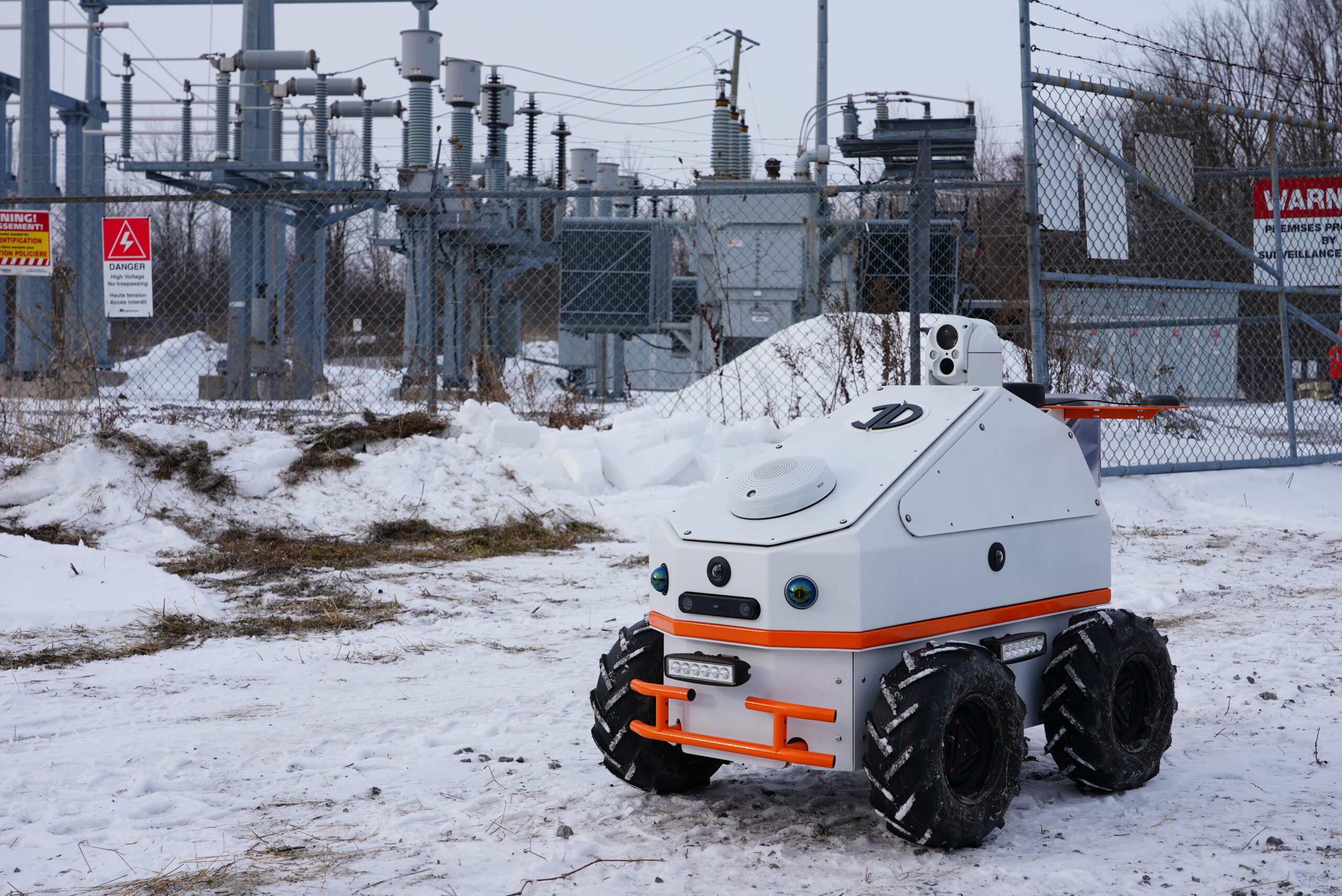
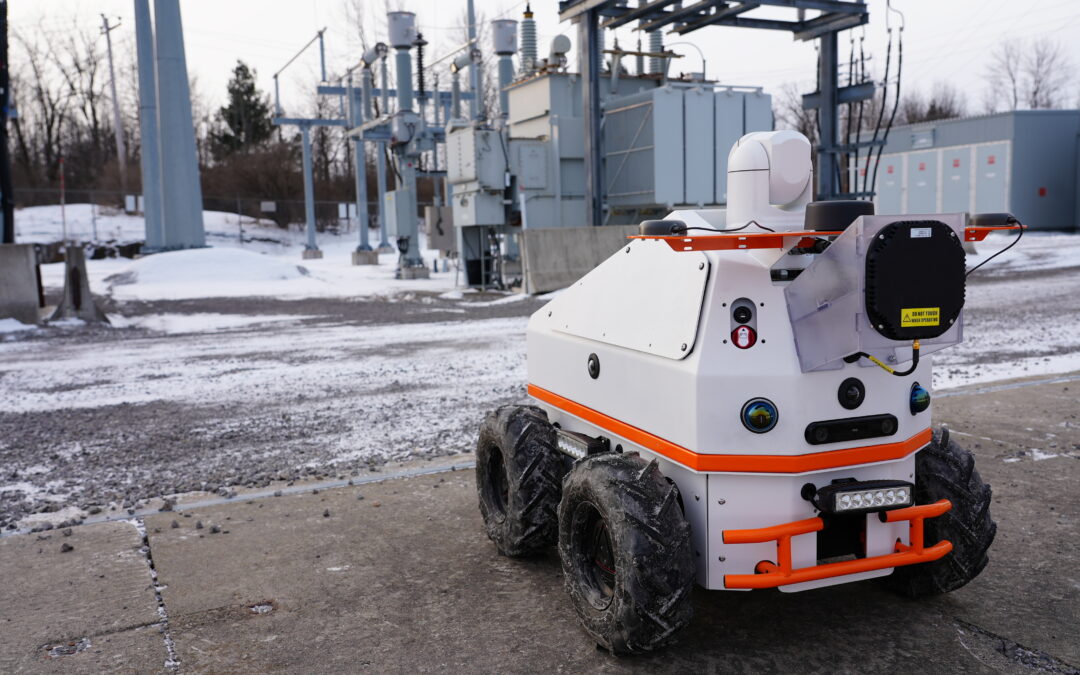
Below: The InDro Robotics Sentinel, at an electrical substation in Ottawa

Sentinel enclosure Ottawa Hydro

DOWNTIME


There are two types of downtime: Planned and unplanned. The former, obviously, is pre-arranged. Maybe it’s time to replace certain pieces of equipment or do other scheduled maintenance. Planned downtime can include hardware and software upgrades, even large-scale replacements. For those companies in service provision, including those in the B2B space, a scheduled event minimises downtime because everything is lined up in advance for the necessary task. In addition, you can notify consumers or clients that the service or commodity will be temporarily unavailable – and schedule the downtime to minimise disruption. Customers and clients generally understand these inconveniences when they know about them ahead of time.

Then there’s that other kind of downtime: Unplanned. Something goes wrong and you need to scramble to fix it. Precisely because these are unexpected, you might not have the required widgets or personnel on-hand (or on-site). And it’s not just the repair itself. There’s usually lost revenue, reputational damage, and even more:

“The repercussions of unplanned downtime extend beyond immediate financial losses,” explains this overview.

“Companies may face financial penalties and legal liabilities, especially if downtime leads to non-compliance with regulatory requirements. These penalties can add another layer of financial strain on top of the already significant downtime costs.”

We’ve all heard stories about airlines being fined, sometimes heavily, for unexpected delays. And the reputational damage? You wouldn’t have to look hard to find consumers who have switched airlines, internet providers and more due to unplanned downtime that inconvenienced them.

That same article dips into the oil and gas sector, using data from a 2016 study by Kimberlite (a research company specialising in the sector) which found offshore organisations face an average of $38M US annually in costs from unplanned downtime. Those with the worst records racked up yearly tabs close to $90M US. So clearly, it’s something most would like to avoid.


THE ADVANTAGES OF INSPECTION


Regular robotic inspection can help reduce unplanned downtime by identifying potential failures before they happen. Is a key component starting to age? Has wildlife encroached on sensitive components? Did the storm that passed through overnight have an impact on anything? Are all gauges reading as they should? Are there any thermal anomalies? Is there the molecular presence of hydrocarbons or other indicators above a safe threshold? Are there any strange new noises, such as arcing or humming?

Yes. People can do this when they’re dispatched. But a robot tailored for inspection – and they can be customised for every client’s needs – can carry out these same tasks reliably, repeatedly, and on schedule.

This idea of predictive maintenance is very much a pillar in the world of Industry 4.0, or 4IR (which we recently explored in some detail). As companies move into this next phase, particularly in the manufacturing sector, Smart Devices are being integrated in every conceivable location across newer factory floors. In conjunction with software, they keep an eye on critical components, identifying potential problems before they occur. Industry leaders in this space, such as Siemens, state these systems can result in up to a 50 per cent reduction in unplanned downtime, and up to a 40 per cent reduction in maintenance costs.

That’s the gold standard. But we are just at the cusp of this integration, and it’s more broadly targeted at the manufacturing sector. Those remote electrical substations and oil assets are still, in many ways, not that smart when it comes to asset intelligence and will require regular inspection for many years to come.

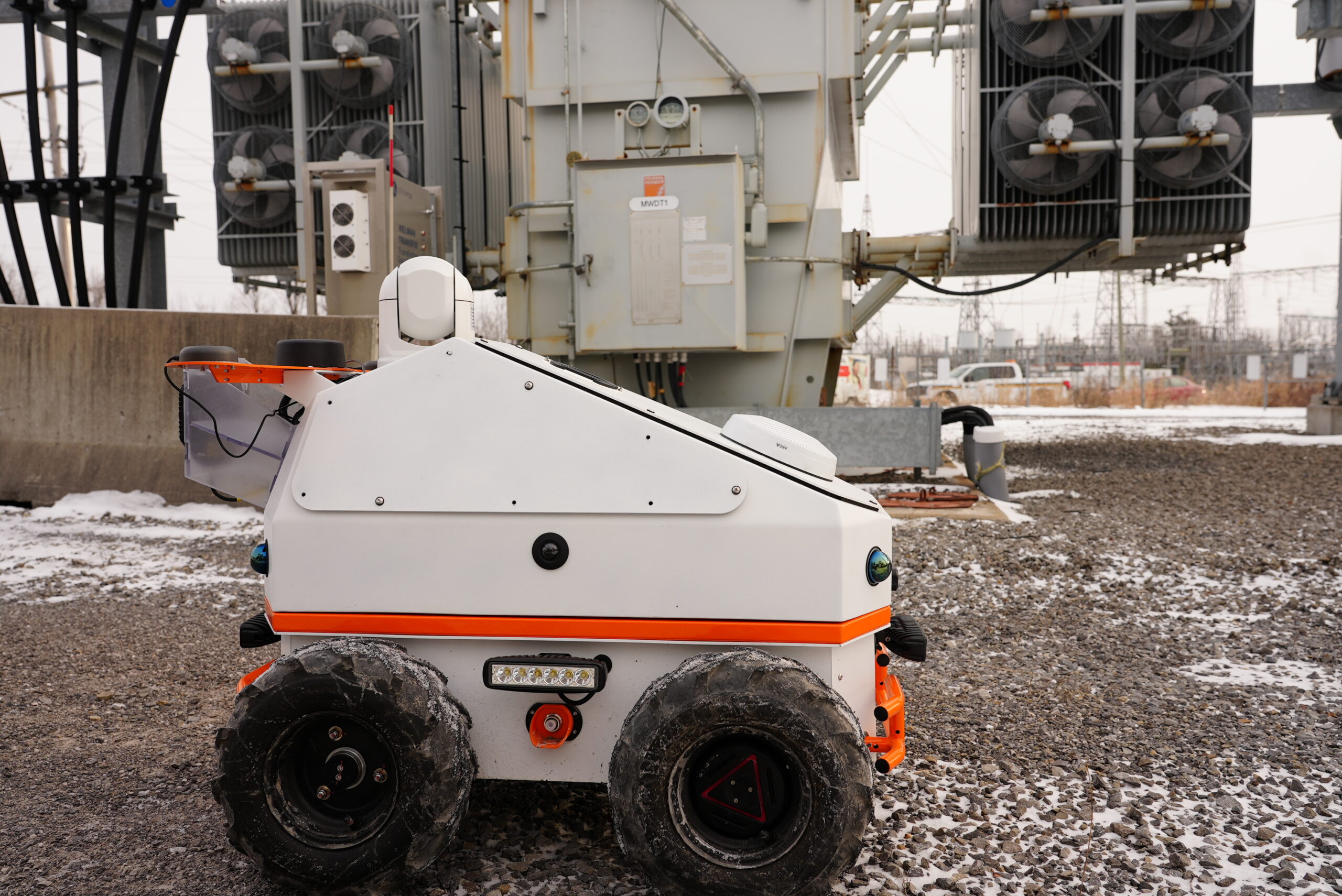
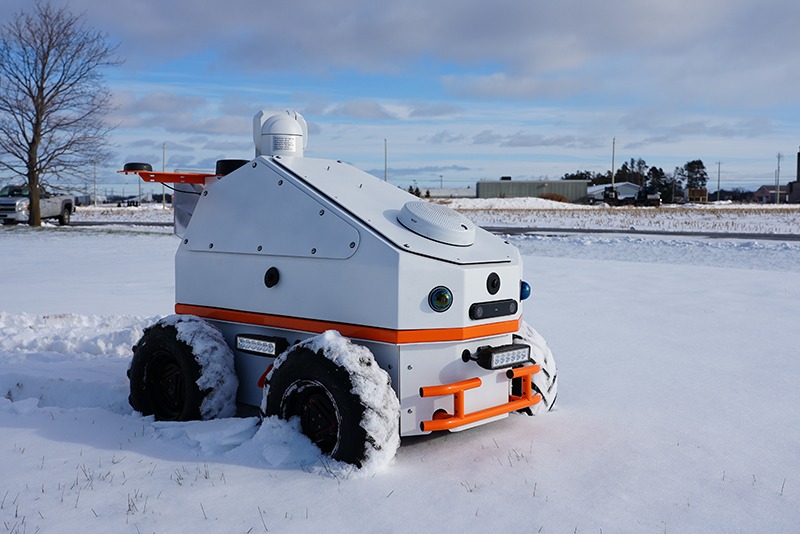
Below: InDro’s Sentinel inspection robot, which can be customised for any inspection scenario, It’s seen here at a demo for Ottawa Hydro

Sentinel enclosure Ottawa Hydro

THE SENTINEL SOLUTION


Sentinel is our flagship inspection robot. Our first iteration was in 2022 and – as with all InDro innovations – we have continued to enhance its capabilities. As new advances in sensors and compute have emerged, so too have Sentinel’s powers. But Sentinel’s evolution goes far beyond adding new LiDAR, depth cameras or processors. In the background at Area X.O, we are continuously improving our own IP. Specifically, our InDro Autonomy and InDro Controller software.

InDro Controller is a desktop-based interface with Sentinel (or any other ROS-based robot). Fully customisable and easy to use, it allows our clients to plan and monitor missions with ease. A few clicks allows users to set up repeatable points of interest where the robot will carry our specific inspection tasks. Need eyes on a critical gauge? Have InDro Controller stop Sentinel at a particular spot. Use the 30X optical Pan-Tilt-Zoom camera to frame and capture the shot. Happy with the results? Great. InDro Controller will remember and carry out this step (and as many others as you’d like) when it next carries out the mission. Collisions won’t be an issue, as InDro Autonomy’s detect and avoid capabilities ensure there won’t be any mishaps on the way. In fact, you could drop Sentinel in a completely unfamiliar setting littered with obstacles, and it could map that site and even produce a precision scan. And, like a regular visit to the robot doctor, InDro Controller also monitors the overall system health of any integrated device.

From the outset, Sentinel has been on a continuous journey pushing the R&D envelope, with testing and rigorous third-party evaluation. An earlier iteration was even put through demanding tests by the US Electric Power Research Association (EPRI) at its test facility in Massachusetts. All of these deployments have resulted in learnings that have been incorporated into our latest version of Sentinel.


SET AND FORGET


When it comes to remote assets, our clients clearly needed a hands-off approach. That meant we had to incorporate some sort of autonomous charging, since there’s no one on these sites to plug it in. We evaluated mechanical docking systems, but realised these physical mechanisms introduce another potential point of failure.

And so we ultimately settled on a powerful wireless charging system. Using optical codes, Sentinel returns to a housed structure following its missions. It then positions itself snugly up to the wireless charging system so that it’s ready for the next deployment (you’ll see a picture of one of our earlier test structures in a few seconds). We needed to avoid metal to ensure the cleanest possible wireless communication (Sentinel operates over 5G and also has the option for WiFi). Housing Sentinel when it’s off-duty protects it from unnecessary exposure to the elements, though it’s certainly built to operate in virtually anything Mother Nature can throw at it (short of a hurricane).

Finally, Sentinel also has InDro Commander on board. In addition to housing its powerful brain, Commander allows for the easy addition of additional sensors by simply plugging them in. It provides both power and a data pipeline, and InDro Controller has been built to instantly recognise the addition of any new sensors. In other words, if a client’s requirements change and a new sensor is required, Sentinel can be modified with relative ease and no new coding.

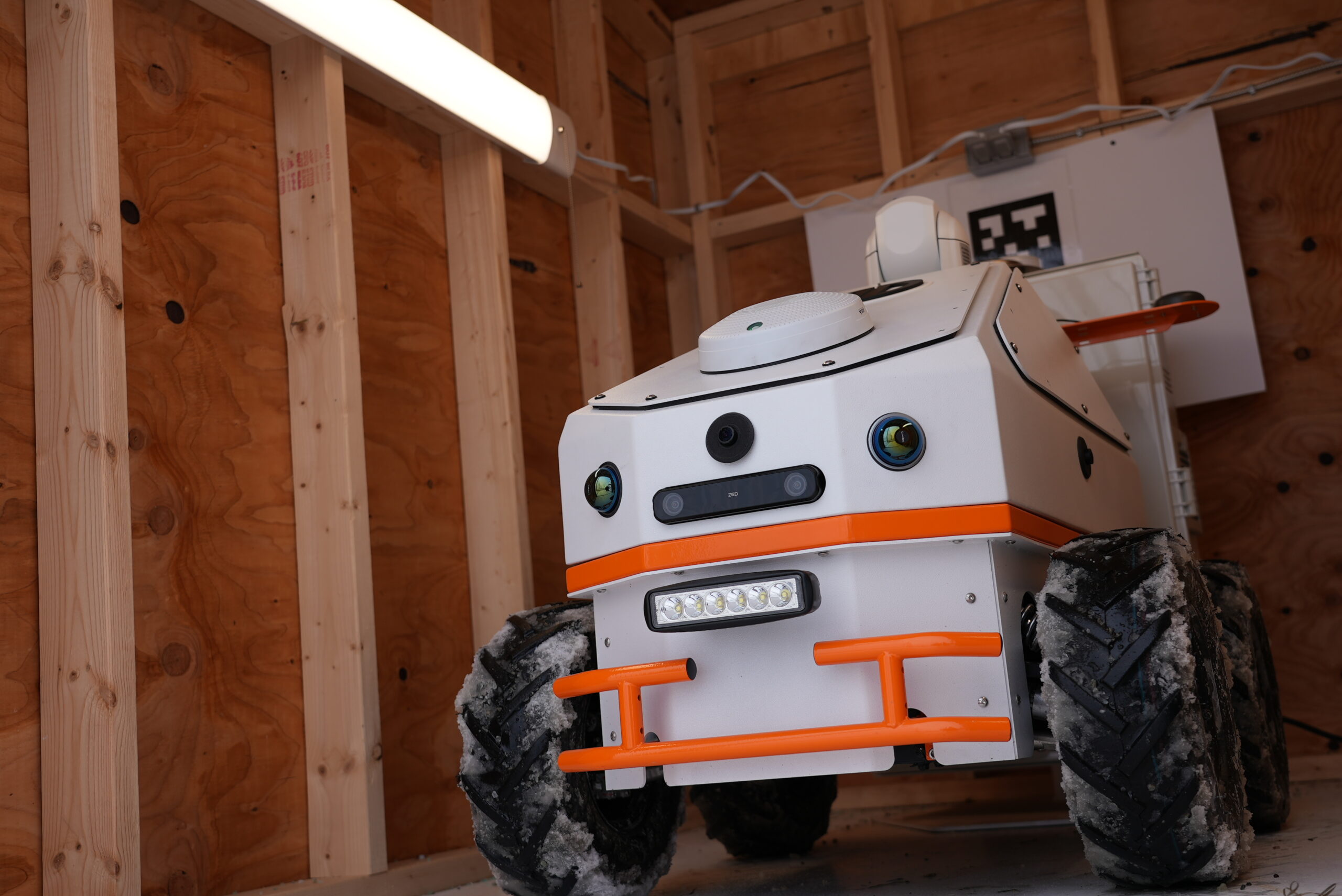
Below: Sentinel, following a demonstration for Ottawa Hydro, snugs up to charge

Sentinel enclosure Ottawa Hydro

THE SENTINEL EVOLUTION


As mentioned, Sentinel has gone through a ton of testing, coding and development to reach its current iteration. We’ve taken literally all of our learnings and client feedback and put them into this robot. Sentinel does the job reliably and repeatedly, capturing actionable data intended to reduce downtime for our clients. What’s more, we have moved past the phase of producing these robots as one-offs when demand arises. With our fabrication facility InDro Forge, we are now commencing to manufacture Sentinel at scale.

“Sentinel is now a fully mature and market-ready product,” says InDro Founder and CEO Philip Reece. “We already have multiple Sentinels on the ground for a major US utility client and have other orders pending. We – like our clients – are confident Sentinel is worth the investment by reducing downtime and saving companies the expense and time of sending people to these remote locations for inspection work.”

Interested in learning more, or even taking the controls for a remote demonstration of Sentinel and InDro Controller? Contact us here.