
By Scott Simmie
A pilot program for delivering emergency medical supplies – including life-saving devices such as an automated external defibrillator and an Epinephrine auto-injector (EpiPen) – by drone has reached a new milestone.
Between July and December of this year, Peel Regional Paramedic Services (PRPS) will respond to emergencies not only with ground crews – but with an RPAS carrying critical supplies or emergency medication – directly to people in need by drone. This could, in some instances mean the difference between life and death for those in rural, remote and Indigenous communities.
“Our goal is simple: to best support you while paramedics are on their way,” says this Peel Region announcement of the program. “By improving access to these essential tools, we aim to give people the best possible chance of survival.” That announcement is part of a broader outreach to inform the community, elected officials and municipal employees about the program.
It’s been a long time coming. Research on this project first began back in 2017. It is spearheaded by Dr. Sheldon Cheskes, Medical Director, Sunnybrook Center for Prehospital Medicine.
“This milestone represents the culmination of extensive planning, including geospatial mapping, feasibility assessments, test flights, and multiple research publications,” he tells us.
“To be among the first programs globally to reach this stage is truly significant. It reflects the dedication and collaboration of a large multidisciplinary team, and seeing the project come to fruition is both exciting and rewarding.”
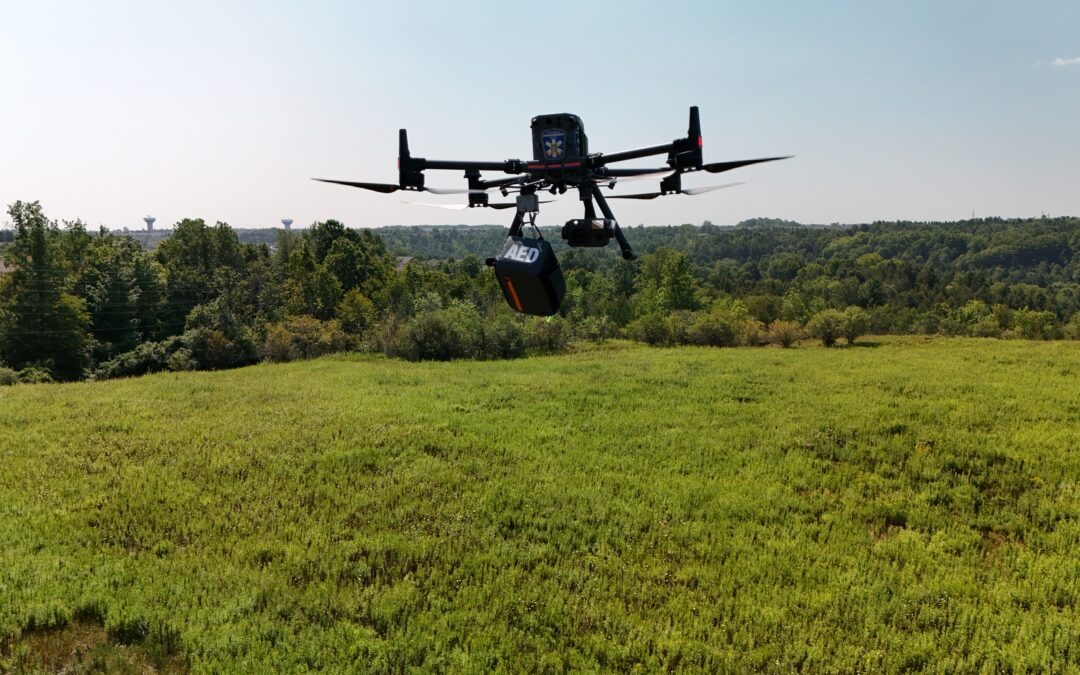
Below: That Peel Regional Paramedic Services drone, and the payload it’s carrying, might well save a life
THE NEED FOR SPEED
It goes without saying it’s better getting medical treatment to someone, particularly in an emergency, sooner rather than later. But in some instances, such as cardiac arrest, a severe allergic reaction or an opioid overdose, every second counts. PRPS will have drones charged up and ready to go, and aims to have them in the air soon after receiving a 9-1-1 call.
“Our medical drones will be equipped with essential, time-sensitive interventions including an AED, epinephrine auto-injector (EpiPen), naloxone for opioid overdoses, and a Stop the Bleed kit,” says Dr. Cheskes, who is also a professor at the Department of Family and Community Medicine and the University of Toronto’s Division of Emergency Medicine.
“Once a call meets our deployment criteria and GPS coordinates are received, our goal is to launch the drone within 60 seconds.”
While the drone is being dispatched, a ground crew will also hit the road. Previous trials have shown that in rural areas, drones arrive more quickly because they can travel directly in a straight line to where they’re needed. The payload will include not only those critical medical devices/supplies, but something equally important: A phone.
When the drone lands, a phone will be in the AED container. That means, says the PRPS, “support every step of the way. A paramedic will talk to your over a phone, guiding you how to use the equipment until paramedics arrive.”
Paul Snobelin, who serves as a Specialist, Community Safety & Resuscitation Programs with PRPS, oversees the drone side of things and has also been deeply involved with this project.
AN ADJUNCT
During this phase of the pilot project, paramedics will also be dispatched on calls where the decision is made to also send a drone.
“A traditional ground EMS response will remain the standard for all calls,” he says. “Drone deployment is designed to complement – not replace – this response.”
For Dr. Cheskes, this has been a long time coming. The physician has spent nearly a decade researching the viability of drones for emergency medical responses. In fact, InDro Robotics supported much of this research, where the data showed drones were faster in arriving at rural destinations than paramedics on the ground.
“The true measure of success, however, will be the lives saved through timely delivery of critical interventions,” says Dr. Cheskes.
“InDro Robotics has been an essential partner from the outset, providing expert guidance across all aspects of the program—from technical consultation to pilot training and navigating the regulatory environment. Their support has been instrumental in helping us reach this important milestone, and this progress would not have been possible without them.”
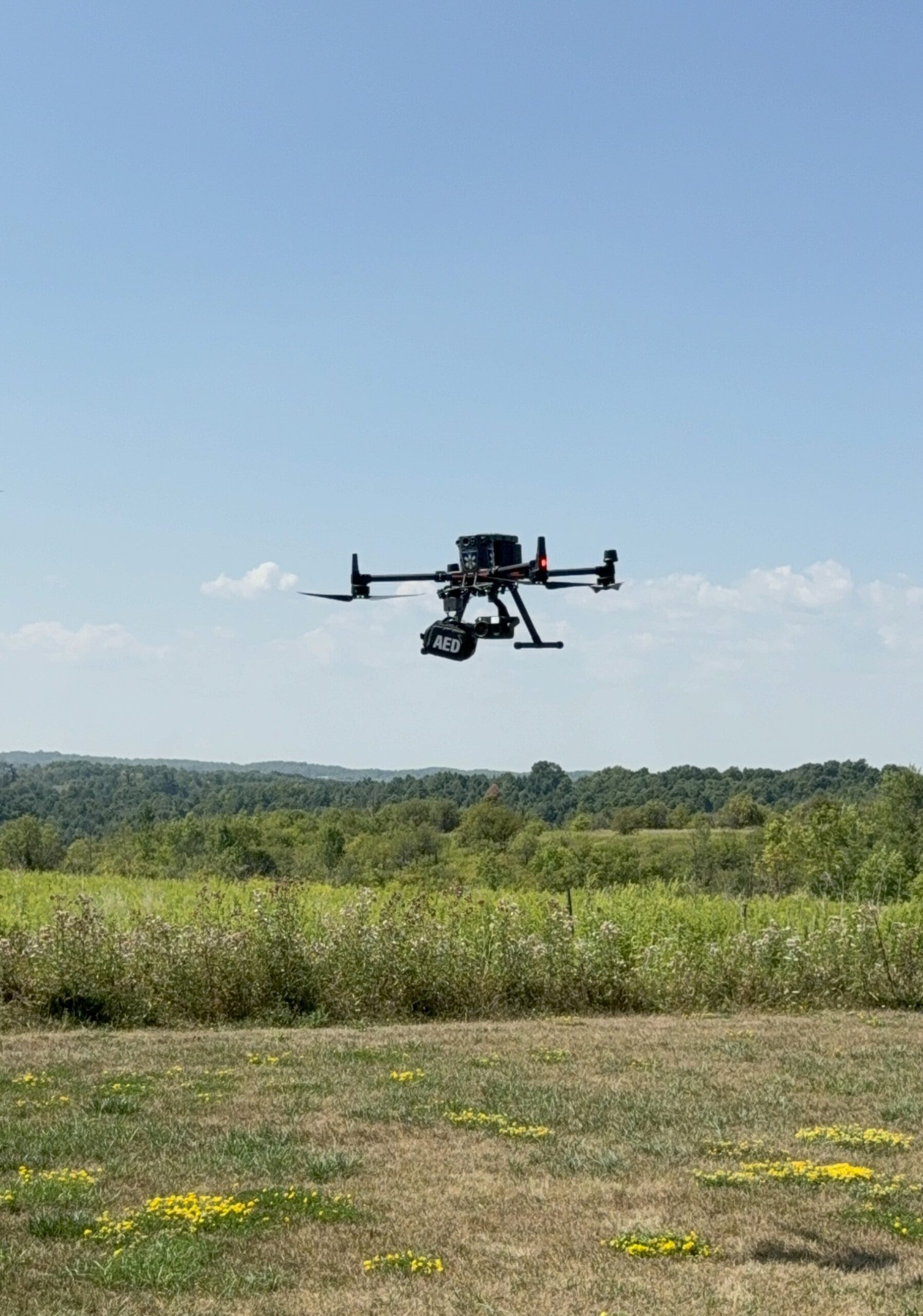
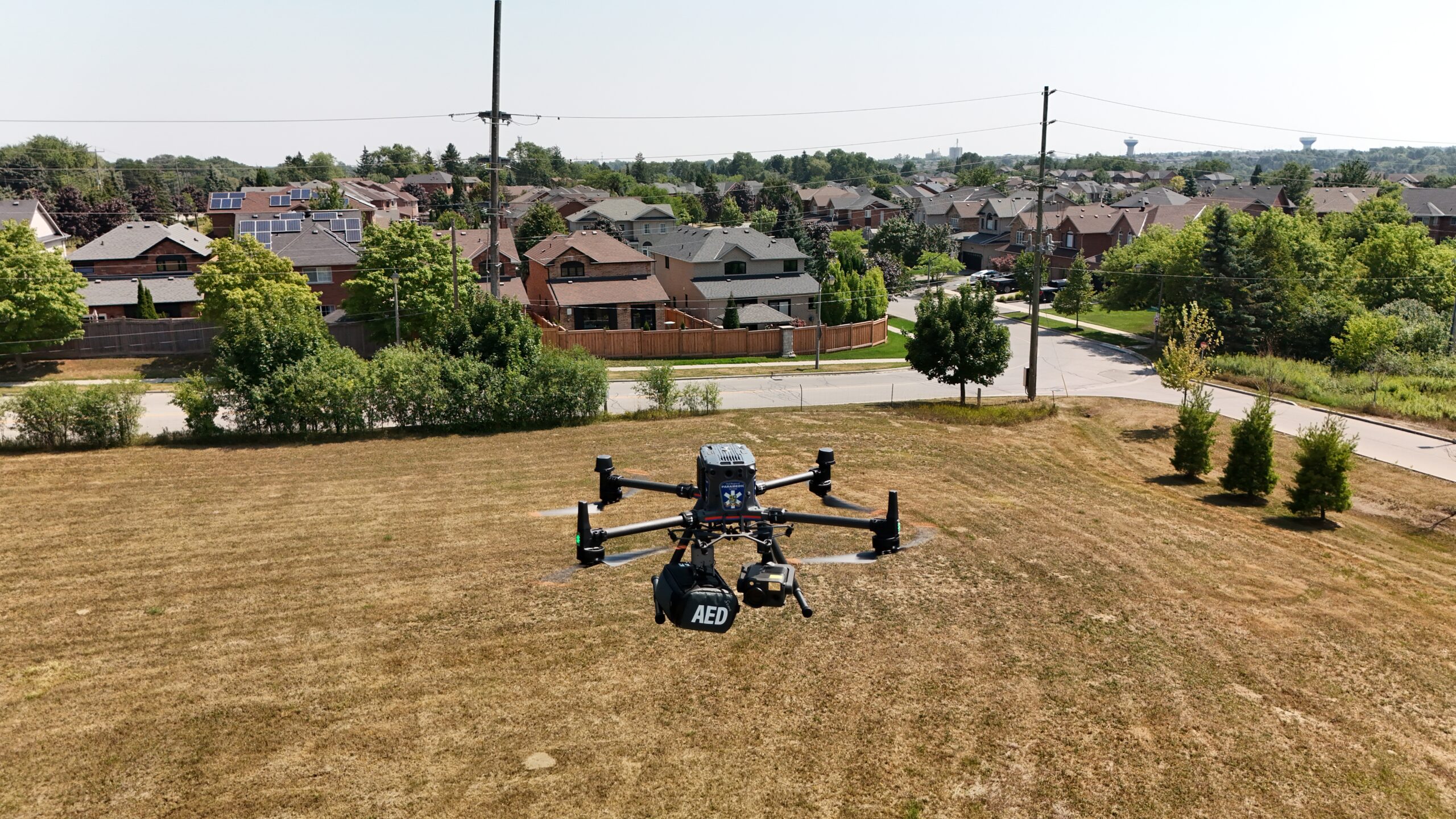
Below: A PRPS drone, complete with payload
INDRO’S TAKE
We are obviously pleased to see the pilot project reach this stage, where a drone responding to an emergency may well save a life.
“We’ve always been a proponent of using drones for the timely delivery of critical medical devices and supplies to rural and remote locations. In fact, we pursued a model for this back in 2014,” says InDro Founder and CEO Philip Reece. “We commend Dr. Cheskes for his devotion to providing evidence-based data that supports this use-case, and look forward to positive results from this phase of his project.”
You can find the announcement Peel Region made to its community about the program, which includes a useful Q&A section, right here.
Below: A flashback to 2014, when we first attempted AED delivery by drone