InDro Robotics “Sentinel”

InDro Robotics “Sentinel”

By Scott Simmie, InDro Robotics

Imagine, for a moment, the challenges of owning and maintaining a remote asset. Further picture that it’s, say, an unstaffed electrical substation located some 800 kilometres from your base of operations. The area is prone to fog, rain and snow. To top things off, the last 200 kilometres consist of a washboard gravel road. There are no hotels or other accommodation nearby.

Keeping a watchful eye on such a facility poses challenges.


The old way…


Companies have traditionally relied on one of two methods – or a combination of both – to monitor remote assets. The most common solution has been to install security cameras and motion sensors and simply keep an eye on monitors. In addition, companies often dispatch employees for occasional inspections.

Unfortunately, fog and rain often mean the security cameras can’t get a clear picture. Even on a decent day, these cameras can’t get up close and personal to truly inspect the assets and determine whether maintenance might be required. Dispatching an employee costs time and money – and isn’t something you can afford to do on a frequent basis.

But you also can’t afford to to not know what’s happening. After all, it’s an expensive and critical asset. If only there was a way to have boots on the ground…without actually dispatching an employee.

It’s precisely this kind of scenario – as well as many others – that has led InDro Robotics to create a solution. It’s a ground-based, all-terrain/all-weather robot designed from the ground-up to allow easy monitoring anywhere, anytime – and all from the comfort of your base of operations.


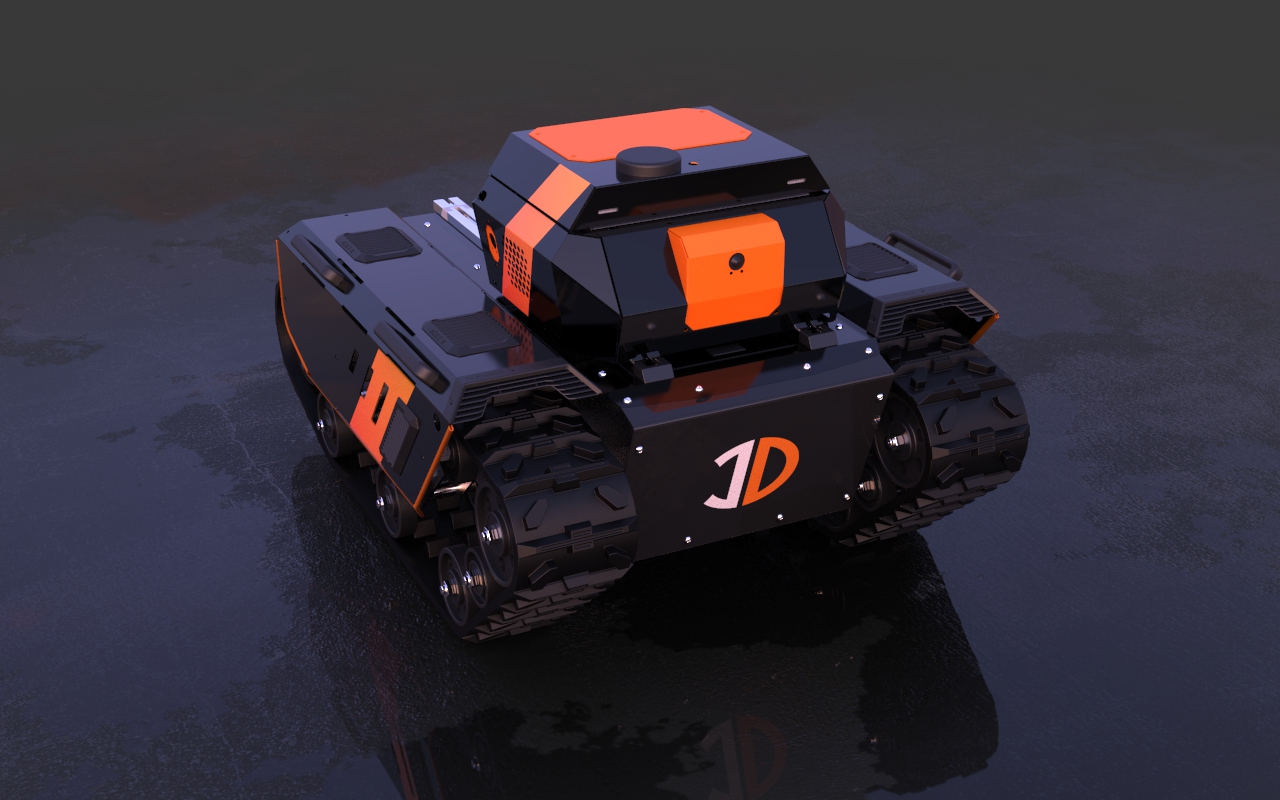
InDro Robotics “Sentinel”


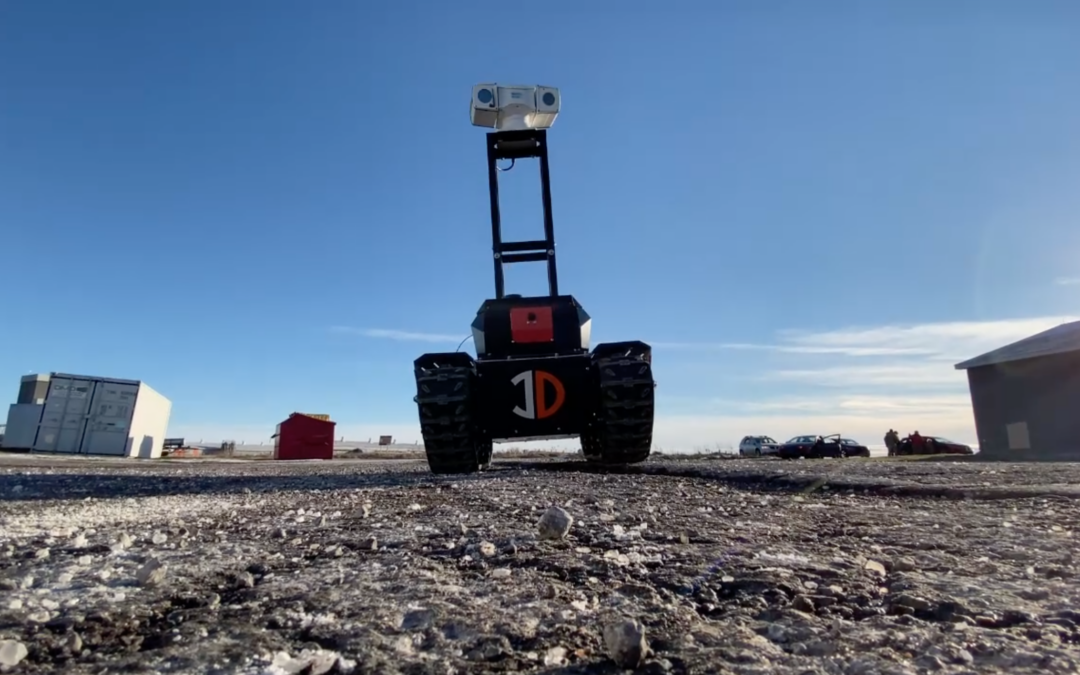
That’s it – right there in the picture below. Now let us tell you why we’re so excited about this product.
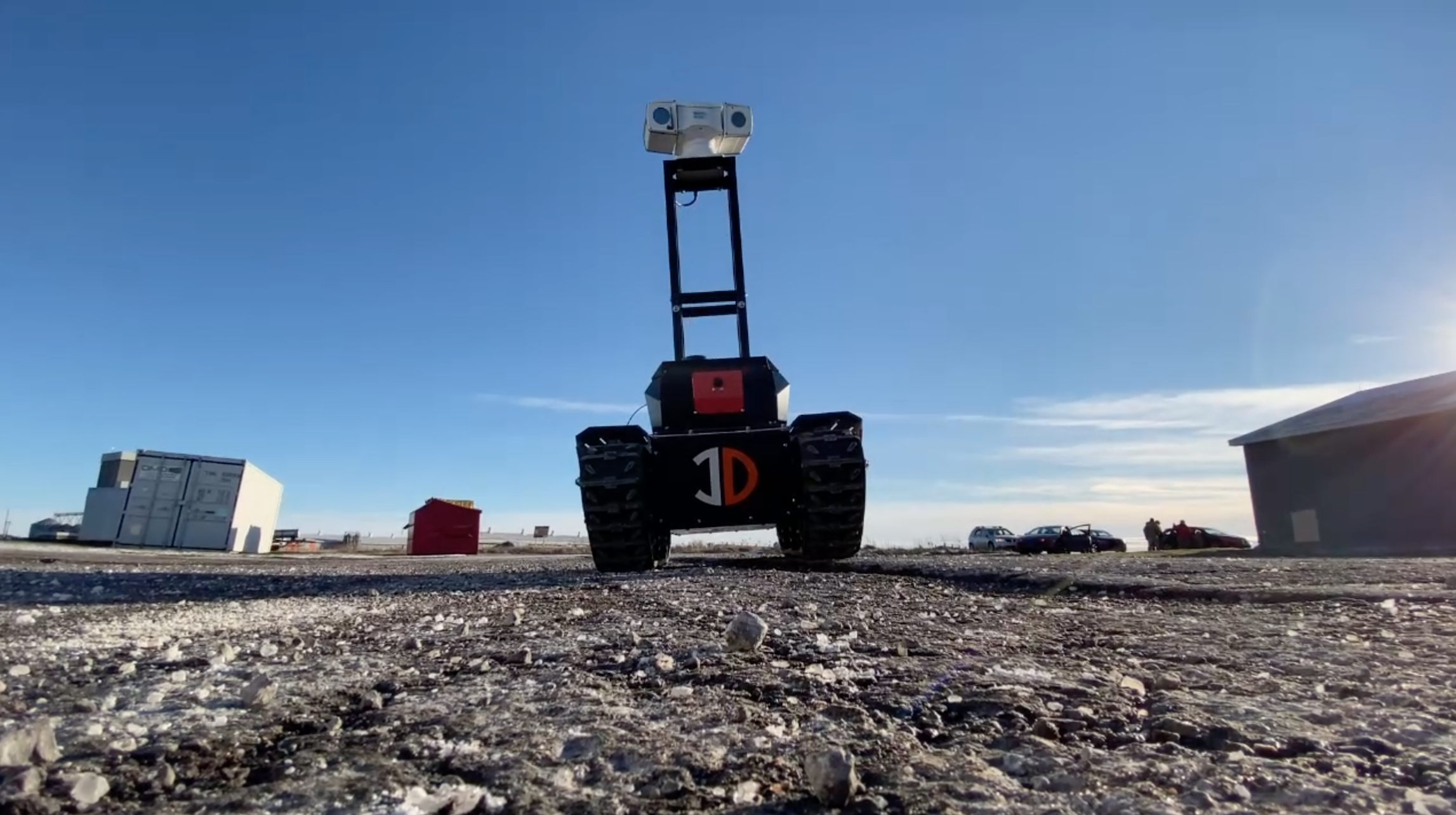
 

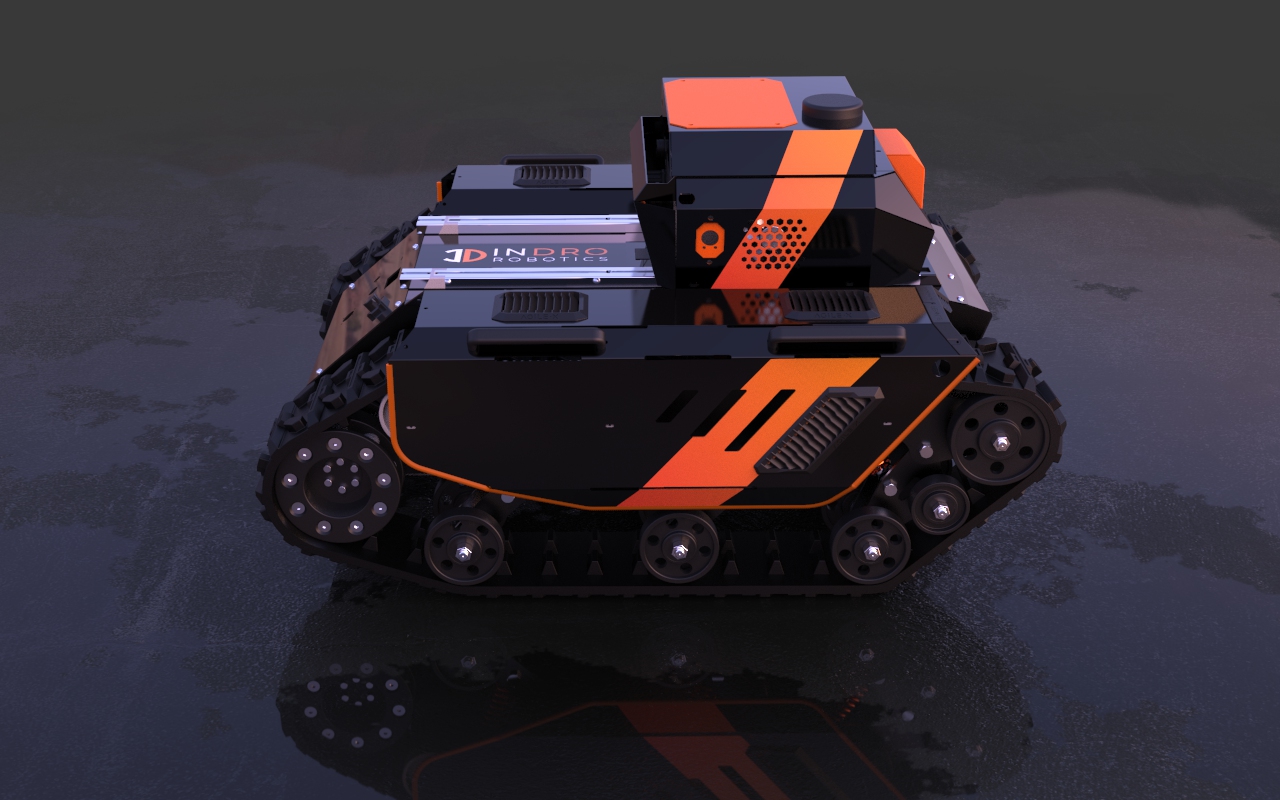
InDro Robotics Sentinel

A workhorse


Sentinel is built on the rugged AgileX Bunker platform. The weather-resistant Bunker has a range of 10 kilometres and can take on pretty much any terrain. Its track system features differential rotation, allowing the operator to get up close and personal with any asset – all without leaving the office.

But that’s just the beginning. Sentinel is packed with features that allow for easy collection of meaningful data, including:


  • 20x optical zoom for detailed inspection
  • Radiometric thermal imaging to detect anomalies
  • 4G/5G connectivity for remote teleoperation
  • Web-based console and cloud storage for operations and data

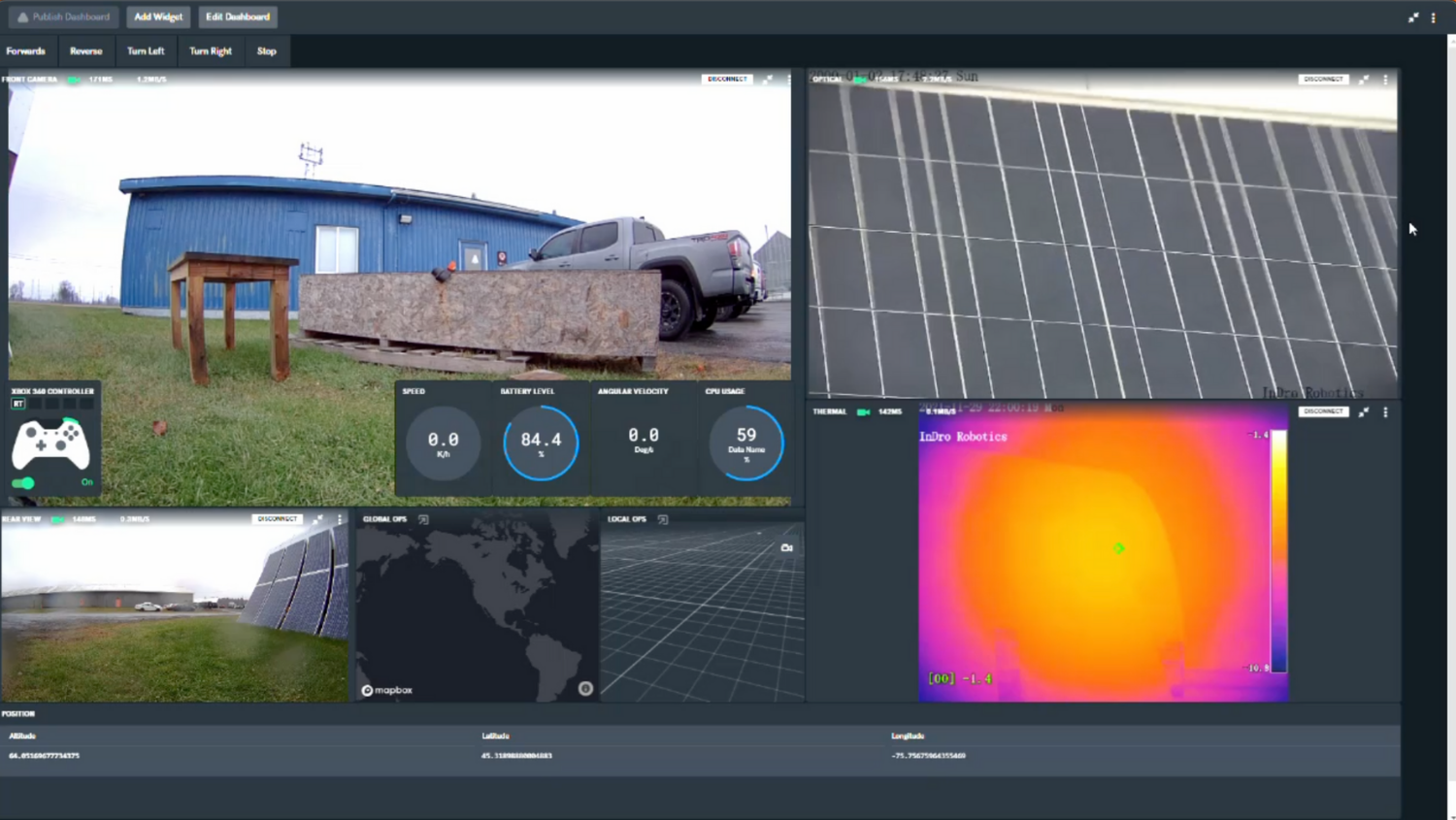
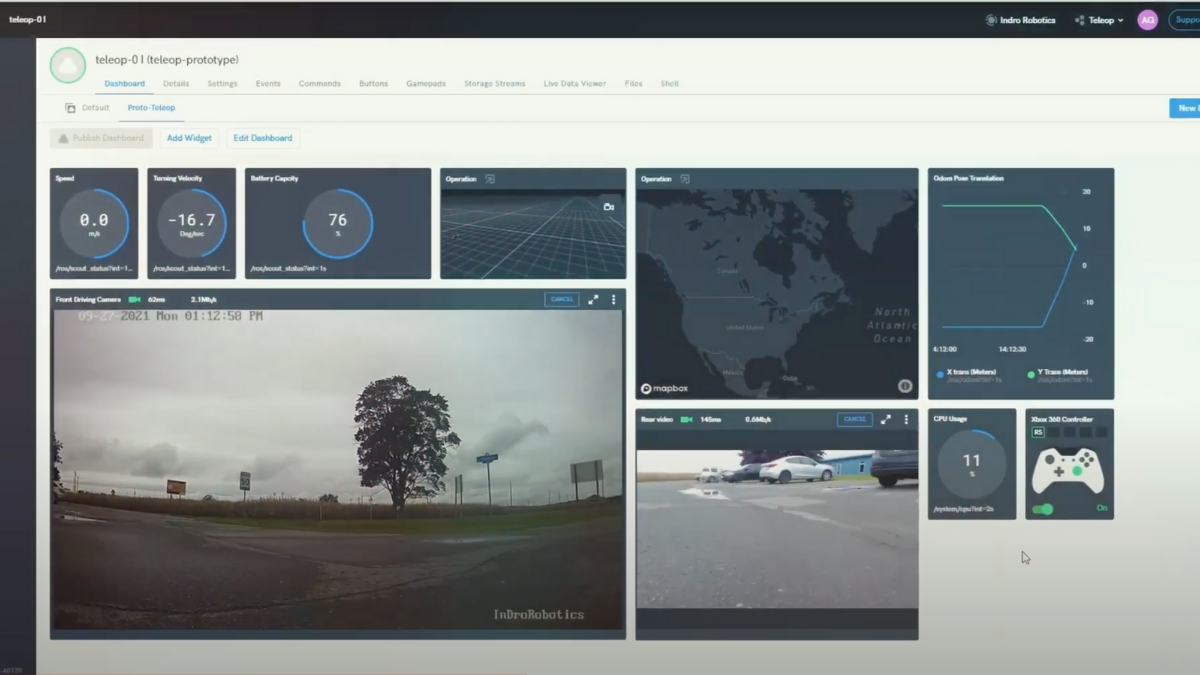
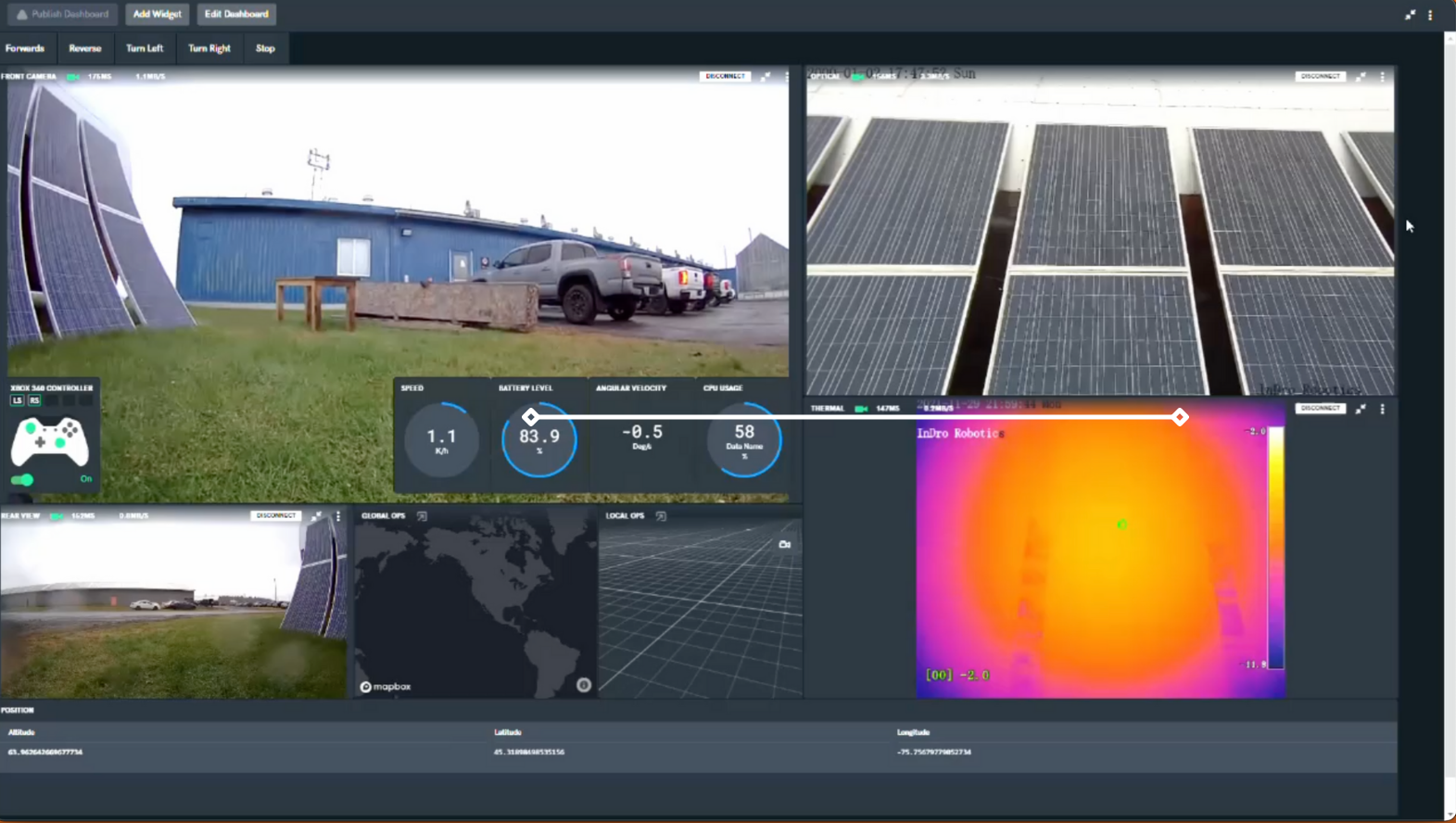
Sentinel is also simple to operate. Using an intuitive handheld controller, the operator has full control over Sentinel’s operations while watching a real-time live video stream from the robot’s RGB and thermal sensors. The display includes data on battery reserves, CPU usage, GPS location and more.

We’ve pulled together a brief video to give you a better sense of what it can do:

A deeper technical dive


What helps pull all of these abilities together is another InDro innovation. It’s a box that contains the brains and sensor/data interfaces that make Sentinel so easy to use. That box contains an onboard EDGE computing device utilizing a Jetson NVIDIA processor, and also the industry-standard Robot Operating System (ROS) software required for the various sensors. We call this solution InDro Commander, and you can read about it here.

You could think of Commander as kind of like a symphony conducter, bringing all the various elements together in a synergic fashion. And yes, there are plenty of key elements, including a wiper for the 20x optical camera – even a thermal defogging component for the lens.

All of this – and more – in a package that’s nearly impervious to the elements.

The robot, and its ‘doghouse’ are IP67 rated, meaning they’re protected from contact with harmful dust, sand, ice shards, hail, rain and water sprays,” explains InDro Account Executive Luke Corbeth.

“Once returning home, the ground vehicle comes in contact with the charging pad and is wirelessly fast charged. This means that Sentinel can withstand many environmental conditions with minimal maintenance required. With that said, should it need maintenance it has a modular design so unlike other UGVs, the brains are separate from the body. As a result, if a component malfunctions we can simply replace it with a new one and bring the damaged one in for repairs to reduce on-site downtime.”

The secure, browser-based operations console is a snap to learn and provides live data while Sentinel is being operated. Whether it’s monitoring for intruders or checking the temperature of assets for preventative maintenance, Sentinel has you covered. Check out the zoom capabilities in the screengrabs below: 
Inspection Robot
Inspection Robot

Sentinel is up for the task(s)

Though we’ve focussed on inspection – there are many different kinds of inspection for which Sentinel is well-suited. These include:

Operational rounds

Also known as preventative maintenance, these kind of inspections are designed to identify potential problems before they become serious. Here, both optical and thermal data can plan key roles. The ability to identify anomalies before they become problematic can be accomplished through regularly scheduled tasks and data analytics.

Emergency Response

Emergencies, by their very nature, are unpredictable. They tend to happen quickly and without warning. The ability to respond to emergencies depends both on a response plan and the ability to obtain situational awareness as rapidly as possible. Sentinel is built to withstand hazardous environments and provide treads on the ground immediately – regardless of how remote your operation is. (And yes, this robust device is also suitable for First Responders.)

Security monitoring

“Maintaining the security of critical infrastructure is vital to minimizing downtime, customer attrition, reputation loss and compliance costs,” explains InDro’s Luke Corbeth. 

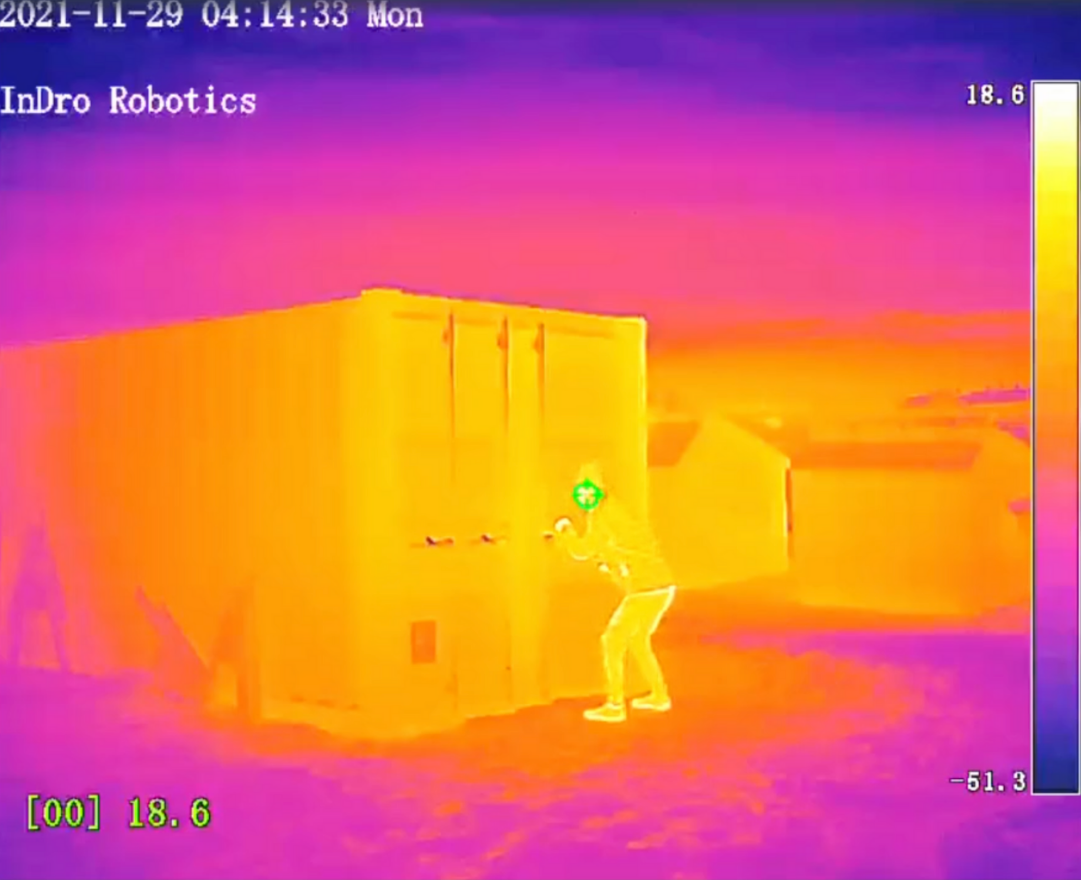
Sentinel can not only keep a regular watchful eye using its RGB Tilt-Pan-Zoom camera, but also has the added benefit of radiometric thermal imaging. In this example, an intruder is quickly detected by their heat signature. And while this was shot during daylight hours, there’s no such thing as the “cover of night” when using thermal sensors:
 

Inspection Robot

Built for the future


While many users will want to dispatch Sentinel using a human operator, the robot can also be programmed for scheduled missions using a pre-planned path. Whether its once a week or twice a day, Sentinel can carry out these missions with no human intervention. And that’s just the beginning.

“With InDro Commander and the Jetson onboard, Sentinel has the ability to learn change detection and obstacle avoidance,” says InDro Robotics CEO Philip Reece. “And with the addition of a LiDAR sensor, this machine could even carry out SLAM (Simultaneous Localization and Mapping) missions in unfamiliar environments.”

It also has some distinct advantages over a UAV, says Reece.

“Drones are great in certain situations, but regulatory permissions for Beyond Visual Line of Sight operations are not easy for companies to obtain. Sentinel does not require a permit and is easy to operate. Plus, with its optical zoom and thermal capabilities, this robot makes it simple to acquire detailed data of any asset visible from the ground.”

InDro Robotics is now taking orders for Sentinel – and even arranging remote “test-drives” for prospective clients. You can contact Luke Corbeth for more information here.

The InDro Robotics “InDro Commander” for ground robots

The InDro Robotics “InDro Commander” for ground robots

By Scott Simmie, InDro Robotics


Today, building basic robots isn’t hugely challenging for engineers – though, of course, some robots are a lot more complex than others.

The really tough part is making those robots be useful.  Tasks like navigating, capturing thermal imagery and other data – even identifying and manipulating objects – all require much more than wheels and sensors and end effectors (the robotic equivalent of hands). Regardless of whether the robot is simple or complex, it needs brains.

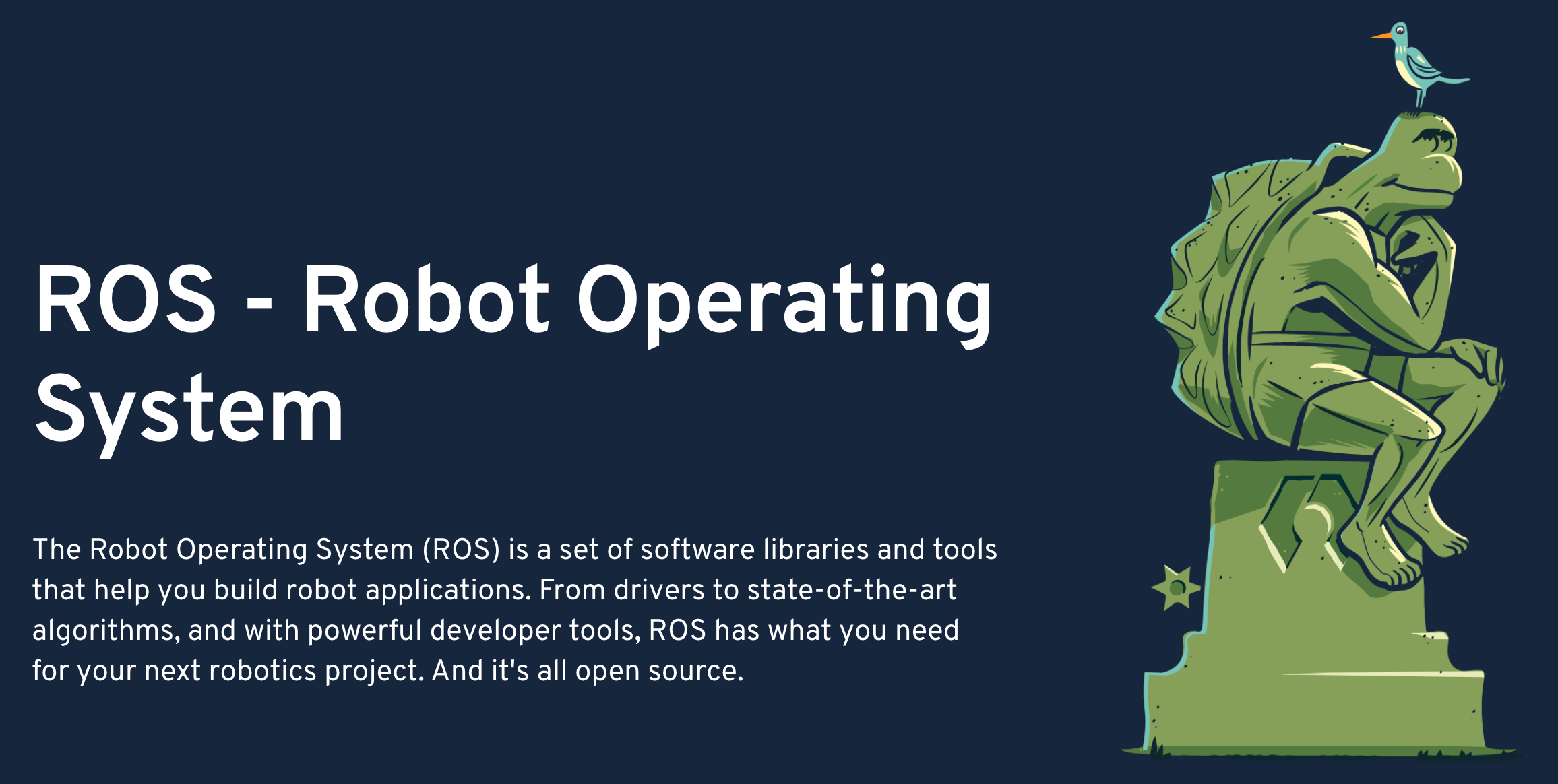
Those brains consist of both hardware and software, with specific bundles of code that can help with specific tasks. And that’s where the Robot Operating System, or ROS, comes into play. ROS.org is a repository of software packages, purpose-built for specific robotic applications by a global network of collaborators.


via ROS.org

As the organization’s website explains it, ROS “is a collection of tools, libraries, and conventions that aim to simplify the task of creating complex and robust robot behavior across a wide variety of robotic platforms.

“Why? Because creating truly robust, general-purpose robot software is hard. From the robot’s perspective, problems that seem trivial to humans often vary wildly between instances of tasks and environments. Dealing with these variations is so hard that no single individual, laboratory, or institution can hope to do it on their own.”

And so ROS could be thought of as a super helpful toolkit, where collaborators upload and share code they’ve developed – and also download and integrate (or even modify) code others have written in order to make their robot carry out required tasks, including specific ways of communicating with an operator or base station.


ROS is cool, but could it be even cooler?


Some time back, we started to ponder this question. Specifically, what if you could pack some of that software in a box – along with the hardware required to run it? And what if that box could easily be integrated to a ground-based robot (most already use ROS drivers) to get it up and running as seamlessly as possible?

That’s the concept of a new InDro Robotics product called InDro Commander, developed by Engineering Manager Arron Griffiths in conjunction with the InDro Robotics Area X.O team.

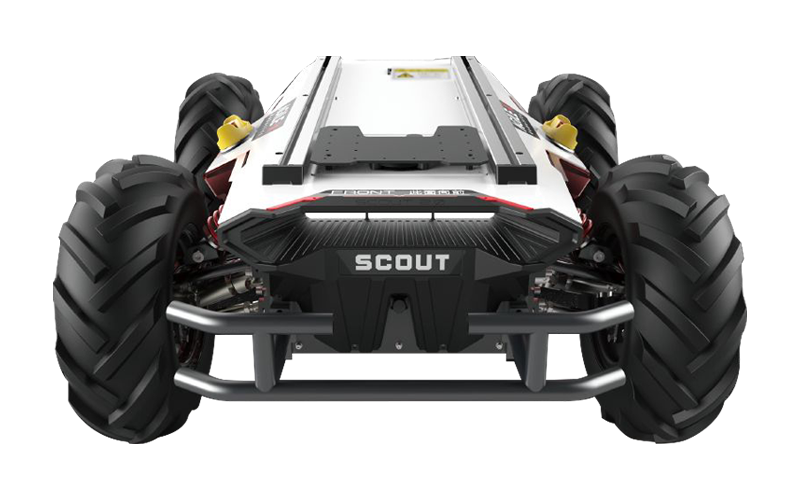
Arron had been working with ROS for about five years, so he already had a great understanding of the available software tools. Arron has worked in robotics for more than a decade now (he was also the Senior Application Engineer at Clearpath Robotics prior to joining InDro Robotics). And Unmanned Ground Vehicles, or UGVs, is an area that has really picked up for InDro since we partnered with Chinese robotics leader AgileX. The picture below is of “Scout” – one the company’s UGVs.


AgileX Scout

With a solid understanding of the software and the hardware required to run it, Arron realized there could be tremendous potential for an “all-in-one, bolt-on” solution. Such a device could get an ROS-compatible robot up and running much more quickly, with zero hassle. In a nutshell, that’s the concept behind InDro Commander. Here’s Arron:

“We’ve created a hardware product around the concept of a simple ROS module, which can be utilized on multiple different robot types. We’re also trying to make it platform-agnostic. We actually don’t want to make a robotic platform, we want to make a box that has robotic systems in it, to make other robotic platforms smarter.”

We’ve been using our InDro Commander on the AgileX Scout Mini, a great R&D platform. And, well, it works like a charm. InDro Commander is also compatible with all the AgileX platforms and any other ROS-ready robot platform.

In fact, we’re so proud of this InDro Robotics innovation that we produced this video for the recent ROS World 2021 Virtual Conference. (At that time, we were calling it ROS-IN-A-BOX):


InDro Commander integrates easily


That’s a key piece here. The box contains everything a developer or end-user would need. EDGE computing is done onboard by the NVIDIA Jetson processor, reducing latency and unlocking potential for AI-related tasks like object recognition or change detection. Connectivity is via 4G/5G, and the box can utilize the CAN (Controller Area Network) protocol, Serial or Ethernet. The ruggedized box has its own cooling system and power regulator, and has an Ingress Protection factor of IP55. It’s literally a solution you can bolt onto pretty much any ground-based robot and begin remote teleoperations over 4G or 5G.

And yes, InDro Commander vastly simplifies things.

“It’s just two wires (battery power and communications) people plug in,” says Arron. “The box already has cameras, communications, power regulators – all inside the box. So you’re not fiddling with all of these various peripherals. It’s truly a self-contained ecosystem. Suppliers, OEMs, they don’t have to think – they just have to bolt this box on.”

ROS-IN-A-BOX

InDro Robotics has long been known for its R&D in the drone space, and has garnered multiple industry “firsts” as a result. Now, with the company’s expansion into ground robotics, InDro Commander is a significant breakthrough – not only for InDro, but for others who will immediately see the benefit of this solution.

“We work closely with academia and collaborate with industry partners and end users,” explains InDro Robotics CEO Philip Reece.

“The common question is: ‘How can we integrate this sensor or piece of tech with this robot or system?’ Now we have a simple working answer to this question, as InDro Commander is designed as a Plug and Play all-in-one module and is platform agnostic.” (Providing the platform either has a ROS driver already, or working example (Python/C++) code which Indro can use to develop a custom ROS driver.)

ROS-IN-A-BOX

Reece says the creation of this product is a very different solution, which he anticipates will help many in the Unmanned Ground Vehicle (UGV) space.

“There are many UGV companies, and more start up every day. Ninety-five per cent of them only make custom solutions for their own. hardware. InDro is doing things differently,” he says.

“InDro Commander is an important addition to our technology development, as we are supplying the industry with a number of different ground robots, and they are interacting in many different ways. InDro Commander will build on the benefits of a common operating system such as ROS, by bringing a standard suite of sensors and systems (camera, GPS, IMU, Computers Power distribution, communications, 4/5G) that can all be simply but powerfully integrated onto any flavour of UGV.”

InDro partners with ROCOS

We’re already quite proud of the InDro Commander solution. But we’ve taken things a step further, partnering with ROCOS. The company’s Robot Operations Platform allows an operator to connect, monitor and control robots – whether it’s a single unit or an entire fleet. But that’s not all.

ROCOS was recently acquired by DroneDeploy, one of the world leaders in drone data acquisition, interpretation and photogrammetry. And what does that mean? Well, imagine having data acquired by a ground robot seamlessly integrated with what is captured by air and presented as meaningful data for the end-user. Further picture a desktop, browser-based console where you can program aerial or ground-based missions and monitor a feed as they unfold in real-time.

Force multiplier

Whether the use-case is industrial, agricultural, security – and much more – having eyes in the air, combined with robotic boots on the ground, can only be a force multiplier.

We’ve already seen what InDro Commander can do in our own testing; we can’t wait to see what others do with this solution.

For more information on InDro Commander, contact us here.