By Scott Simmie
Canada’s drone industry, along with drone technology in general, have advanced immensely over the past decade, and at an even greater pace over the past few years.
But there are still some tricky areas, particularly as industry tries to take advantage of Transport Canada’s new regulations that permit routine, low-risk Beyond Visual Line of Sight flights. For example, what is an effective Detect and Avoid (DAA) system? How can AI be best put to use for identifying aspects of critical infrastructure that require maintenance? And on a broader question, how can the industry collaborate with First Nations to ensure that long-range BVLOS flights best serve their needs?
These are all questions worth asking. And, thankfully, the National Research Council of Canada (NRC) has been collaborating with academia, industry partners and First Nations communities in a coordinated effort to find solutions.
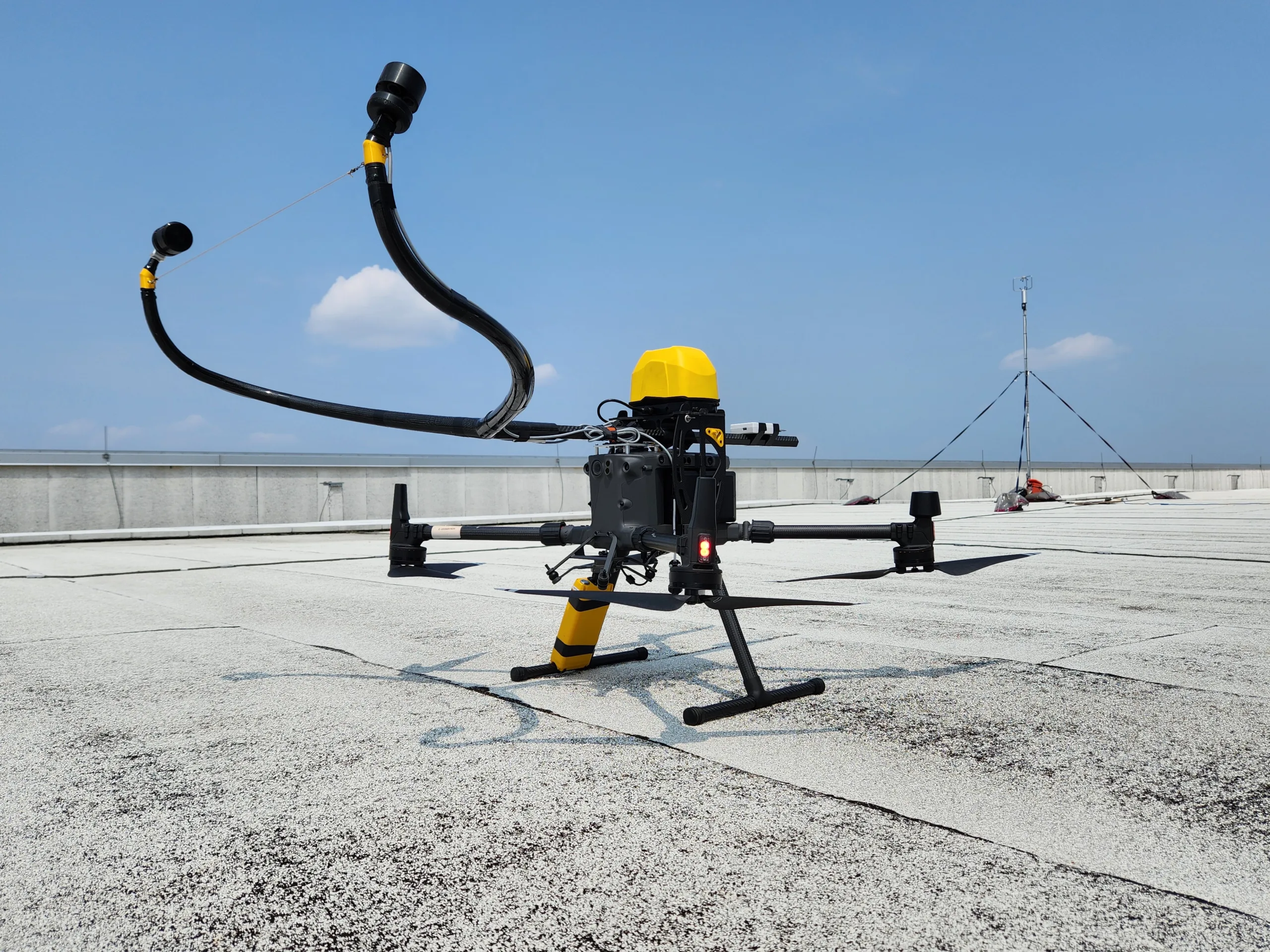
Below: A custom modified drone that InDro piloted for NRC research on urban wind tunnels in Montreal. That wishbone device carries two separate, high-precision anemometers mounted at different angles to detect turbulence, eddies, wind shear etc.