How the National Research Council of Canada advances drone capabilities

How the National Research Council of Canada advances drone capabilities

By Scott Simmie


Canada’s drone industry, along with drone technology in general, have advanced immensely over the past decade, and at an even greater pace over the past few years.

But there are still some tricky areas, particularly as industry tries to take advantage of Transport Canada’s new regulations that permit routine, low-risk Beyond Visual Line of Sight flights. For example, what is an effective Detect and Avoid (DAA) system? How can AI be best put to use for identifying aspects of critical infrastructure that require maintenance? And how can long-range BVLOS flights best serve the needs of remote First Nations communities?

These are all questions worth asking. And, thankfully, the National Research Council of Canada (NRC) has been collaborating with academia, industry partners and First Nations communities in a coordinated effort to find solutions.

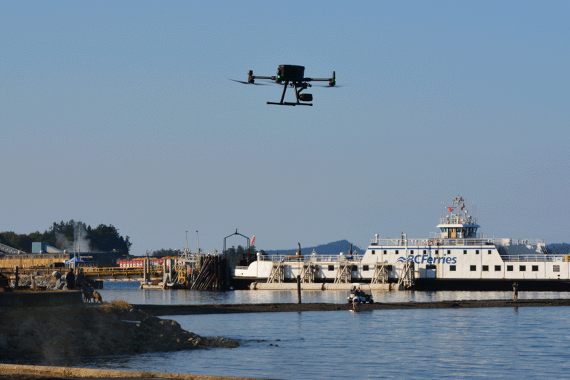
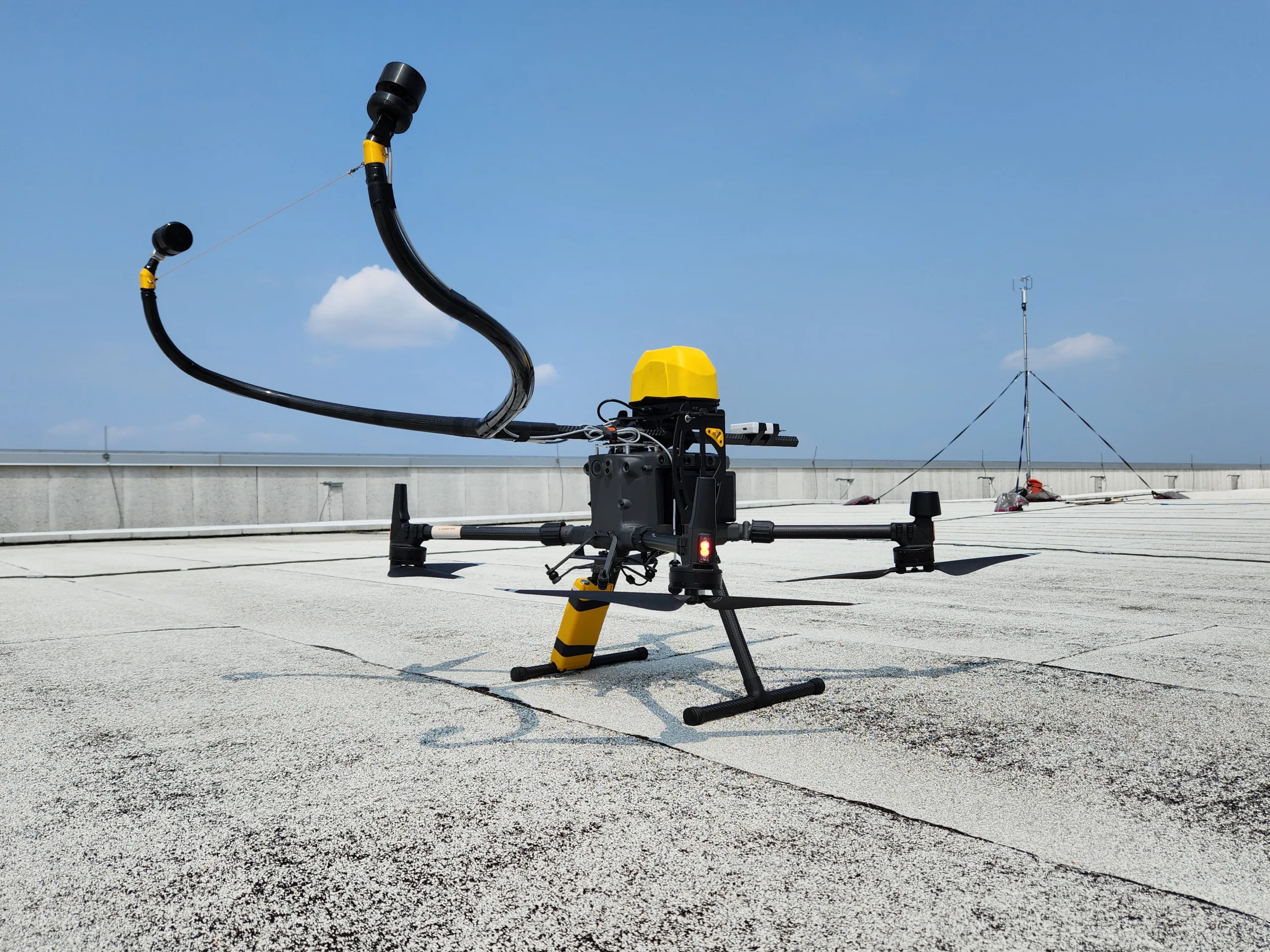
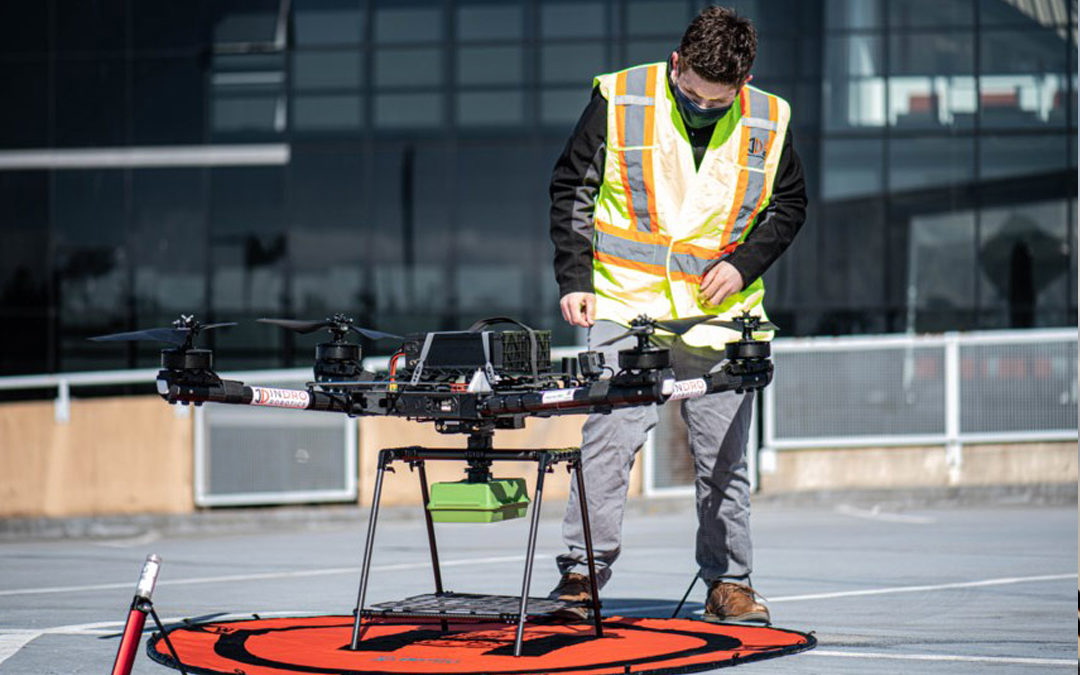
Above: An NRC image showing a drone on a BVLOS flight in BC as part of a research project. Below: A custom modified drone InDro piloted for NRC research on urban wind tunnels in Montreal. That wishbone device carries two separate, high-precision anemometers mounted at different angles to detect turbulence, eddies, wind shear etc. 
NRC Wind Tunnel Montreal Eric

MORE THAN DRONE SITE SELECTION


Pretty much everyone in the drone industry is familiar with the NRC’s Drone Site Selection Tool, or DSST. Available as a mobile app or via browser, the DSST allows operators to check airspace and determine permissible operations for all levels of drone operation (ie sub-250g, Basic, Advanced, and Level One Complex low-risk BVLOS). It shows restricted, controlled and safe flying areas for all categories at a glance, and even includes a measurement tool so you can be certain your operations meet Transport Canada requirements. (You can access the browser version of the DSST here.)

While the DSST is an indispensable tool for operators, the NRC is also involved with highly complex research. Back in 2019, it launched its Integrated Air Mobility Program – which collaborates with outside partners to develop new technologies that could benefit the industry while enhancing safe operations.

“The NRC works with industry, academia, and the public sector to develop critical and key technologies to strengthen Canada’s supply chain, develop new technology solutions, support the development of UAS regulations, and enrich our talent pool of highly skilled aerospace researchers.”

One example of that research was referenced in the photo above, where the NRC’s Integrated Air Mobility Program examined how urban wind tunnels can potentially impact RPAS operations. InDro captured real-world data from the air, which was compared with data produced by wind-tunnel testing of a scale model of downtown Montreal. We wrote about that research here (and if you want a really deep technical dive you can find the research paper here).


MUCH, MUCH MORE


Montreal is but one example. The NRC has been involved with multiple projects and has or is developing technologies including:

  • optical sensor Detect-and-Avoid systems
  • drone docking technologies for drone work that involves physical contact with an object during an aerial task (such as non-destructive testing)
  • the manufacturing of high-density, safe ceramic lithium batteries – ideal for low-emission hybrid-electric propulsion


Several of the NRC’s more recent projects (with academic and industry partners) involved developing and testing AI and Machine Vision software for detailed mapping and structural inspection, as well as a system that allows a drone to plan, execute and land its mission completely autonomously – perfect for routine deliveries.

“Researchers and engineers from Toronto Metropolitan University, led by Professor Farrokh Janabi‑Sharifi, teamed up with InDro Robotics and the Cowichan Tribes to create intelligent flight‑planning systems that allow drones to pick up and deliver packages safely,” writes the NRC.

“This project marks a significant milestone in advancing drone technologies. The collective expertise, dedication and innovation of all partners were instrumental in achieving the project objectives,” says Prof. Janabi-Sharifi.

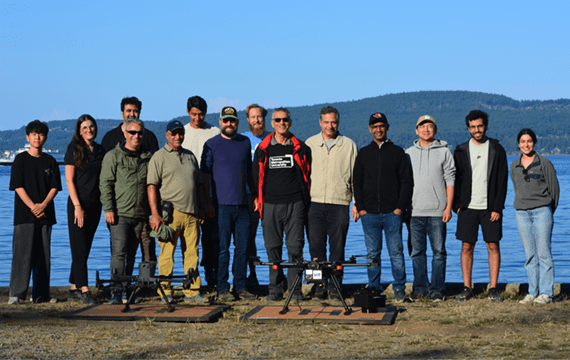
Below: The team during a testing day in Cowichan, BC. InDro’s Training and Regulatory Specialist Kate Klassen appears second from left. NRC image
INDRO NRC

INDRO’S TAKE


We’re proud to work with NRC and its Integrated Aerial Mobility program, along with other partners. And we’re pleased the NRC feels this latest project was so successful:

“The results were promising,” says the NRC. “The systems proved they could help drones fly safely in remote environments, avoid obstacles, and land accurately. These advances in Remotely Piloted Aircraft System (RPAS) technology could transform how Canada delivers goods and inspects infrastructure in hard‑to‑reach places.”

Part of that goal – specifically, safe and autonomous BVLOS deliveries – will help enable a long-term project involving InDro and multiple partners to deliver medical supplies to remote First Nations communities in northern British Columbia. Such NRC projects help lay the groundwork that ultimately benefits the industry as a whole.

“Projects like this show what’s possible when industry, academia, First Nation and research partners collaborate,” says Philip Reece, Founder and CEO of InDro Robotics. “By testing advanced technologies in real environments, we’re helping ensure these innovations serve Canadians in meaningful ways.”
 

How mandatory electronic conspicuity could accelerate Canada’s drone industry

How mandatory electronic conspicuity could accelerate Canada’s drone industry

By Scott Simmie


New Transport Canada RPAS regulations go into effect November 4, 2025.

Among many coming changes, the industry is most excited about the prospect of enabling routine, low-risk BVLOS flight for those with the new Pilot Certificate: Level 1 Complex Operations (plus an organization or point person – an Accountable Executive – holding an RPAS Operator Certificate). The RPOC holder accepts overall responsibility for safe operations, including maintenance, training etc. In addition, the drone must meet TC’s safety requirements for Level 1 Complex Operations.

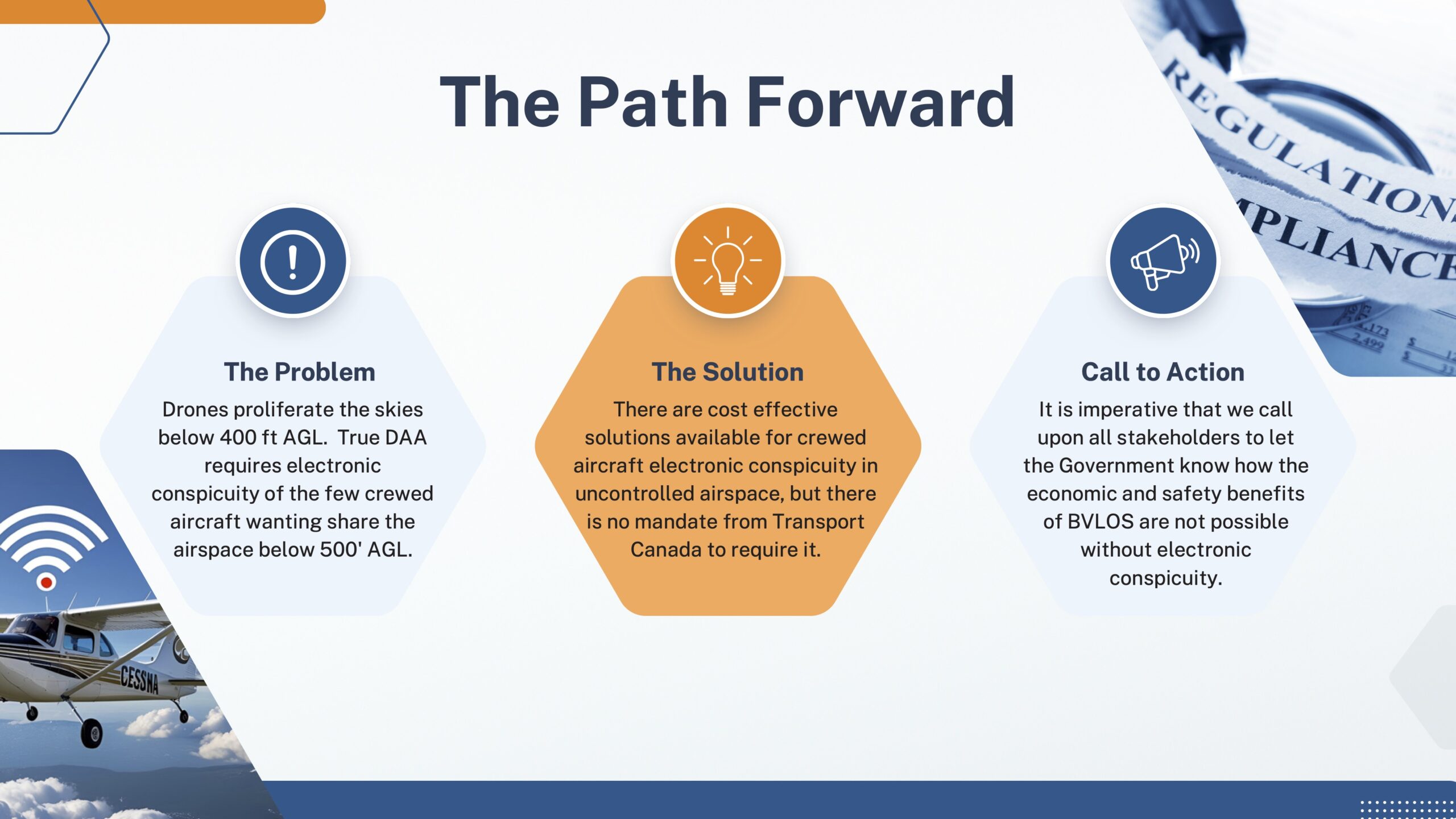
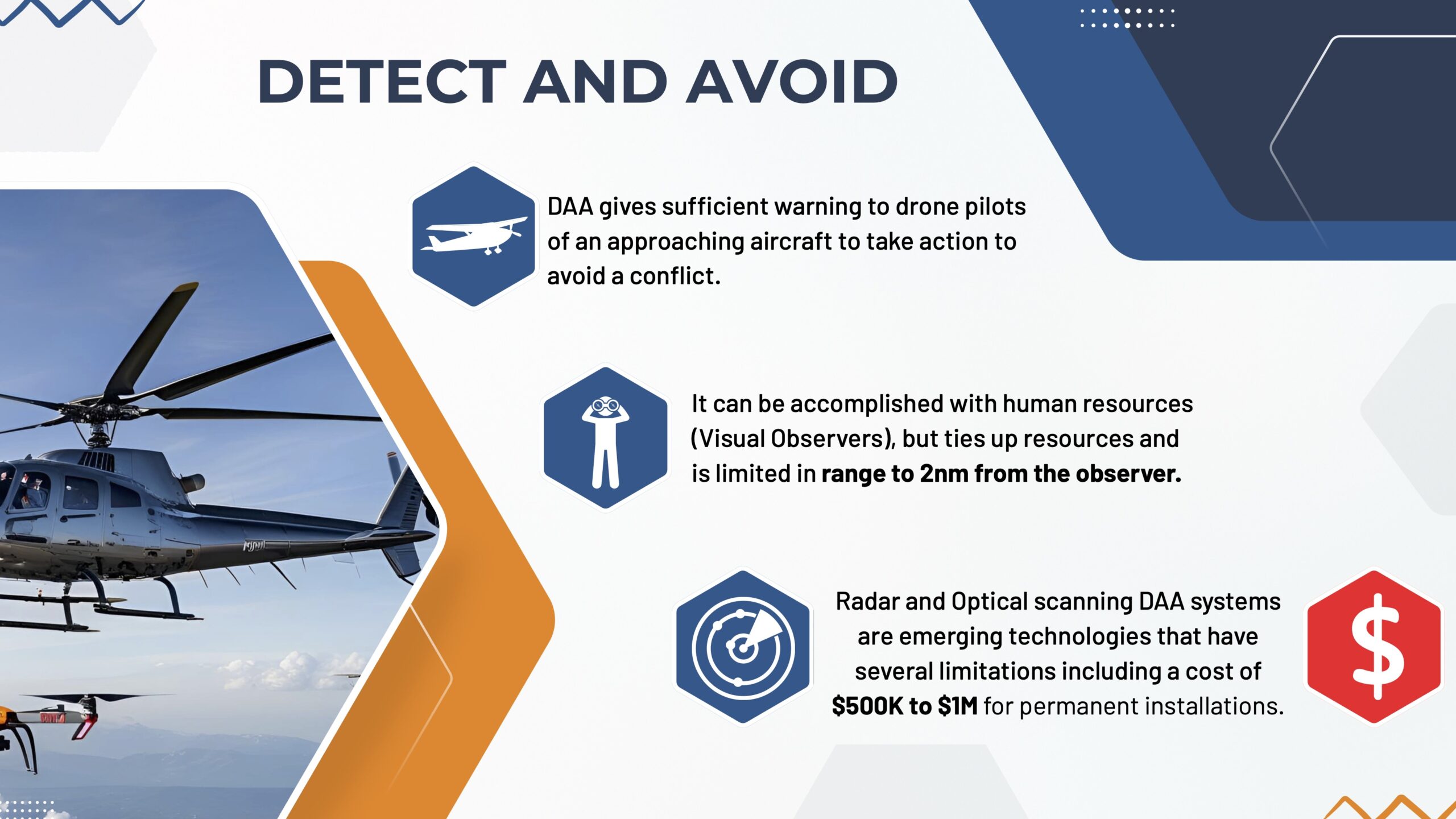
But to fly BVLOS, the regulations require some sort of Detect and Avoid (DAA) system to avoid conflict with traditional low-flying aircraft. TC has provided a standard for vision-based DAA, but it has limitations including a max distance of 4 NM. For longer range BVLOS missions (and there are many applications) or other scenarios that don’t align with the standard, the operation must use a technology-based DAA solution.

For an industry scrambling to take on routine, low-risk BVLOS operations, that’s a bit of a stumbling block. The cost of DAA systems (including ground-based radar) is prohibitive. And that’s why a recent LinkedIn post by Brian Fentiman, CEO of BlueForce UAV Consulting (and InDro’s Law Enforcement Division Consultant) recently caught our attention.

“Canada’s drone industry is ready for BVLOS, but one major barrier remains: affordable Detect and Avoid (DAA) solutions,” he wrote. “Most DAA systems cost over $100k and can run into the millions. That’s not scalable.”

InDro’s Training and Regulatory Specialist, Kate Klassen, agrees, saying “It might be the first time the regulations have been ahead of the technology.”

Below: A look at the issue

DAA ADS-B Petition

ELECTRONIC CONSPICUITY


A far simpler and more cost-effective solution, argue many, would be a mandatory requirement for all crewed aircraft flying at lower altitudes to be equipped with an electronic system that constantly broadcasts information about its position and altitude. This generally means Automatic Dependent Surveillance – Broadcast Out, or ADS-B Out. It’s a vastly more affordable path to avoiding conflict between RPAS and low-flying aircraft, and the cost for RPAS operators for technology to detect these signals is inexpensive, accessible, and available.

“The answer lies in Electronic Conspicuity (EC), low-cost ADS-B Out broadcast by crewed aircraft that lets RPAS operators safely detect and avoid traffic,” writes Fentiman. “The US, Australia, the UK, and New Zealand are already doing this. Canada must catch up.”

Fentiman argues such a mandate would quickly open the skies to much-needed RPAS services, including:

  • Search and Rescue
  • Energy Corridor Inspection
  • Emergency Response
  • Infrastructure Monitoring

NAV CANADA mandated the use of this technology by traditional aviation flying in Class A Domestic Airspace in 2019, expanding it to include Class B in August of 2023. ADS-B is currently not required in uncontrolled airspace. There will be no further changes for some time to come.

“The implementation of any subsequent Canadian ADS-B mandate in Class C, Class D or Class E airspace will occur no sooner than 2028, pending further assessment and engagement with stakeholders,” says NAV CANADA.

That’s part of the reason why the RPAS industry believes it’s critical to address this issue as soon as possible.

“We don’t have a good RPAS-based solution for Detect And Avoid,” explains Klassen. “And size, weight and power restrictions are a challenging problem, which makes it hard to execute BVLOS missions under these regulations. That’s where Electronic Conspicuity comes in. If we expand the NAV CANADA mandate for ADS-B Out…then the only thing we need on the drone is a system to detect those signals.”


PETITION


With the lack of an approved and affordable DAA system for drones themselves, many in the RPAS industry believe the simplest and most expedient solution is a broader mandate for ADS-B Out on all aircraft that fly below 500′. And so multiple industry partners (including the Aerial Evolution Association of Canada) have come together to create a petition to Transport Canada “to implement a nation-wide requirement for Electronic Conspicuity systems on all low-flying crewed aircraft that share airspace below 500 feet AGL with drones.”

“It’s time to unlock safe and economical BVLOS drone operations in Canada,” writes Fentiman. “A national EC (Electronic Conspicuity) mandate would make Canada safer for both drones and general aviation.”

You’ll find Brian’s full LinkedIn post below – feel free to repost – and you can find a link to the petition here.

DAA ADS-B

INDRO’S TAKE

Like many in the industry, InDro embraces the coming regulations. But we share the belief that the lack of an affordable and approved DAA system will impinge RPAS operators during what should be a period of rapid expansion into routine, low-risk BVLOS flight. That’s why InDro is one of the partners pushing forward this petition.

“Mandating Electronic Conspicuity for all crewed aircraft that share airspace with drones is a logical, practical and cost-effective solution that has the benefit of enhancing safety for traditional aviation, too” says InDro’s Kate Klassen.

Once again, you can sign the petition here. And please spread the word.